Mercury and Argos — História e Análise
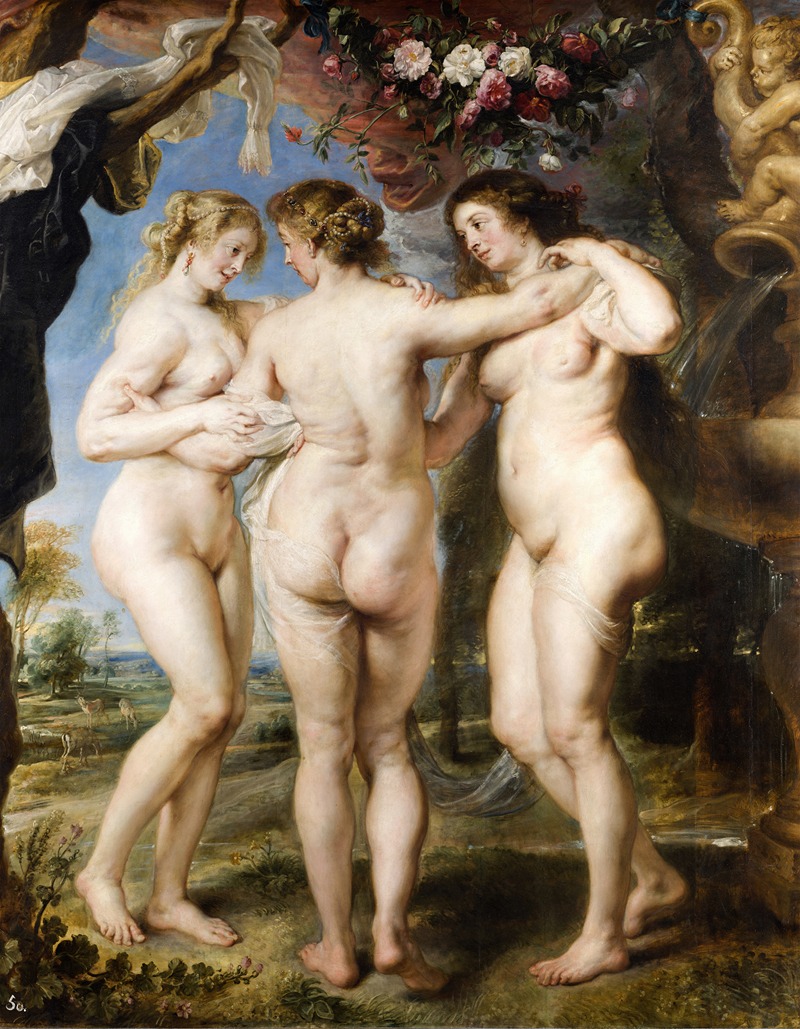
Can beauty exist without sorrow? In Mercury and Argos, the delicate balance between life and loss unfolds in a dynamic tableau that speaks to the heart of rebirth. Focus first on the vibrant blue sky that envelops the scene, its cerulean expanse setting a melancholic backdrop to the figures below. Notice how the golden light bathes Mercury, illuminating his youthful form while casting a shadow over Argos, the watchful giant whose many eyes are depicted with a mix of fear and curiosity. The composition draws you in, leading your gaze from Mercury’s animated gesture of persuasion to the stillness of Argos, creating a palpable tension that captures both hope and despair. Delve deeper into the figures’ expressions; Mercury’s slight smile contrasts sharply with the tragic fate of Argos, who is destined to succumb to sleep.
The juxtaposition of youth against the weight of impending loss echoes the duality of existence, where joy is often shrouded in sorrow. Each of Argos's eyes, filled with an unsettling awareness, serves as a reminder that beauty can be fleeting, yet it is in this very fragility that one finds the essence of rebirth. When Joseph Brett painted Mercury and Argos between 1836 and 1848, he was immersed in the rich currents of the Romantic movement, which celebrated emotion over reason. Working in England during a time of industrial change and social upheaval, he sought to capture the timeless tales of mythology with a fresh, emotional lens.
This piece reflects not only his artistic evolution but also a broader quest to find beauty amid the turmoil of the human experience.