Moonlit landscape — História e Análise
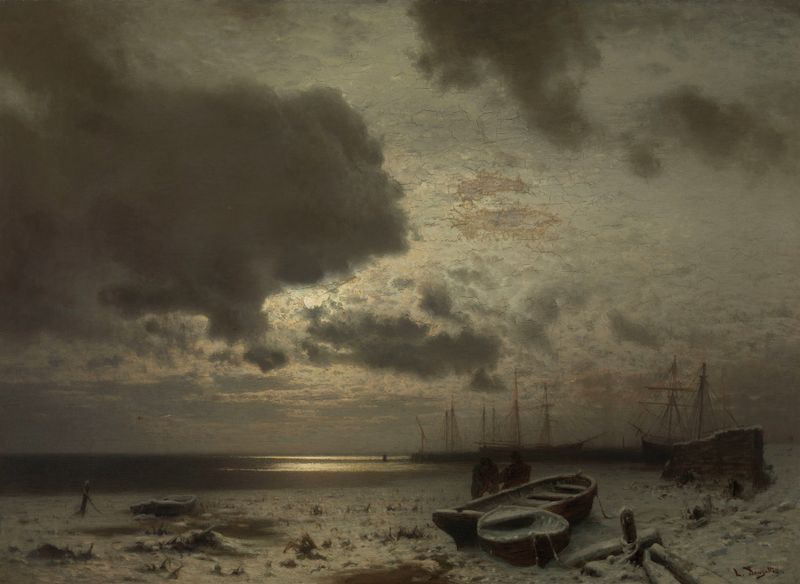
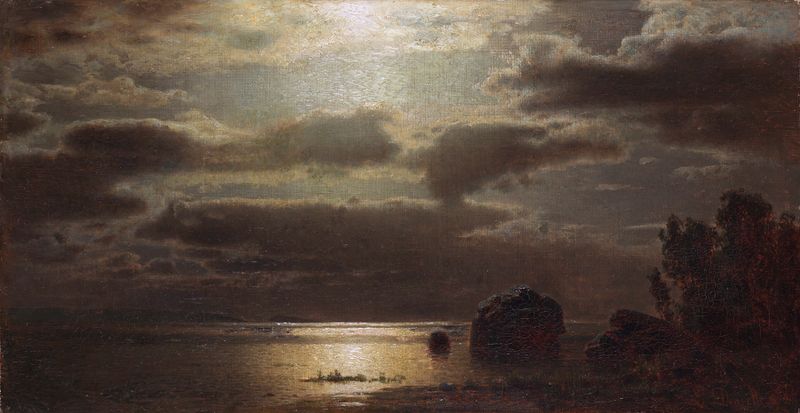
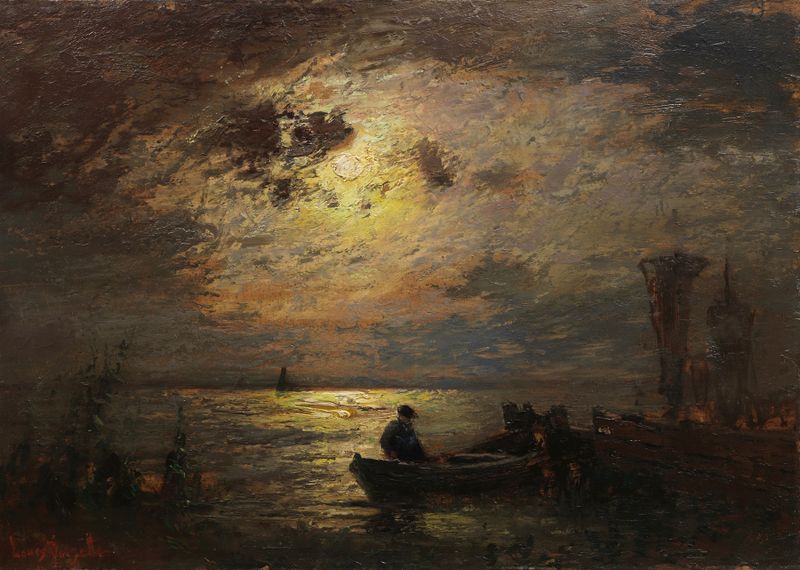
Can paint confess what words never could? In the depths of a moonlit night, where shadows dance and colors whisper secrets, Moonlit Landscape captures a quiet yet profound conversation between nature and the soul. Look closely at the deep blues and silvery whites that wash over the canvas, creating a serene interplay of light and dark. Notice how the moon, a luminous sentinel, casts a gentle glow on the landscape, illuminating the delicate details of the trees and the soft contours of the hills. The brushstrokes vary in rhythm, inviting your eyes to wander over the tranquil scenery, while the subtle integration of color enhances both depth and emotion. While the surface appears calm, the painting subtly reveals contrasting emotions.
The cool hues suggest a sense of tranquility, yet they also evoke a hint of melancholy, reflecting the loneliness of the night. The interplay between light and shadow illustrates the duality of existence—serenity intertwining with the mysteries that lie in the darkness. This duality draws viewers into a contemplative state, allowing them to explore their own feelings of solitude and peace. During an unspecified period, Moonlit Landscape emerged from the creative mind of Louis Douzette, a painter known for his serene depictions of nature.
Working within an evolving artistic landscape, he focused on landscapes that emphasized color and atmosphere, capturing the essence of the night in a way that resonates with both contemporary and future audiences. Douzette's exploration of nocturnal beauty reflects a deeper understanding of light’s role in evoking emotion and connection with the viewer.