Mountainous Landscape with a Waterfall — História e Análise
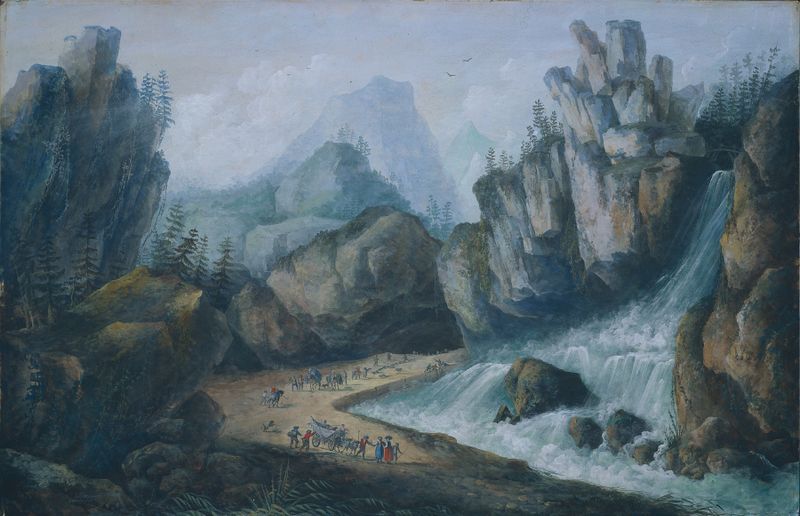
Who listens when art speaks of silence? In Mountainous Landscape with a Waterfall, the stillness of nature captures an essential moment of rebirth, inviting introspection and wonder. Look to the left at the cascading waterfall, its crystalline threads glimmering under the soft light. Notice how the artist skillfully contrasts the vibrant greens of the surrounding foliage with the muted browns of the rocky terrain. The composition draws the eye along the water's descent, leading the viewer's gaze into the depths of the peaceful valley beneath.
Each brushstroke reveals a tactile, almost palpable texture, enhancing the sense of immersion in this serene environment. The interplay of light and shadow creates emotional tension, suggesting a delicate balance between tranquility and the ever-present force of nature. The viewer can sense the waterfalls' power, yet it flows gracefully, an embodiment of rebirth and renewal against the rugged landscape. In this harmonious juxtaposition, the painting evokes a feeling of hope and the cyclical nature of life itself. Louis Belanger painted this work in 1803 while living in Canada, amidst a burgeoning interest in Romanticism that emphasized the sublime beauty of nature.
The early 19th century was marked by a shift toward individual expression in art, and this piece reflects both his personal vision and the cultural context of exploration in depicting the untamed wilderness.