On a Late Summer’s Evening, Ukraine — História e Análise
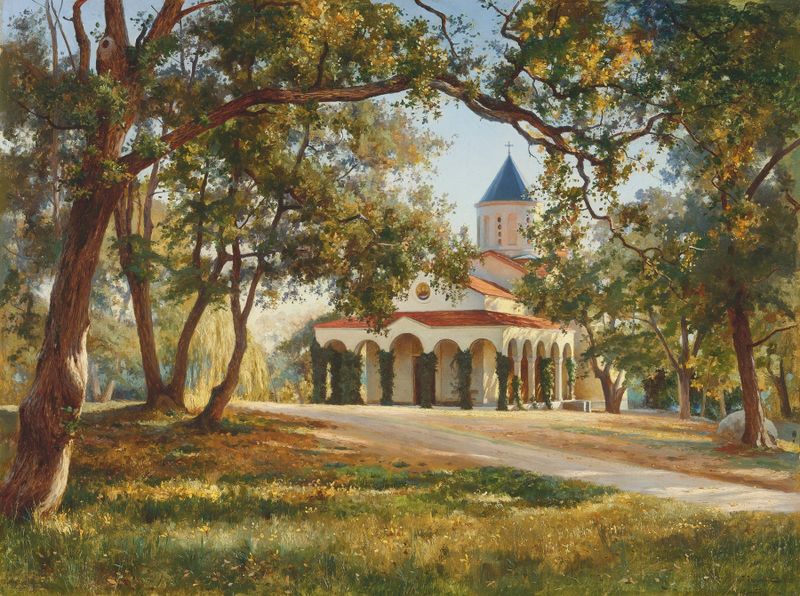
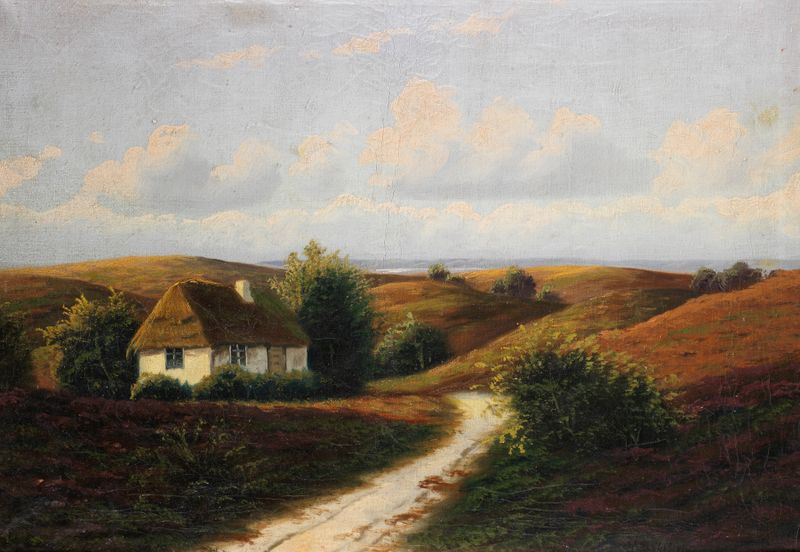
In the stillness of a late summer’s evening, the quiet whispers of nature can both ignite obsession and soothe the soul. Here, a landscape unfolds, inviting us to explore the delicate interplay of light, shadow, and the subtle hues that breathe life into the scene. Look to the lower left where the soft, golden grass catches the last rays of sunlight, each blade shimmering like a secret yet unspoken. Notice how the gentle brushstrokes create a gradient of blues and greens in the distant hills, a serene backdrop that contrasts sharply with the vibrant warmth at the foreground.
The artist skillfully uses a palette that transitions from warm golds to cool blues, evoking a sense of tranquility while simultaneously hinting at the inevitable shift of dusk. As you delve deeper, consider the emotional undertones woven into the fabric of the painting. The vibrant colors suggest an exuberance that masks an underlying melancholy, a fleeting moment on the edge of change. The juxtaposition of light and shadow speaks to a tension—perhaps a longing for what is transient.
This scene embodies not only the beauty of nature but also an obsessive yearning for moments that vanish as quickly as they appear. In 1888, Iosif Evstafevich Krachkovsky was capturing the essence of rural life in Ukraine during a period of national awakening. Living among the shifting landscapes and cultural renaissance, he harnessed his experiences to reflect both the beauty of his homeland and the complexities of human emotion. This painting emerged amidst a growing appreciation for Impressionism, as artists began to explore the poetry found in the mundane and the ephemeral, breathing new life into the visual arts.