Our Hill from Dumstown, Ohio — História e Análise
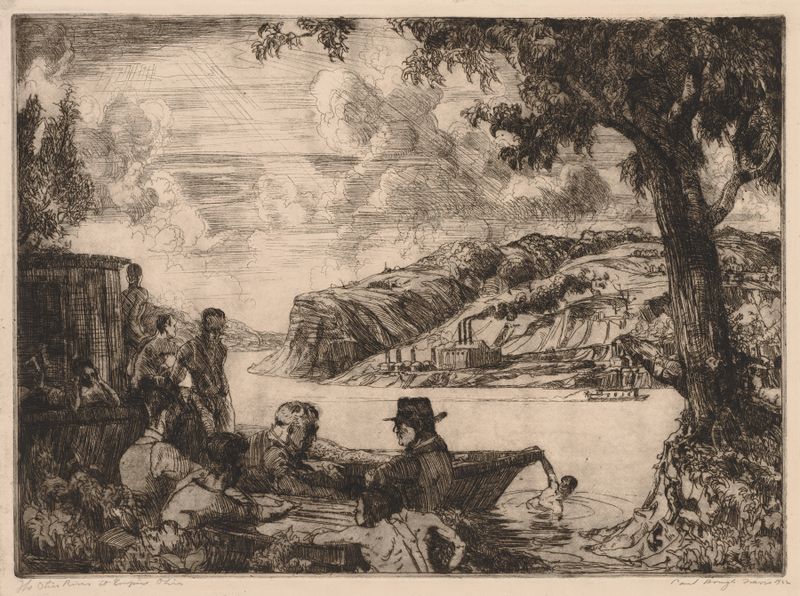
When did color learn to lie? The vibrant hues of our world's landscapes can evoke both awe and unease, challenging our perception of reality and inviting us into the sublime. Look to the foreground, where rich greens intertwine with the golden yellows of autumn foliage, creating a tapestry of life. Focus on the rolling hills that undulate in the background, kissed by the soft light of a setting sun, which casts long shadows and enhances the depth of the scene. The artist’s confident brushwork defines the contours of the land, while the interplay of warm and cool colors instills a feeling of both tranquility and restlessness, drawing the viewer deeper into the composition. Yet, under this seemingly pastoral exterior lies a contrast of tension.
The vibrant colors could suggest an idyllic rural scene, but they also mask the complexities of rural life in the early 20th century, hinting at the quiet struggles of the people who inhabit this landscape. The layering of the hills creates a sense of both separation and connection, echoing the emotional distance of those who look upon their surroundings with nostalgia and longing. In 1922, Paul B. Travis painted this work during a time of profound transition in America, as the country grappled with the effects of World War I and the rise of modernism in art.
Residing in Chicago, he sought to capture the essence of the American Midwest, reflecting both the beauty and the challenges of rural existence. As artists began to explore abstraction and new forms, Travis maintained a deep appreciation for landscape, grounding his art in the vivid realities of the world around him.