Painting — História e Análise
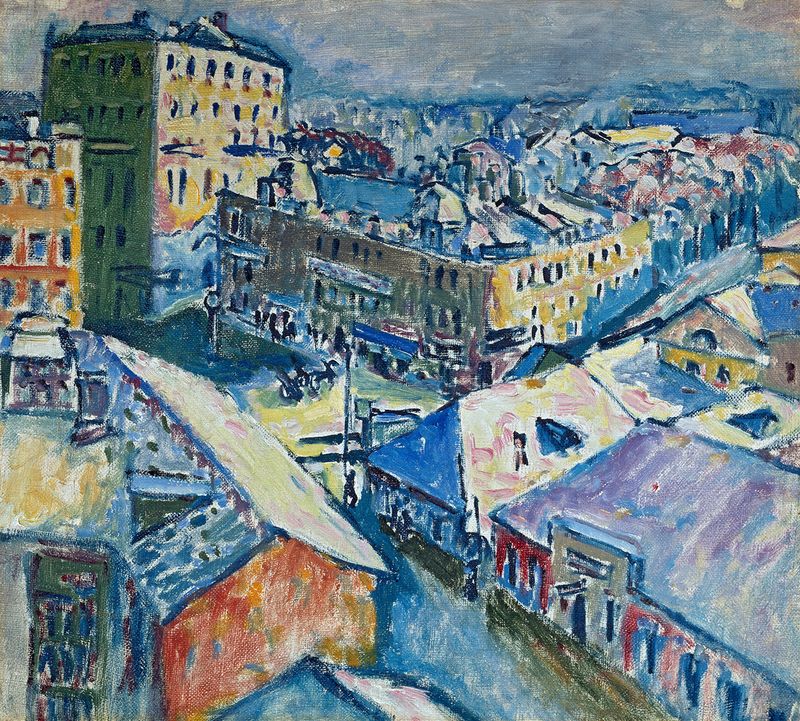
In the fragile fabric of existence, loss echoes like a haunting melody, resonating with the emptiness of what once was. Look closely at the vibrant canvas; your gaze is immediately drawn to the interplay of bold colors. Swathes of deep blues and earthy browns create a dynamic contrast that speaks to both turmoil and solace. Notice how the strokes are not merely applied but seem to throb with emotion, each line pulsating with the weight of remembrance.
The composition is at once chaotic and harmonious, guiding the viewer's eye through a labyrinth of memory and grief. Within this intricate tapestry, subtle details emerge: hints of familiar shapes that feel almost like ghosts from the past. The absence of defined form suggests what is missing, evoking a sense of yearning. The juxtaposition of vibrant colors against muted backgrounds reflects the struggle between presence and absence, as if Zaritsky is capturing the tension between life’s vivid moments and the shadows of loss that linger in their wake. In 1964, during a period of personal and artistic exploration, Yossef Zaritsky stood at a crossroads.
Living in Israel, he contributed to the burgeoning art scene, firmly establishing his voice amidst the vibrant currents of abstraction. The cultural landscape was rich and dynamic, yet Zaritsky’s work often delved into the complexities of memory and identity, reflecting both the personal and collective struggles of his time.