Parmelee Estate in Bloom — História e Análise
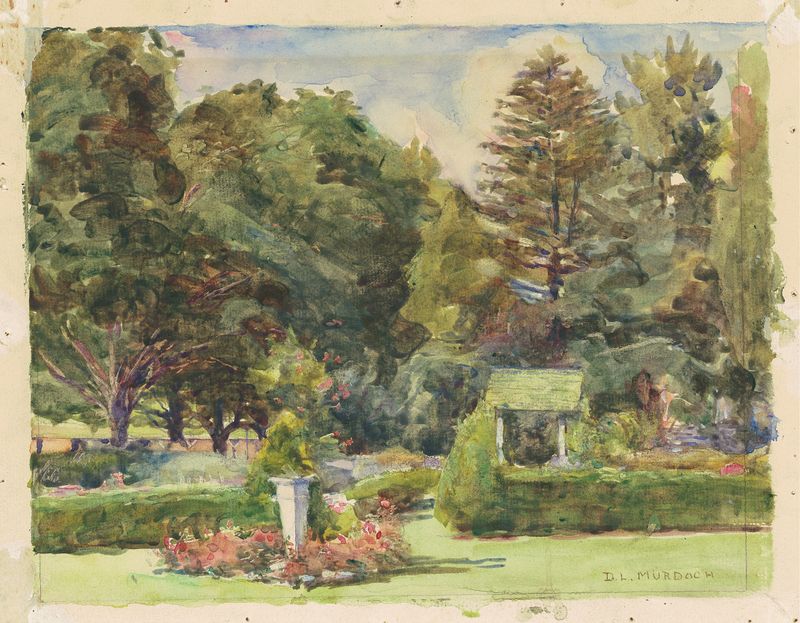
Can beauty exist without sorrow? In Parmelee Estate in Bloom, the ephemeral splendor of nature intertwines with the weight of memory, inviting contemplation on the complexity of our experiences. Look to the left, where vibrant blooms explode in a riot of color, each petal whispering tales of seasons past. The lush greens cradle the flowers, while dappled sunlight filters through the leaves, casting gentle shadows that dance over the ground. Murdoch’s delicate brushwork and carefully chosen palette convey a sense of both tranquility and vivid life, capturing the essence of a garden in full bloom. Beneath the surface vibrancy lies an emotional tension.
The soft, fleeting beauty of the flowers hints at the inevitability of decay and loss, evoking a poignant nostalgia for moments that have slipped away. Each bloom symbolizes a fleeting memory, contrasting the lively colors with an underlying sense of impermanence. The composition draws the viewer's eye through this garden of recollections, compelling us to reflect on our own experiences of beauty intertwined with sorrow. Dora Louise Murdoch painted this work around 1920, during a period marked by a growing fascination with nature in the arts and the rise of the American Impressionist movement.
At the time, she was establishing her voice amid a landscape of shifting artistic paradigms, seeking to capture the transient beauty of her surroundings while confronting the changing world outside her studio. The painting reflects her evolving style and emotional depth, resonating with contemporary art's exploration of personal and collective memory.