
Parthenon — História e Análise
Is this a mirror — or a memory? The Parthenon looms large, a haunting echo of grandeur and desolation, where the specter of violence intertwines seamlessly with the eternal beauty of the ancient world. Focus on the sharp angles and bold lines that define the structure. Look closely at the interplay of light and shadow; the sun casts a harsh brilliance on the smooth surfaces, while darker corners seem to cradle the weight of history. The palette, a mix of stark whites and muted earth tones, evokes both reverence and sorrow, urging the viewer to ponder the stories etched within its columns. Beneath the surface, the artwork reveals an uneasy juxtaposition.
The monument, often seen as a symbol of democracy and civilization, is subtly tainted by an undercurrent of conflict—each crack and weathered stone speaks of the violence that has shaped its existence. One can sense the tension between the idealized past and the harsh realities of construction and destruction, a reminder that beauty often exists alongside suffering. Lundy created this piece during a transformative period in American art, while he was living in New York in the late 1940s. This was a time marked by the aftermath of World War II, where the echoes of war reverberated in cultural expressions.
The influence of modernism was palpable, as artists sought to redefine space and structure; Lundy's architectural vision reflects both optimism and the scars left by conflict, encapsulating the duality of human experience.
Mais obras de Victor Alfred Lundy
Ver tudo →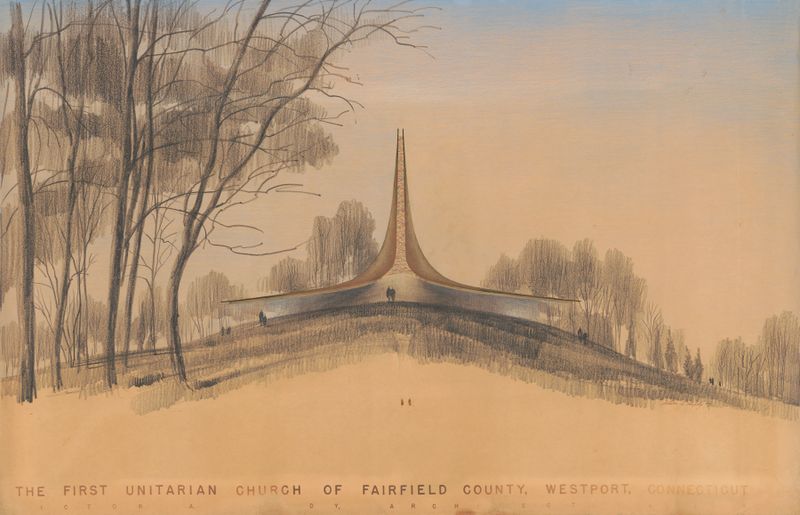
First Unitarian Church, Westport, Connecticut, Exterior
Victor Alfred Lundy

Residence for Mr. and Mrs. Ben Heller, East Hampton, Long Island, New York, Beach site
Victor Alfred Lundy
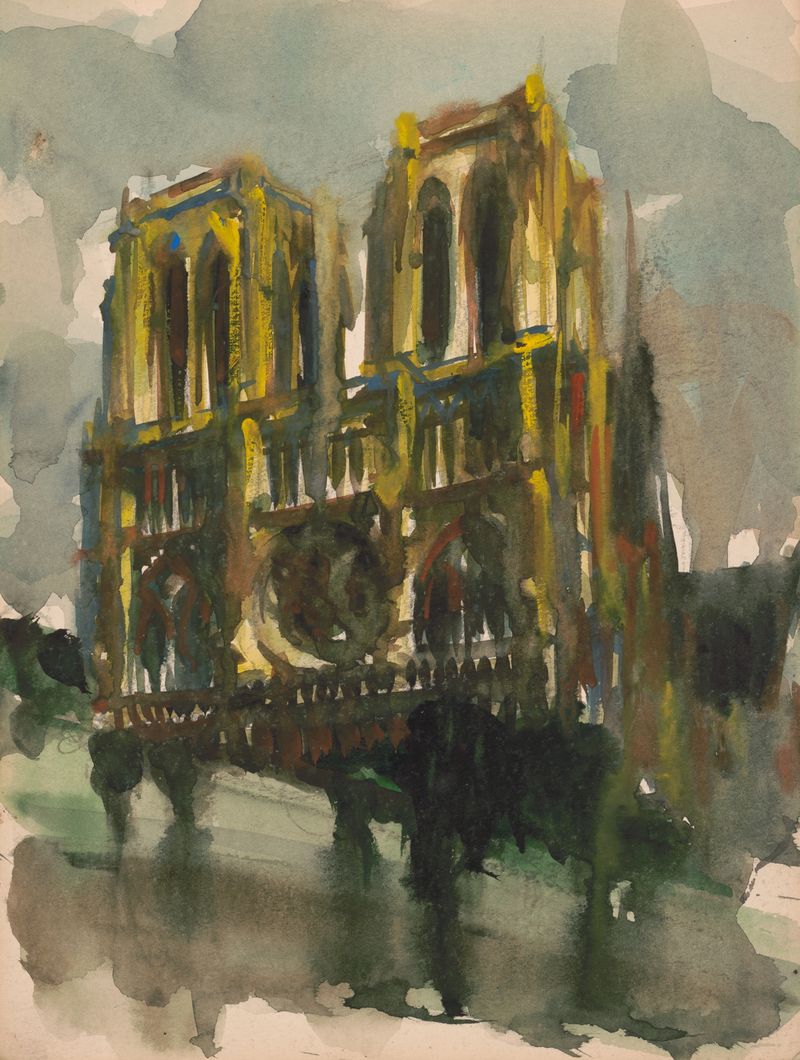
Notre Dame, Paris
Victor Alfred Lundy

Church on plaza, Mexico
Victor Alfred Lundy

Rue Saint Julien le Pauvre, Paris 5e
Victor Alfred Lundy
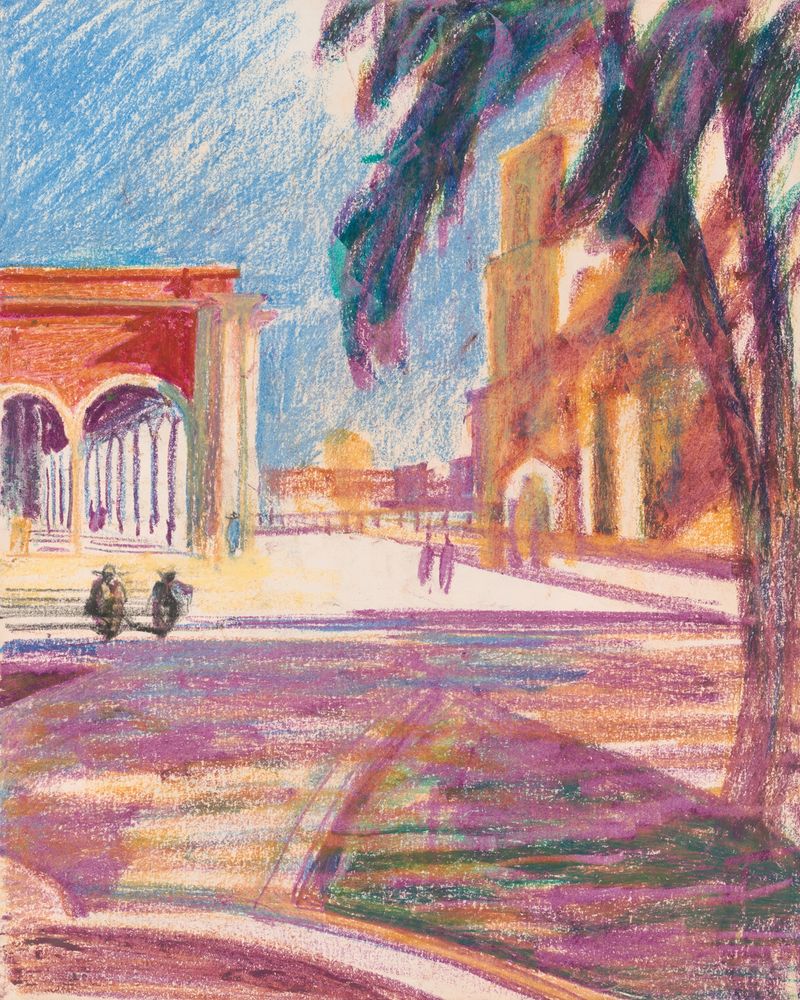
Plaza, Nochistlá́n, Mexico
Victor Alfred Lundy

Temple of Luxor
Victor Alfred Lundy

Trevi Fountain, Rome, Italy
Victor Alfred Lundy
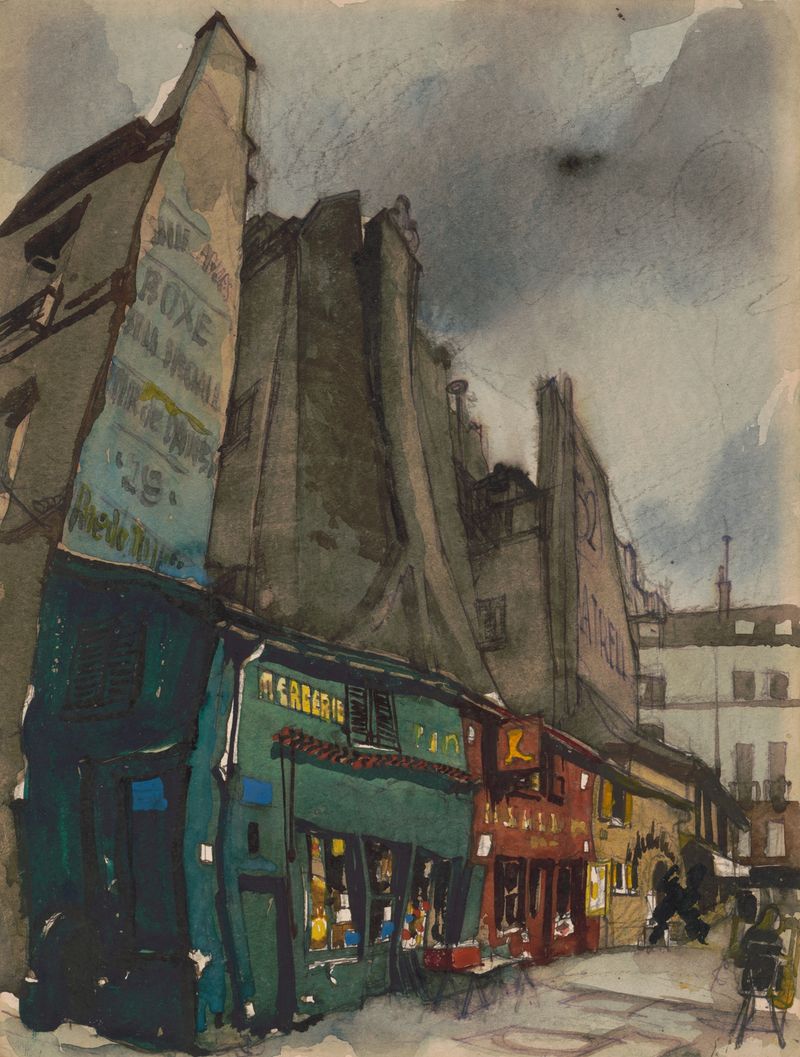
Place St. André des Arts, Paris between Rue Suger & Rue St. André des Arts
Victor Alfred Lundy
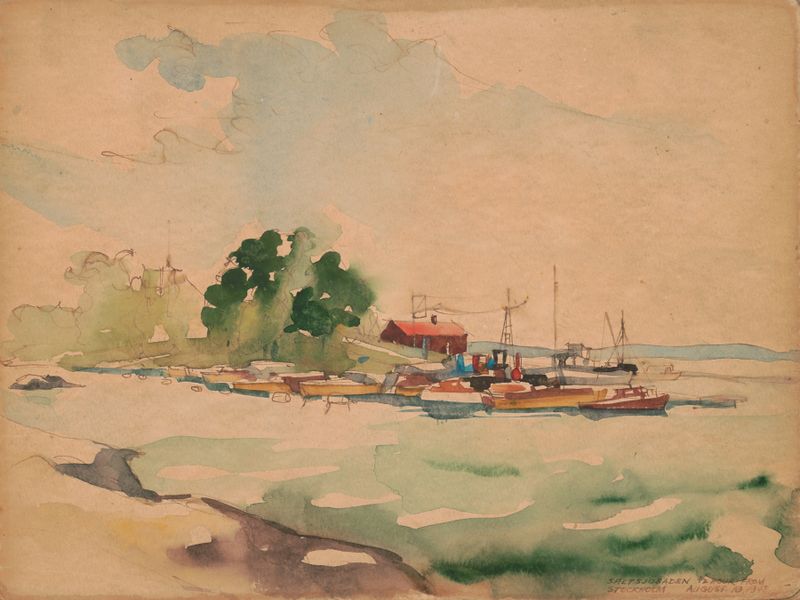
Saltsjöbaden, Half hour from Stockholm
Victor Alfred Lundy
Mais arte de Arquitetura
Ver tudo →
The statue of Liberty
Frédéric Auguste Bartholdi

View of Houses in Delft, Known as ‘The Little Street’
Johannes Vermeer

View of Houses in Delft, Known as ‘The Little Street’
Johannes Vermeer

The Cathedral in Rouen. The portal, Grey Weather
Claude Monet

The yellow house
Vincent van Gogh

The Church in Auvers-sur-Oise, View from the Chevet
Vincent van Gogh