Paysage — História e Análise
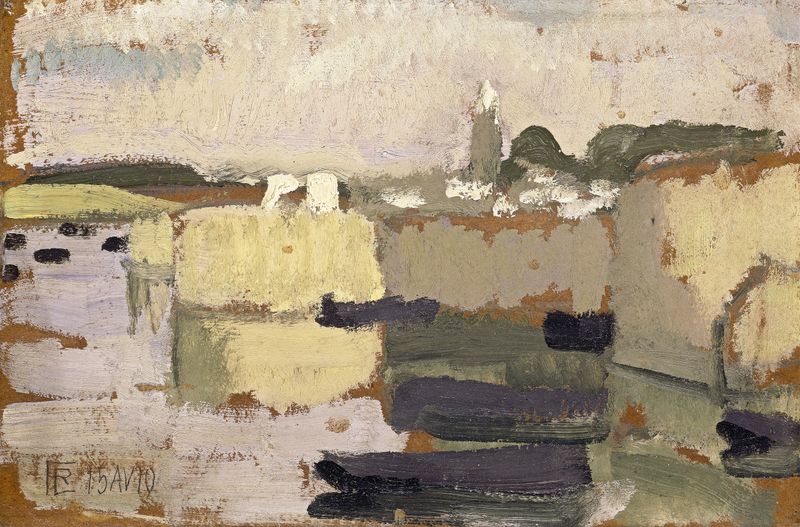
Can beauty exist without sorrow? In Paysage, a sense of nostalgia envelops the viewer, inviting contemplation of the interplay between joy and melancholy. Begin by looking to the left, where soft, rolling hills rise against a vivid sky, their colors blending in a harmonious dance. Notice how La Fresnaye plays with geometric shapes, breaking the landscape into a series of blocks that evoke both simplicity and complexity. The gentle brushwork in the foreground contrasts sharply with the bold strokes in the background, creating depth that draws the eye deeper into the scene.
The palette is rich yet subdued, with earthy greens and warm ochres that echo the seasons of change. The emotional tension in this work lies in its paradox: the tranquil beauty of the landscape juxtaposed with the structured forms that suggest confinement. This contrast speaks to the human experience, where moments of peace are often tinged with an underlying ache for what has been lost. Subtle details, like the distant figures barely visible against the horizon, evoke a sense of longing, whispering stories of lives intertwined with the land’s ever-present cycles. During the early 20th century, La Fresnaye painted this work amid a burgeoning modernist movement in France, as artists began to explore abstraction and new perspectives.
This period was marked by a departure from traditional forms and a questioning of reality itself. While not dated, Paysage reflects the artist’s desire to capture the essence of nature while navigating the complexities of contemporary life, embodying a pivotal moment in the evolution of art.