
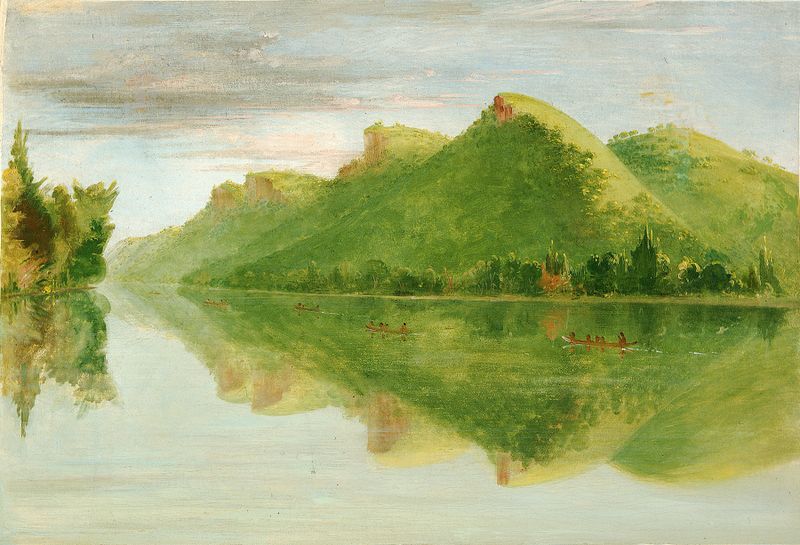
Picturesque Clay Bluff, 1700 Miles Above St. Louis — História e Análise
In the quiet embrace of nature, one can sense the pulse of life, a movement that transcends stillness. George Catlin's vision invites us to explore the nuanced dance between the tangible and the ethereal, revealing the layers of existence that await our discovery. Look to the foreground, where the earthy tones of the bluffs contrast with the vibrant greens of the surrounding foliage. The painter’s brush captures the rugged texture of clay, inviting your fingertips to trace the undulating lines that define the landscape.
Notice how the light plays delicately across the surface, illuminating the crevices and casting shadows that suggest both depth and history. The composition directs your gaze outward, creating a sense of vastness that is both inviting and introspective. Within this seemingly serene vista lies a tension between the permanence of the land and the transience of human experience. The bluffs stand resolute, a testament to time and resilience, while the fluidity of the river snakes below, embodying movement and change.
The juxtaposition of these elements prompts reflection on the passage of time and the intricate relationship between nature and humanity. Each color whispers a story, each shadow holds a secret, inviting viewers to question what lies beneath the surface. In 1832, Catlin created this work during his travels along the American frontier, seeking to document Native American culture and landscapes that were rapidly changing due to westward expansion. His artistic journey was fueled by a desire to preserve the authenticity of the land and its people amidst the encroaching tide of modernization.
This piece stands as both an homage to the natural world and a poignant reminder of the delicate balance between existence and erasure.
Mais obras de George Catlin
Ver tudo →
Wichita Lodge, Thatched With Prairie Grass
George Catlin

Ball-play of the Choctaw–Ball Up
George Catlin

Sioux Worshiping At The Red Boulders
George Catlin
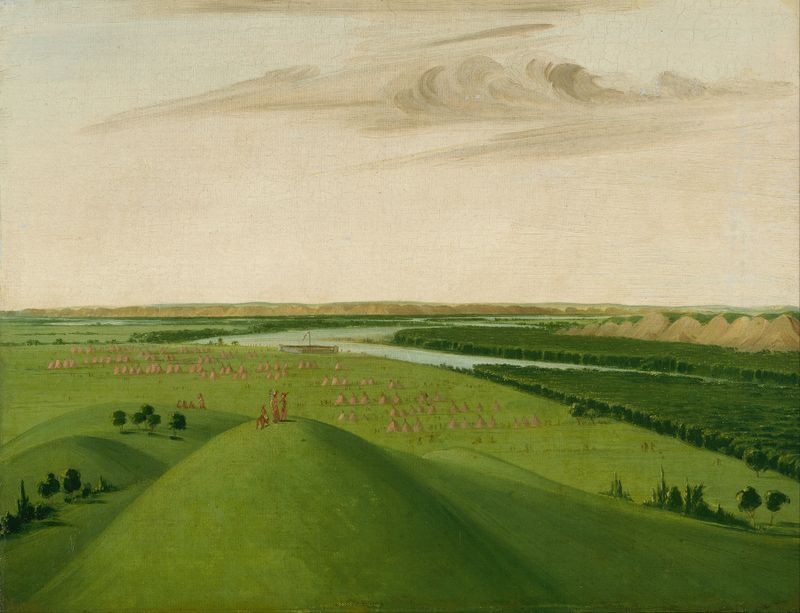
Fort Union, Mouth of the Yellowstone River, 2000 Miles above St. Louis
George Catlin
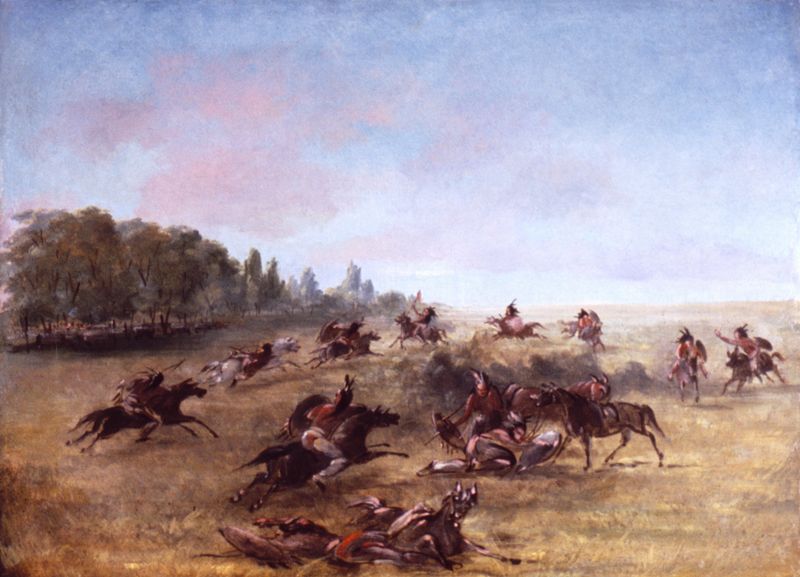
Mounted War Party Scouring A Thicket
George Catlin

Buffalo Chase, A Surround by the Hidatsa
George Catlin
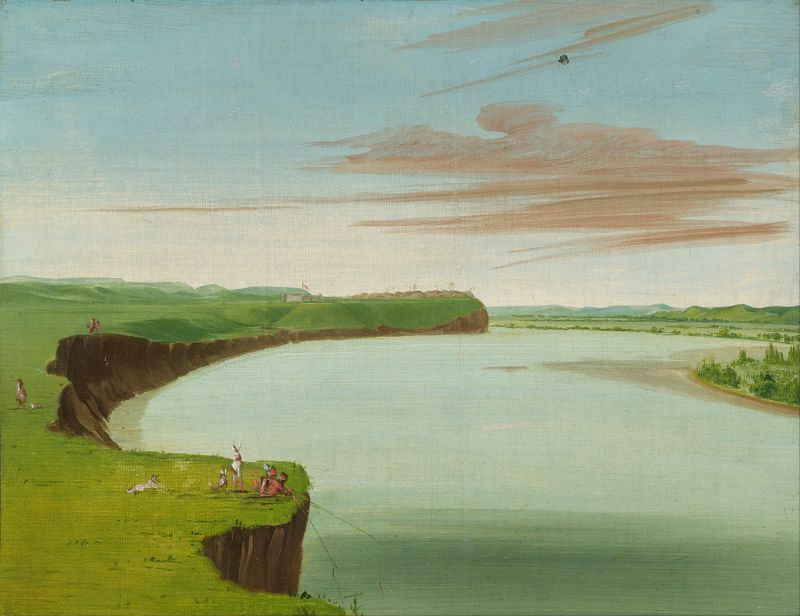
Distant View of the Mandan Village
George Catlin
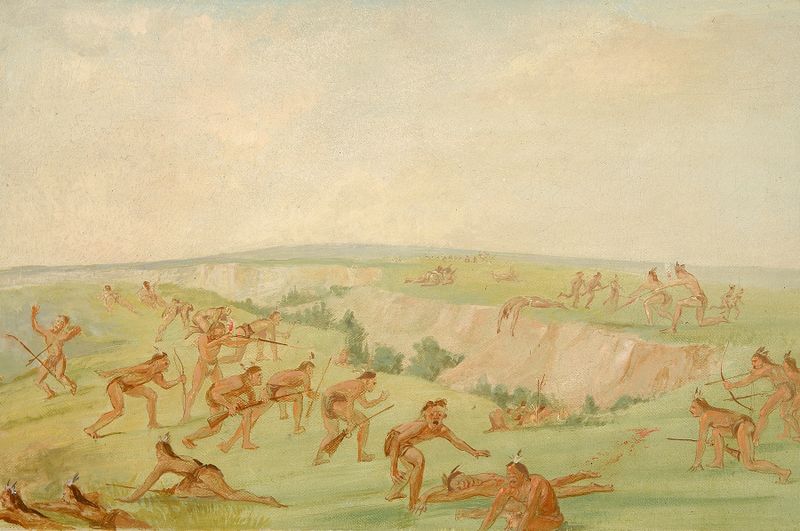
Mandan Attacking A Party Of Arikara
George Catlin
View On The Upper Mississippi, Beautiful Prairie Bluffs
George Catlin
Sac And Fox Sailing In Canoes
George Catlin





