
Radoub d’une barque à marée basse — História e Análise
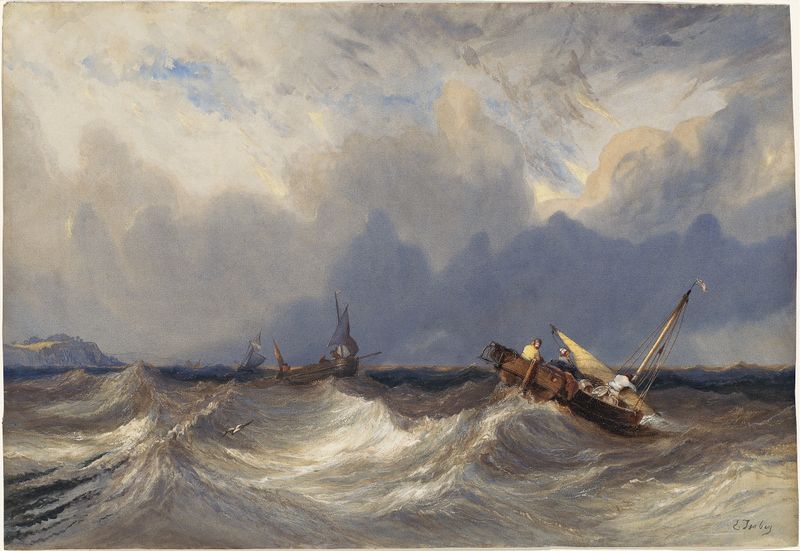
Can beauty exist without sorrow? In Eugène Isabey’s Radoub d’une barque à marée basse, the answer unfurls amidst the tranquil chaos of a quiet harbor, where the remnants of a busy day linger like whispers in the air. Begin your journey by focusing on the boat at the center, resting upon the mudflats, its hull weathered yet proud against the backdrop of a muted sky. Notice how the soft brushstrokes create a sense of warmth within the cool palette, drawing your gaze to the interplay of light and shadow. The delicate touch of golden sunlight highlights the edges of the vessel, while the surrounding stillness of the low tide paints an atmosphere of melancholy—a moment suspended between activity and abandonment. In the distance, a solitary figure kneels by the boat, evoking a story of care, labor, and perhaps a quiet resignation.
The juxtaposition of the vibrant boat and the desolate surroundings speaks to the tension between human endeavor and nature's indifference. Beneath the calm surface, currents of chaos ripple through—memories of the sea's fury and the laborious hands that coax life from it linger in every brushstroke. Painted in 1833, this piece reflects Isabey's deep engagement with the marine world, a passion shaped by his upbringing in coastal landscapes. At this time, the art world was experiencing a shift towards Romanticism, where the sublimity of nature eclipsed the strictures of Neoclassicism.
Isabey, while rooted in tradition, embraced the emotive qualities of his surroundings, capturing the intricate relationship between mankind and the unpredictable sea.
Mais obras de Eugène Isabey
Ver tudo →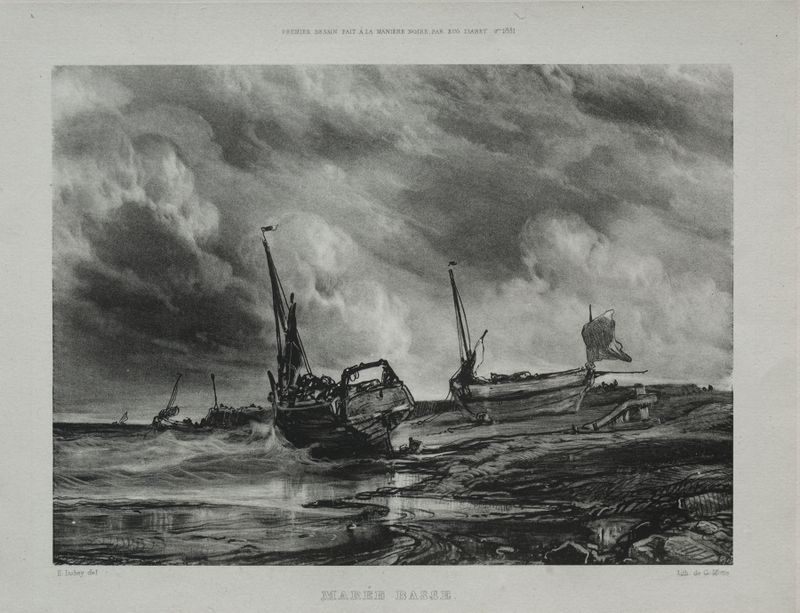
Marée basse
Eugène Isabey

Shipwreck
Eugène Isabey

Shipwreck
Eugène Isabey

The Wreck
Eugène Isabey
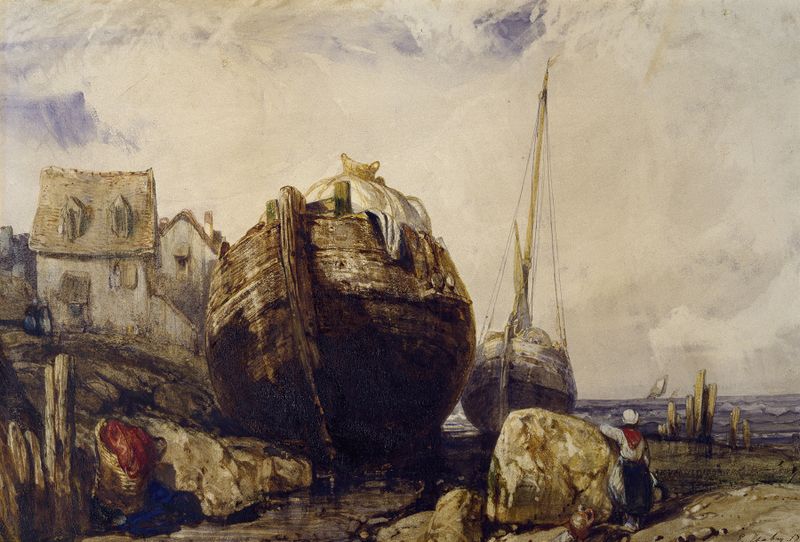
Fishing Boats
Eugène Isabey
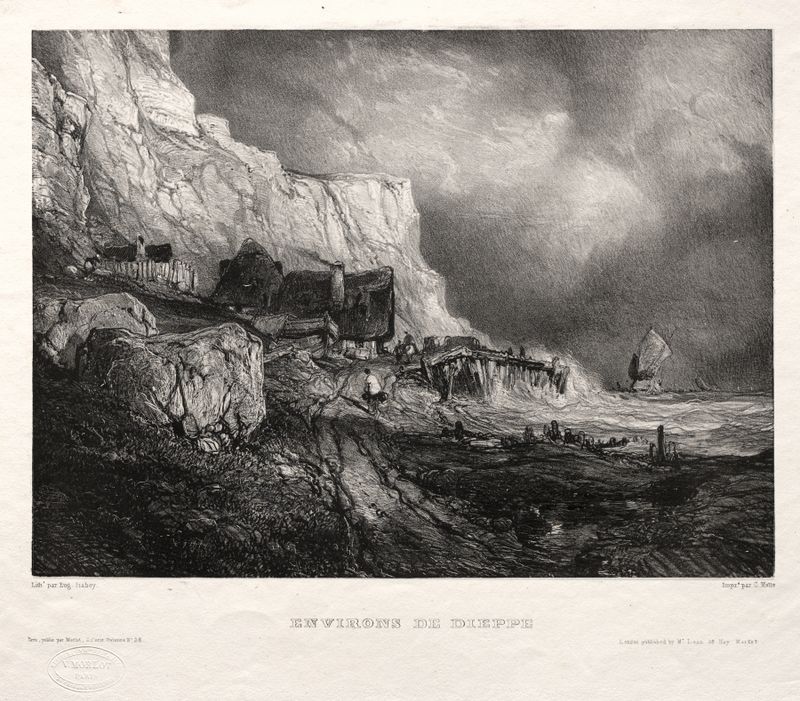
Environs de Dieppe
Eugène Isabey
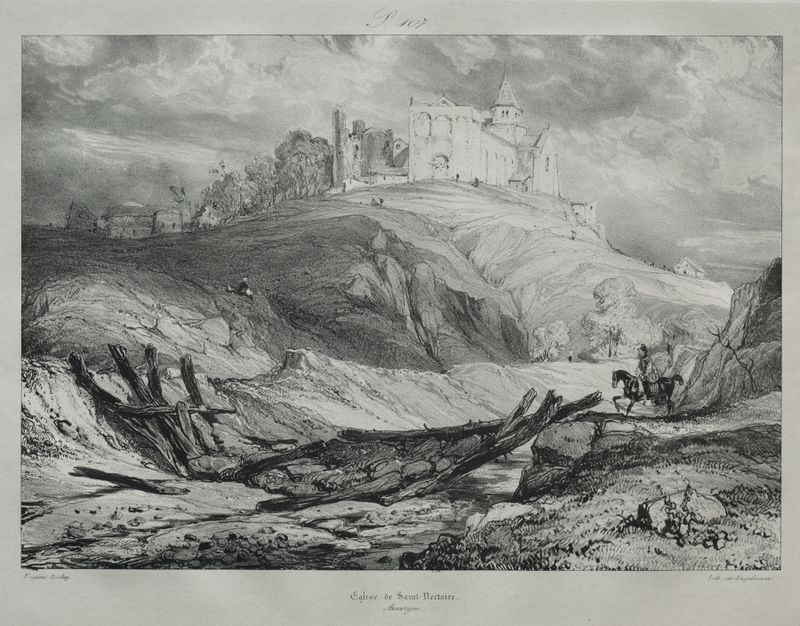
Église de St. Nectaire
Eugène Isabey

Fishing boat at the seaside
Eugène Isabey

Sunset on the Normandy Coast
Eugène Isabey
Fishing Boats Tossed before a Storm
Eugène Isabey





