River Landscape near St. Ives, Huntingdonshire — História e Análise
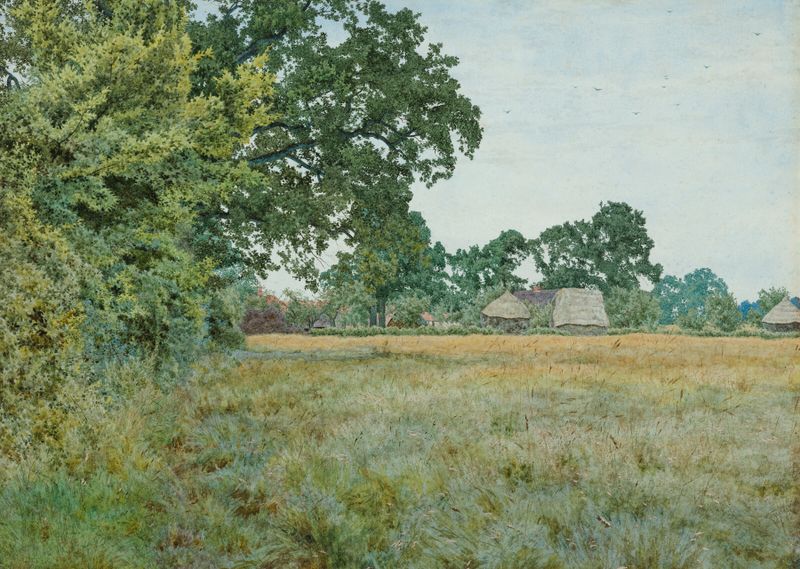
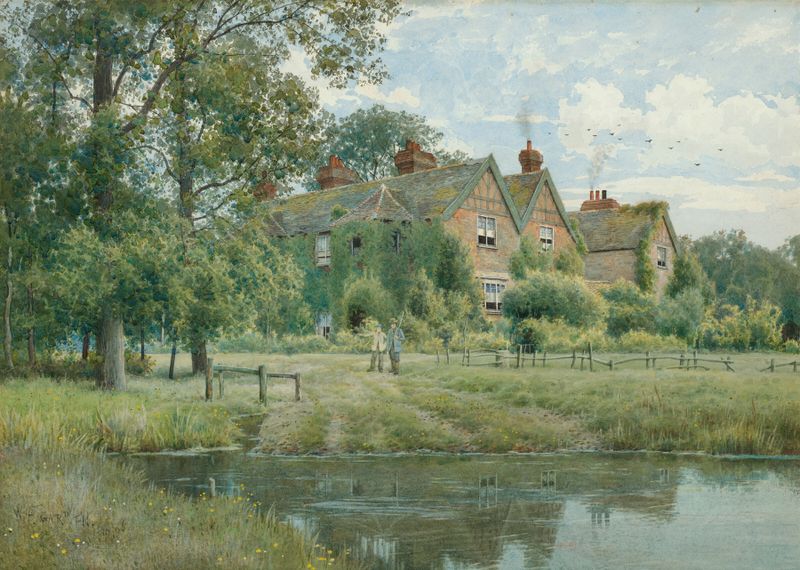
Could beauty survive in a century of chaos? In River Landscape near St. Ives, Huntingdonshire, serenity unfurls like a whisper against the backdrop of a tumultuous world. Look to the left at the gently flowing river, its silken surface mirroring the soft clouds above. The artist employs a delicate palette of greens and blues, evoking a sense of tranquility that invites the viewer to pause and breathe.
Notice how the vibrant foliage frames the scene, leading the eye toward the distant hills, painted with a light touch that suggests the ephemeral nature of innocence. Every stroke captures the undisturbed essence of nature, untainted by time's relentless march. The juxtaposition of light and shadow reveals deeper tensions within the landscape. The dappled sunlight filtering through the trees suggests moments of clarity amidst uncertainty, while the quiet river embodies a sense of continuity, as if to remind us of life’s gentle currents.
Hidden within the brushwork is a reflection on the passing of time—the lush greenery speaks of vitality, yet hints at the inevitable decline of innocence as the century wears on, echoing the struggles of the human spirit. In 1897, William Fraser Garden created this piece in a period marked by rapid industrialization and societal upheaval. At that time, he was immersed in the English countryside, seeking solace from the chaos of urban life. The Impressionist influences of the era, coupled with his keen observation of natural beauty, shaped his vision as he sought to immortalize fleeting moments of peace in an age defined by conflict and change.