Rivierlandschap — História e Análise
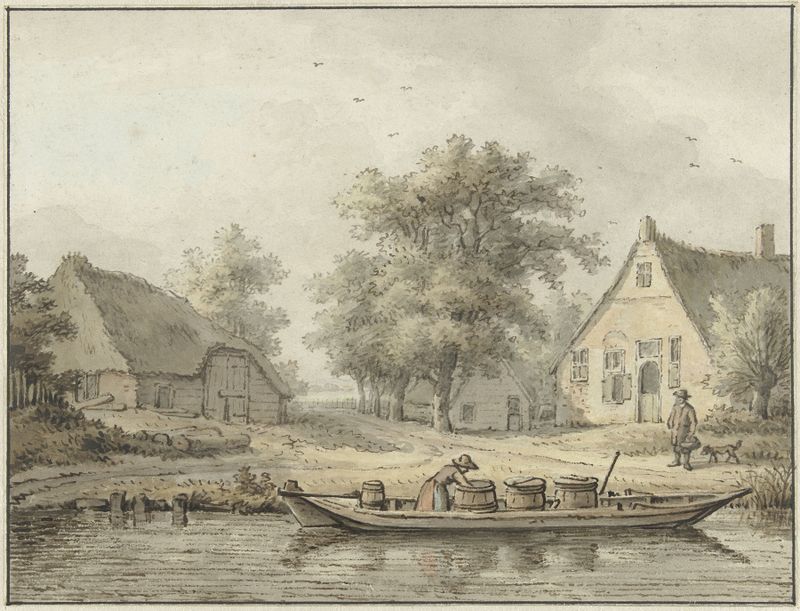
Can beauty exist without sorrow? Cornelis Buys invites us to ponder this question through Rivierlandschap, a work suffused with a tranquil yet poignant allure that speaks to the heart. Look to the foreground, where a gentle river meanders lazily, its surface shimmering under the warm embrace of sunlight. The artist masterfully employs a palette of soft greens and blues, evoking a sense of harmony in nature. As your gaze travels towards the horizon, notice the delicate interplay of light and shadow, where wisps of clouds caress the sky, hinting at the fragility of this idyllic moment.
Each brushstroke creates a serene atmosphere that seems to whisper secrets of joy intertwined with melancholy. Yet, within this pastoral beauty lies a subtle tension. The river, a symbol of life's journey, flows steadily, suggesting the passage of time and the inevitability of change. The distant hills, while picturesque, loom with an air of uncertainty, reflecting the human experience of longing and loss.
The interplay of light and shadow serves not only to highlight the landscape's splendor but also to remind us of the transient nature of happiness, where moments of ecstasy are often tinged with the awareness of sorrow. Created during the mid-18th century, Rivierlandschap emerged from a period when Buys was exploring the shifting tides of Romanticism in art. He painted this piece in the Netherlands, a time marked by an increasing appreciation for landscapes that captured emotional depth. As the world began to embrace nature’s beauty, Buys was at the forefront, bridging aesthetic pleasure with introspection, reflecting the complex emotions that beauty can evoke.