
Rocks in the Forest of Fontainebleau — História e Análise
Can beauty exist without sorrow? In the quiet depths of the forest, where nature reigns supreme, melancholy weaves itself through the vibrant hues and soft shadows. Look to the center of the canvas, where a cluster of imposing rocks stands resolute, partially shrouded by the gentle embrace of verdant foliage. Notice how the light filters through the leaves, casting dappled patterns on the rocky surfaces, illuminating the textures that pulse with life yet hint at the passage of time. The brushwork is loose and fluid, inviting the viewer to explore the interplay of color and form, while the palette balances rich greens and earthy browns, evoking a sense of both serenity and introspection. At first glance, the composition offers a tranquil scene, yet beneath the surface lies a tension between permanence and transience.
The rocks symbolize resilience amidst decay, a reminder that beauty often coexists with an undercurrent of sorrow. Subtle details, like the fallen leaves that carpet the ground, suggest the inevitability of change and the bittersweet nature of existence. This juxtaposition resonates deeply, prompting reflections on the transient moments that punctuate our lives, even in nature’s splendor. Created between 1860 and 1865, this work emerged during a pivotal time in Corot's career, when he was exploring plein air techniques that captured the essence of landscapes.
Living in France, he was influenced by the shift towards Impressionism, yet he remained rooted in the Romantic sensibility. This painting reflects his mastery of light and atmosphere, as well as the emotional depth that defined his artistic voice during a period of significant change in the art world.
Mais obras de Jean-Baptiste-Camille Corot
Ver tudo →
View of Genoa
Jean-Baptiste-Camille Corot
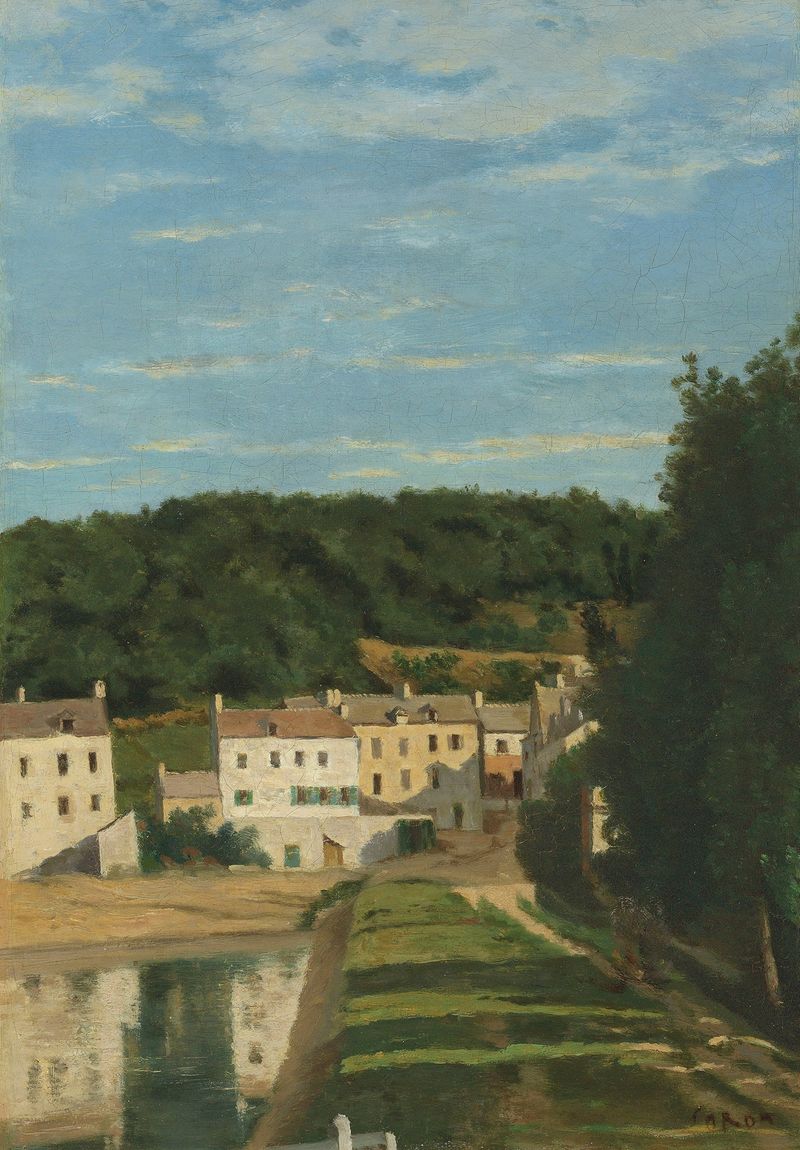
Les Maisons Cabassud À Ville D’avray
Jean-Baptiste-Camille Corot

La solitude. Souvenir de Vigen (Limousin)
Jean-Baptiste-Camille Corot
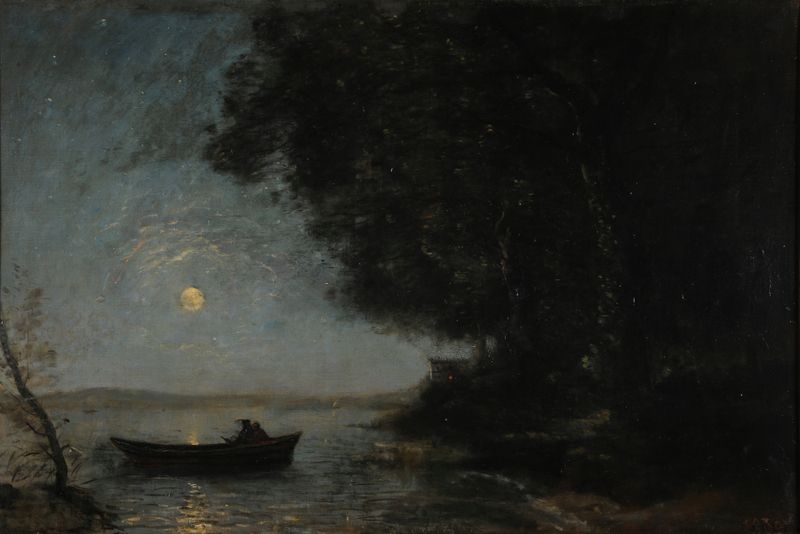
Le lac ; effet de nuit
Jean-Baptiste-Camille Corot
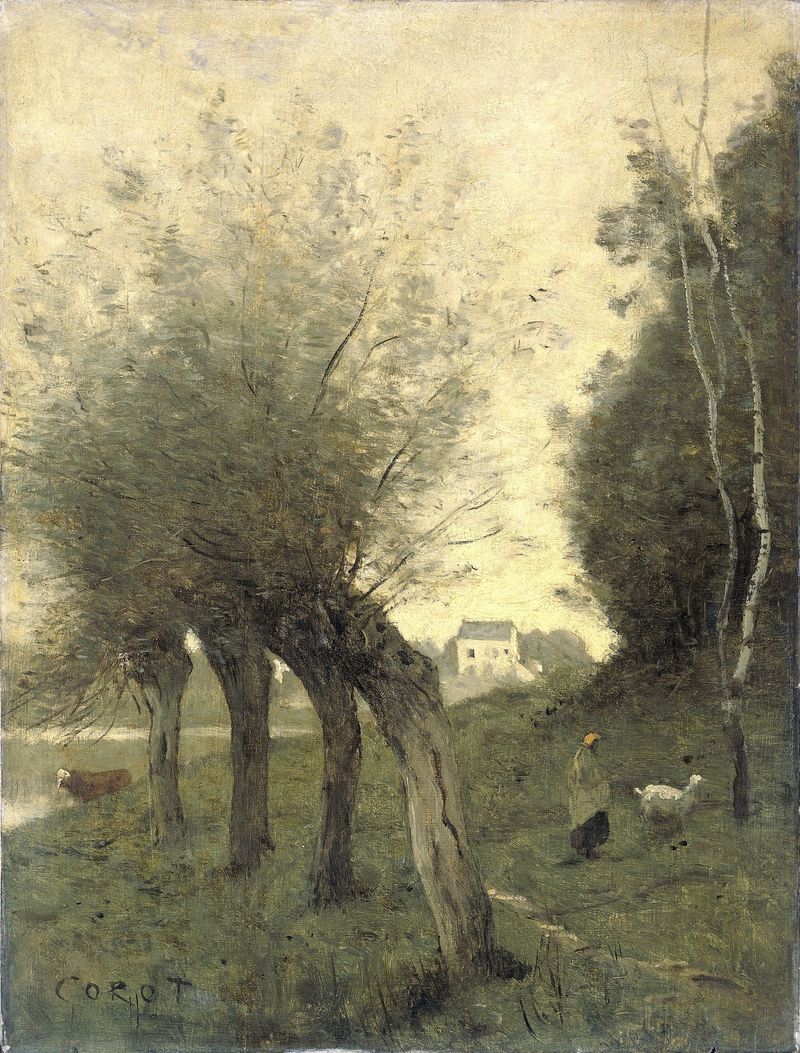
Landscape with Pollard Willows
Jean-Baptiste-Camille Corot
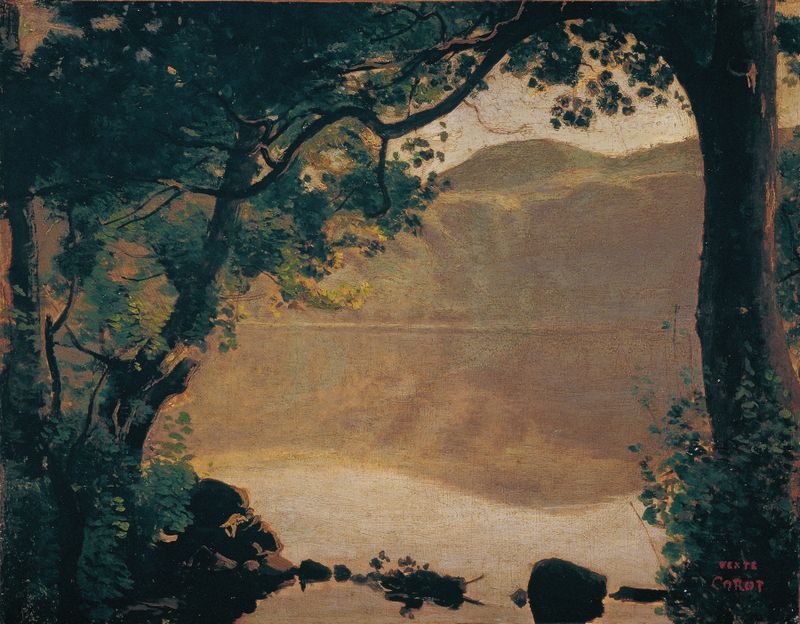
Der Nemisee
Jean-Baptiste-Camille Corot
Les Étangs De Ville D’avray
Jean-Baptiste-Camille Corot
Pond in the Woods
Jean-Baptiste-Camille Corot
Ville D’avray; L’abreuvoir Des Chevaux
Jean-Baptiste-Camille Corot
Le vallon au cavalier
Jean-Baptiste-Camille Corot





