
Rue de Bretagne, en 1908. 3ème arrondissement — História e Análise
What if silence could speak through light? In Rue de Bretagne, en 1908. 3ème arrondissement, the gentle interplay of shadows and radiance invites viewers to listen closely to the whispers of a bygone era. Look to the left, where warm sunlight bathes the cobblestones in golden hues, revealing a textured surface alive with stories. The narrow street stretches into the distance, flanked by charming façades painted in soft pastels.
Notice how the interplay of light and shadow creates a rhythm, drawing your eye from the lively market scene that unfolds just beyond the frame to the quiet corners where time seems to stand still. The artist’s meticulous brushwork captures not just the physical forms but also the very essence of the moment. Amidst the bustle, one perceives a contrast between the vibrancy of daily life and the subtle stillness that lingers in the air. The figures, though engaged in their activities, seem suspended in time, reflecting the tension between movement and pause.
The light itself, warm yet fleeting, conveys a sense of nostalgia, as if it yearns to hold on to the fleeting moments of joy and routine that define the fabric of this Parisian street. Frédéric Houbron painted this scene in 1908 while residing in Paris, an era marked by the rise of modernism and the changing dynamics of urban life. At this time, artists were exploring new techniques, and Houbron was drawn to capturing everyday moments through a lens of light and color. The world was transitioning rapidly, and his work reflects both the vibrancy and the timelessness of a city at the dawn of the 20th century.
Mais obras de Frédéric Houbron
Ver tudo →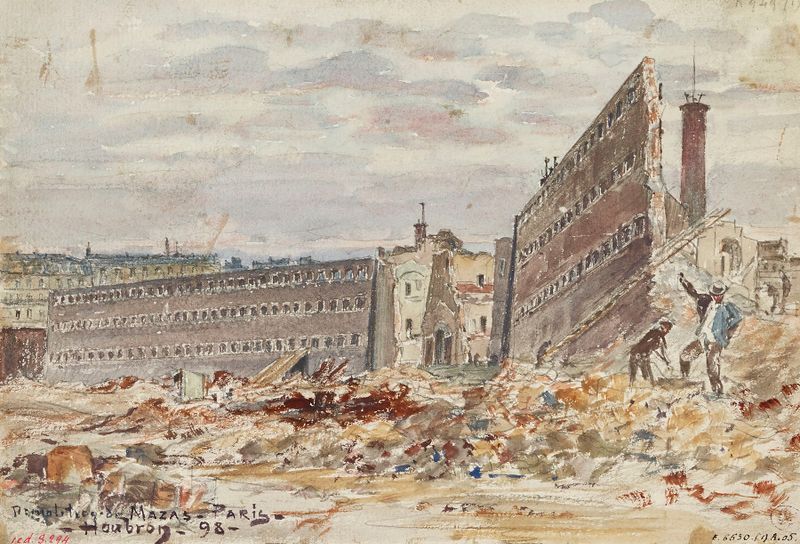
Démolition de la prison Mazas, 23, 25 boulevard Diderot (ancien boulevard Mazas)
Frédéric Houbron
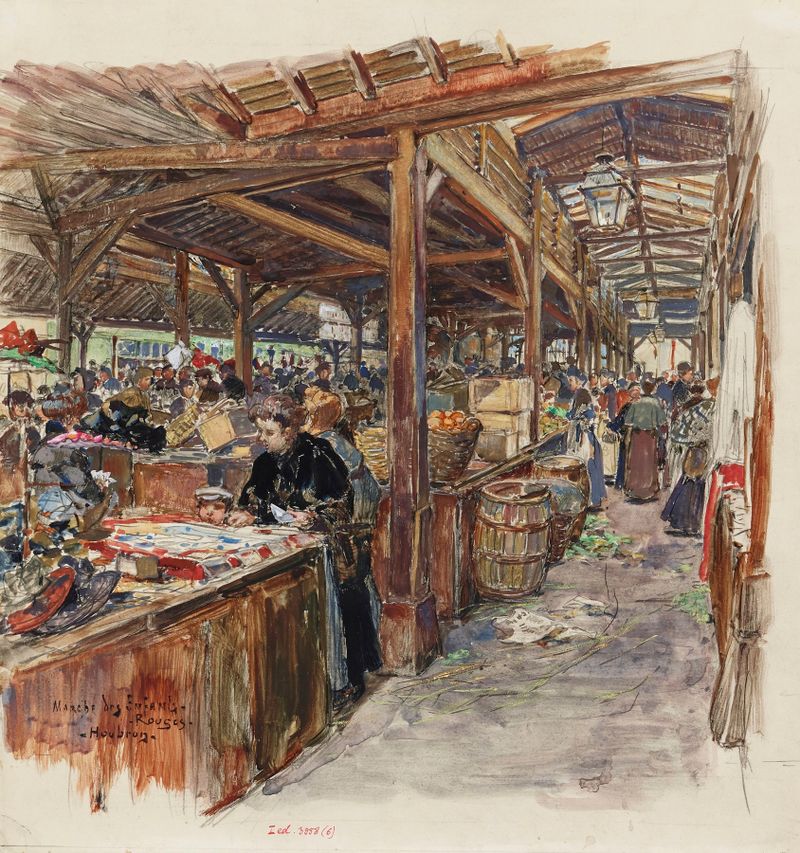
Intérieur du Marché des Enfants Rouges. 3ème arrondissement
Frédéric Houbron
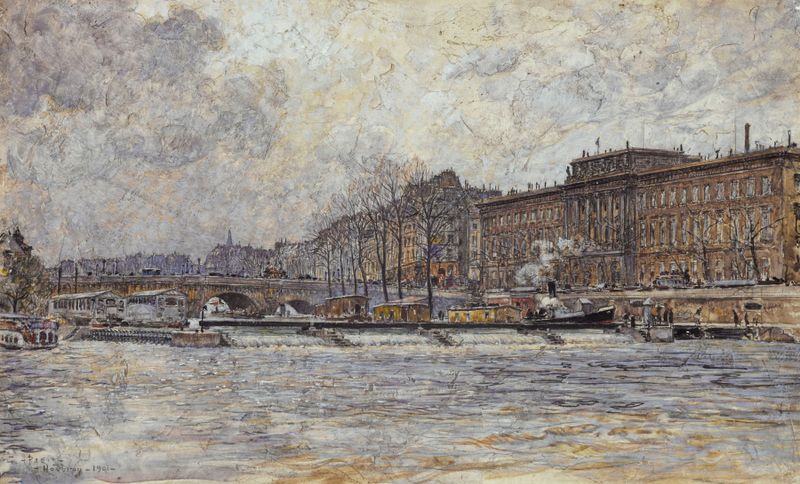
L’Hôtel de la Monnaie et le Pont-Neuf
Frédéric Houbron

Quai des Orfèvres. Paris. 1906
Frédéric Houbron
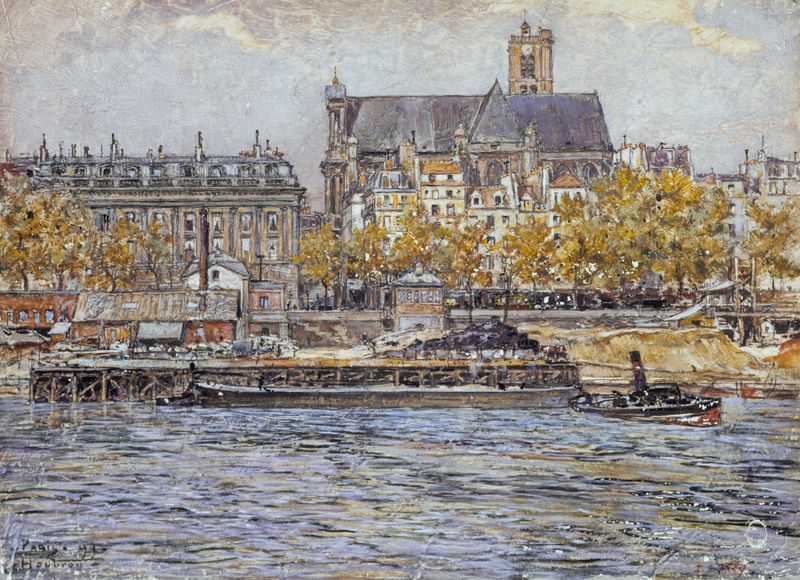
Le quai de l’Hôtel-de-Ville et l’église Saint-Gervais-Saint-Protais
Frédéric Houbron
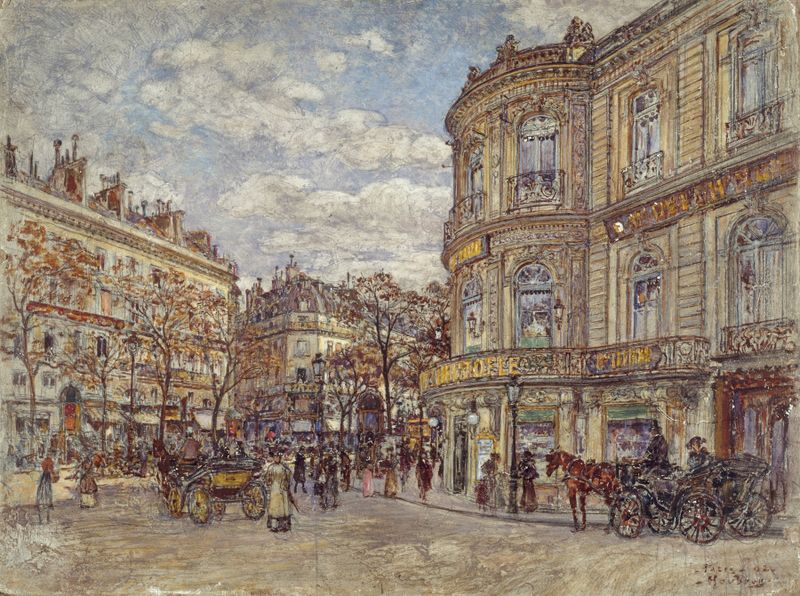
Le Pavillon de Hanovre, rue Louis-le-Grand
Frédéric Houbron

La rue du Chevalier-de-la-Barre, avec le Sacré-Cœur en construction
Frédéric Houbron
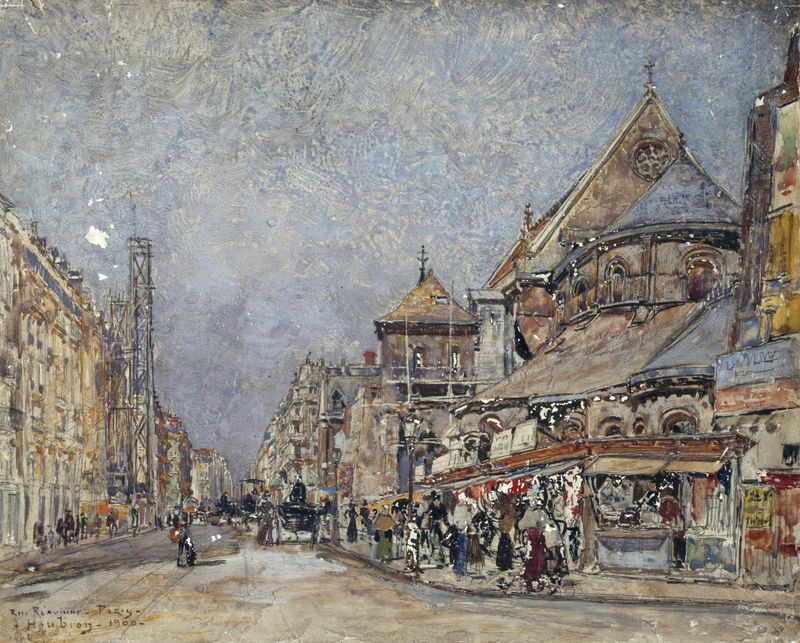
La rue Réaumur et le chevet de l’église Saint-Martin-des-Champs
Frédéric Houbron
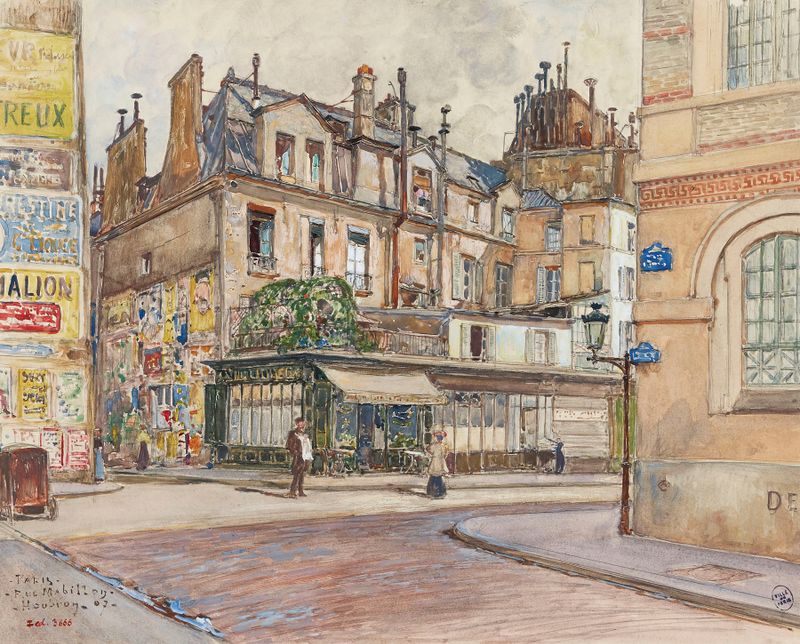
Angle rue Mabillon et rue Clément, en 1907. 5ème et 6ème arrondissements
Frédéric Houbron
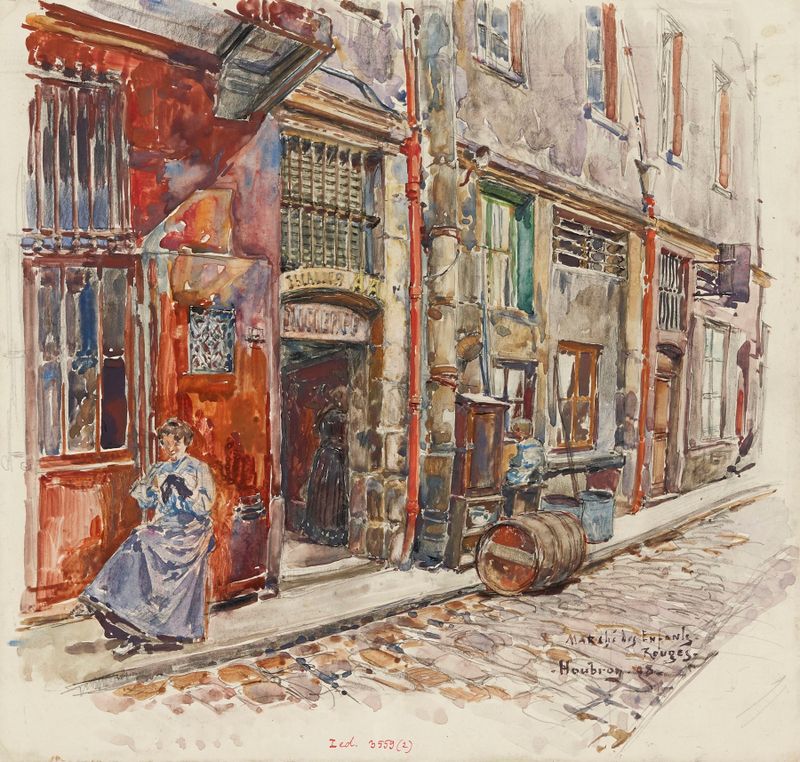
Entrée escalier A du Marché des Enfants-Rouges, en 1908. 3ème arrondissement
Frédéric Houbron





