Saaremaa rannamaastik — História e Análise
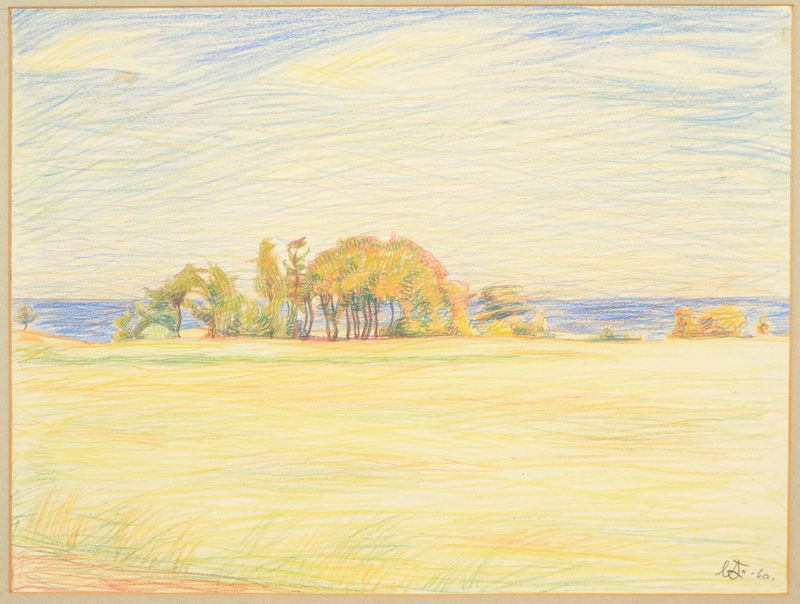
Can paint confess what words never could? In Saaremaa rannamaastik, the brush captures a desolate shoreline, where nature and time converge in a dialogue of decay and resilience. Look to the center of the canvas, where waves gently lap at the weathered rocks, their surface marked with scars of age. The muted palette of grays and earth tones suggests a fading world, while hints of green echo the tenacity of life pushing through decay. Notice how the light filters through the clouds, casting an ethereal glow on the water, transforming the seemingly lifeless into a space that breathes with quiet strength and melancholic beauty. Within the composition lies a poignant contrast between the vibrant life of the sea and the crumbling ruins of the rocks, emblematic of the passage of time.
The artist invites contemplation—what was once a thriving ecosystem is now a place of quiet surrender. Each brushstroke echoes the intimacy of memory, portraying not just a landscape but a profound reflection on existence itself. The soft blending of colors evokes a sense of nostalgia, reminding us that decay is as much a part of beauty as life itself. Nikolai Triik created this piece during the early 20th century, a time when the Estonian art scene was grappling with national identity and the effects of rapid modernization.
Working primarily in Estonia, he sought to connect with the natural world around him, drawing inspiration from the landscapes of his homeland. This period marked a shift toward a more personal and expressive style, as artists like him began to emphasize emotional resonance over strict realism.