Seascape — História e Análise
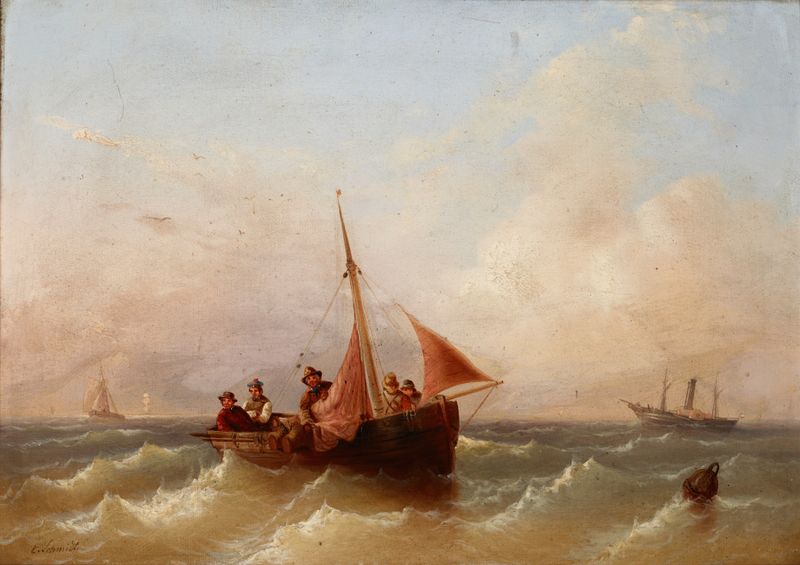
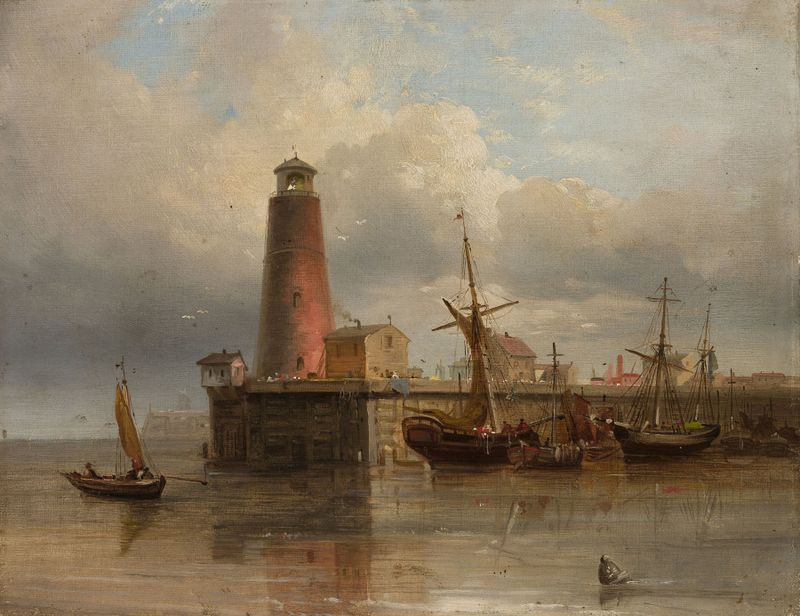
What secret hides in the quiet of the canvas? The answer lies in the gentle undulation of waves, a promise whispered through the hues of blue and green, beckoning us to listen. Look to the horizon, where the sky melts into the sea, an exquisite gradient that draws the eye across the canvas. Notice how the brushwork conveys movement; the swirling strokes become the very essence of water, each wave captured mid-gesture, alive with a rhythmic pulse. The sunlight dances upon the surface, creating shimmering reflections that suggest both serenity and the potential for storm. In this tranquil seascape, contrasts emerge — the calmness of the water juxtaposed with the imminent vitality of the horizon.
The artist skillfully balances light and shadow, evoking a sense of anticipation. Each wave carries whispers of hope, hinting at stories untold beneath the surface, while the vastness of the sky invites contemplation, reflecting both freedom and the unknown. Eduard Schmidt painted Seascape in the 19th century, during a time when Romanticism was shaping artistic expression. This period was marked by a heightened appreciation of nature, driven by both the industrial advancements of the era and an increasing desire for introspection.
Schmidt, influenced by these currents, sought to capture the emotional resonance of the sea, emphasizing its beauty and mystery amidst a rapidly changing world.