Shipwreck — História e Análise
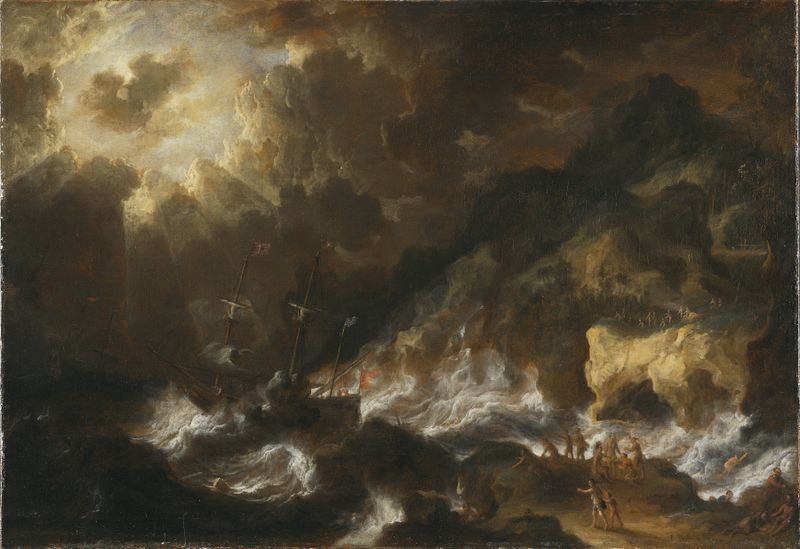
What happens when yearning meets chaos amidst the unrelenting sea? In the face of catastrophe, can we find solace in the tumult? Look to the foreground of Shipwreck, where the scattered wreckage emerges from a tempestuous swirl of deep blues and grays. The ship's splintered hull and tattered sails lie in disarray, a stark contrast to the looming, swirling clouds above. Notice the figures struggling against the tide, their postures conveying desperation, while glimmers of sunlight pierce through the turbulence, hinting at the possibility of rescue.
The artist's deft brushwork captures the violent motion of the waves, each stroke alive with energy, yet also evoking a haunting stillness in the faces of those clinging to hope. Delve deeper into the emotional tapestry woven into the piece. The juxtaposition of vibrant colors against a backdrop of despair amplifies the yearning for safety and security, emphasizing the precarious balance between life and death. The shipwreck is not merely an event but a metaphor for the human condition—a reminder of our vulnerabilities amidst nature’s raw power.
Tiny details, like the expressions of anguish and resolve on the figures' faces, reveal an underlying narrative of survival, resonating with anyone who has faced adversity. In 1692, Peter van de Velde painted Shipwreck during a period that found Europe grappling with the aftermath of exploration and maritime trade. Based in the Netherlands, van de Velde was influenced by the turbulent seas and the tales of sailors—adventures filled with both triumph and disaster. The chaos and beauty of the natural world around him fed his artistic vision, creating a poignant commentary on human resilience against the forces of nature.