Shūbi gakan, Pl.17 — História e Análise
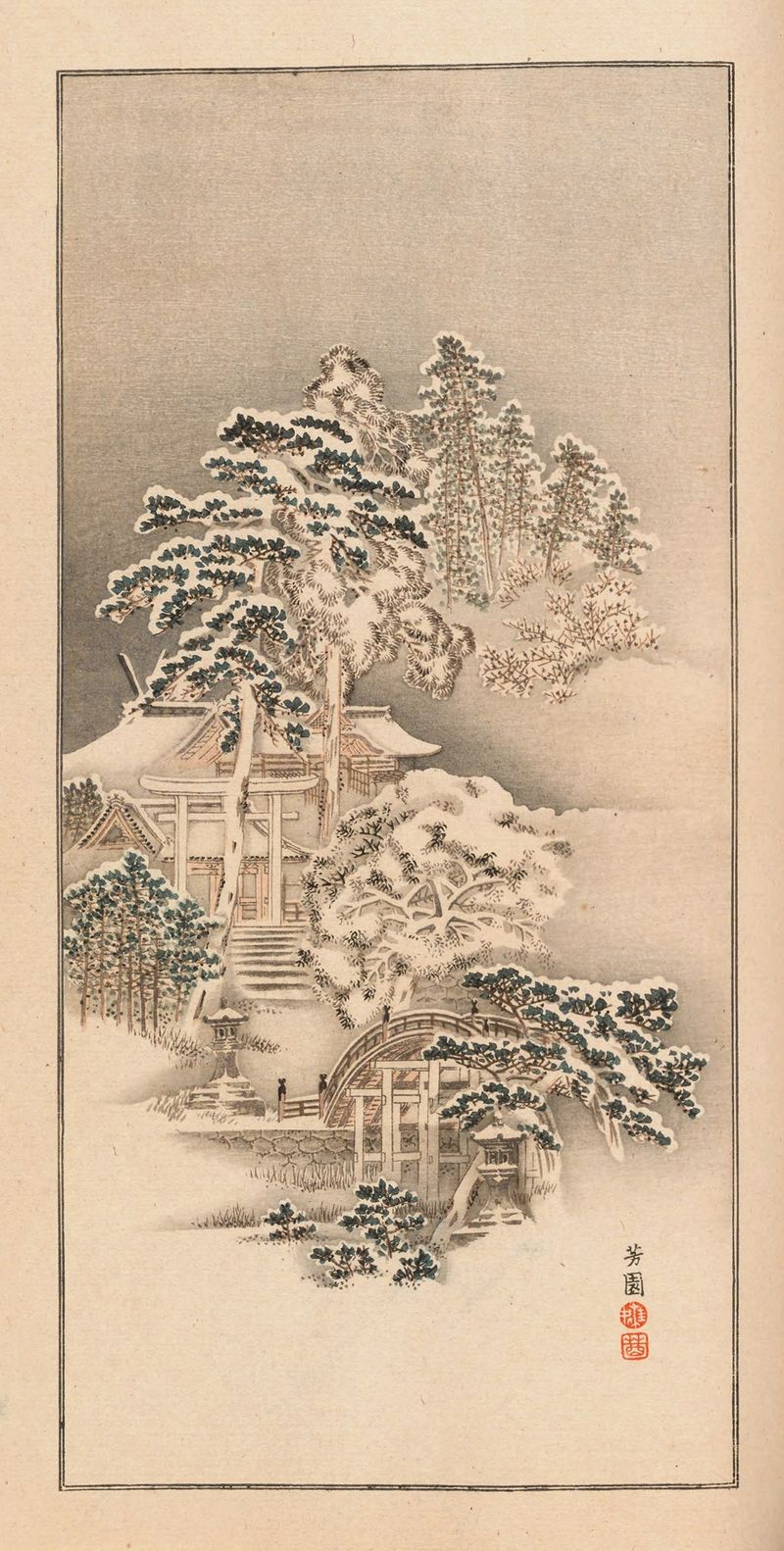
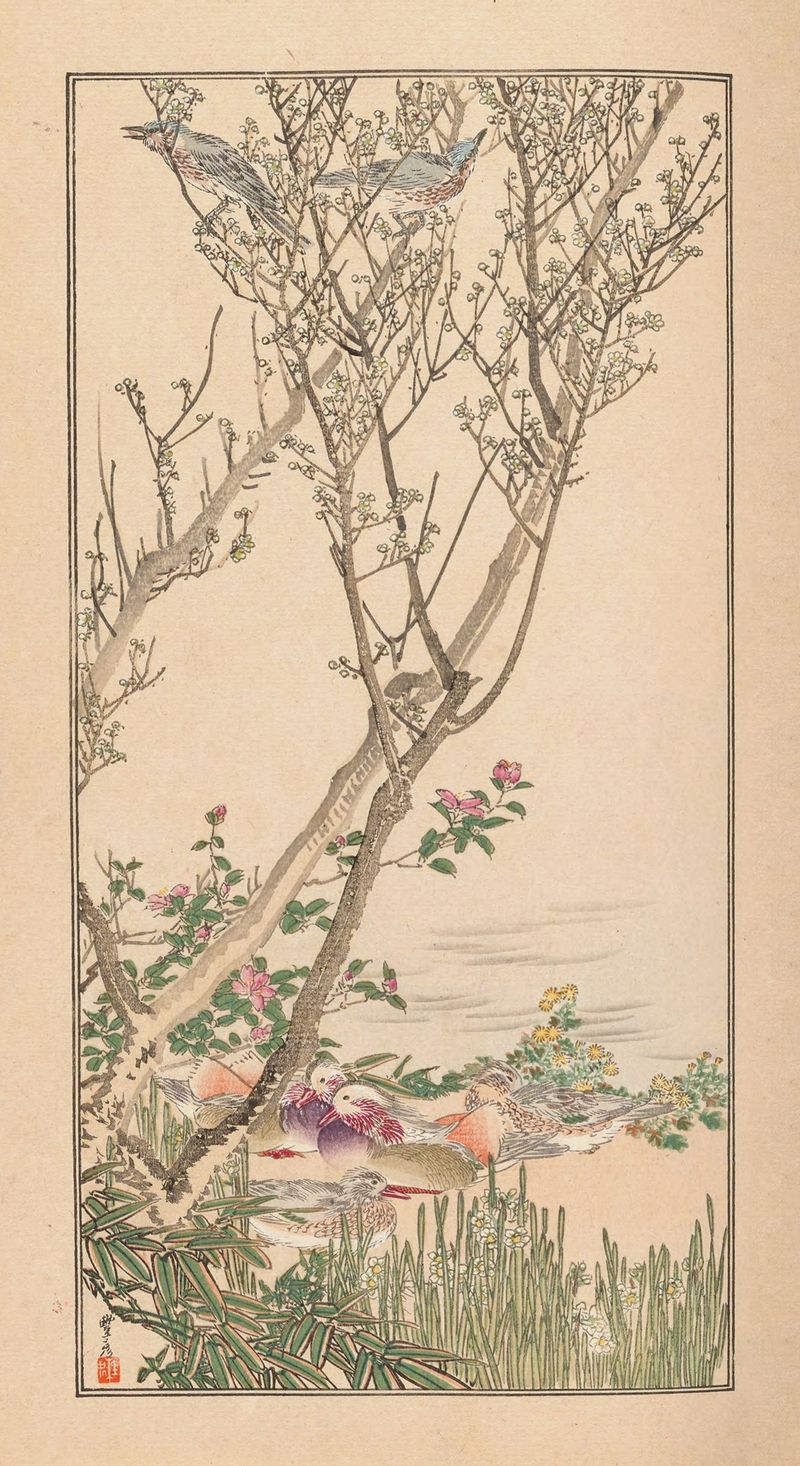
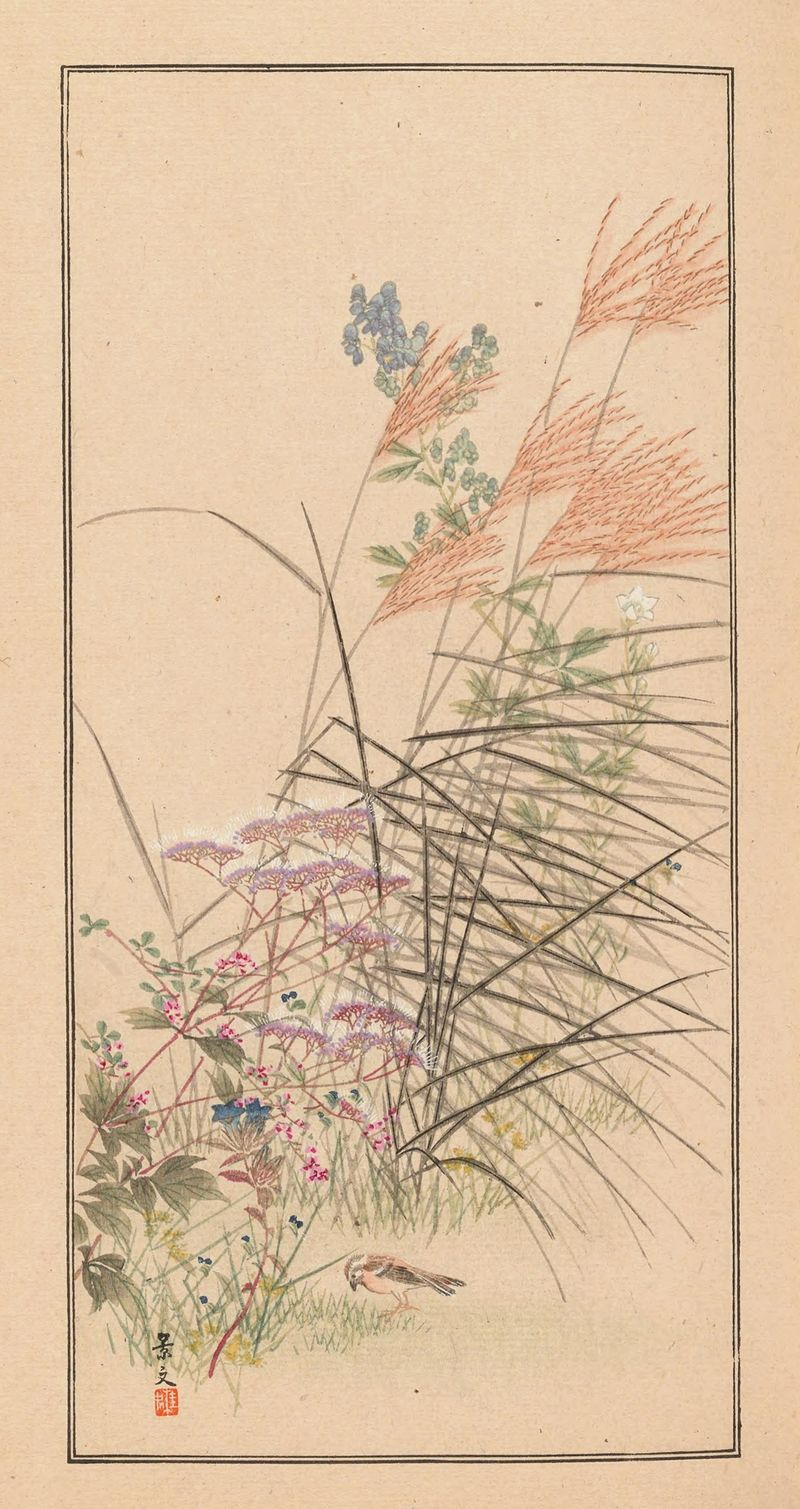
Could beauty survive in a century of chaos? This question reverberates through Shūbi gakan, Pl.17, where aesthetics and turmoil intertwine in a delicate dance of creation. Look to the center of the composition where vibrant flora bursts forth, a testament to nature’s resilience. The artist employs a detailed yet fluid brushwork that allows colors to blend seamlessly, evoking the softness of petals against a backdrop of muted earth tones. Notice how the gentle hues of pink and green are juxtaposed with deeper shades, creating a visual rhythm that guides the eye and invites contemplation.
The meticulous attention to shadow and light plays a crucial role in establishing depth, imbuing the scene with an almost alive quality. Peering closer, one can discern the resilience of the flowers, contrasting with the creeping sense of desolation hinted at by the surrounding space. The simplicity of the subject belies a complex narrative — each bloom appears to symbolize hope amidst adversity. There’s an emotional tension held within the gentle curves of the petals, suggesting fragility in a world ravaged by uncertainty.
This duality reflects not only the beauty of nature but also the artist's commentary on the human condition during tumultuous times. In 1889, Nanbara Sakujirō created this piece in Japan, a period marked by rapid modernization and social upheaval. The Meiji Restoration had altered the artistic landscape, as traditional practices met Western influences. It was a time of searching for identity amidst transformation, and this artwork stands as a poignant reflection of that struggle, capturing the essence of creation in a world on the brink of change.