Silverstream — História e Análise
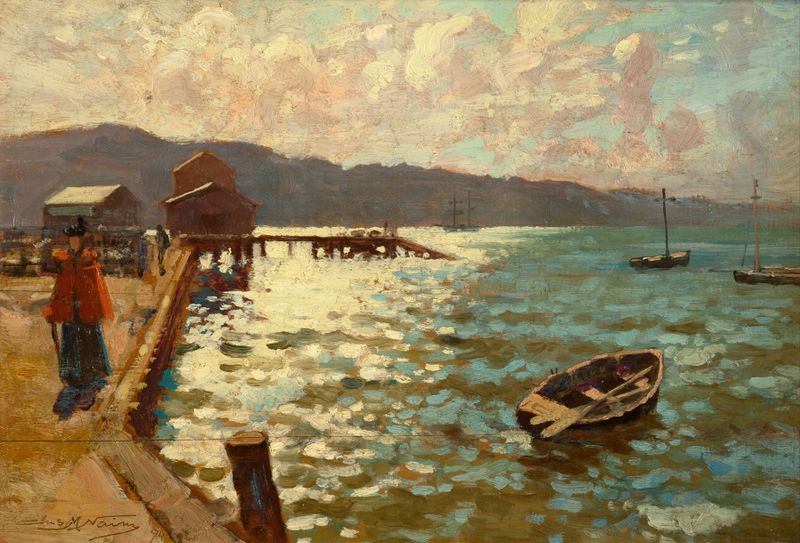
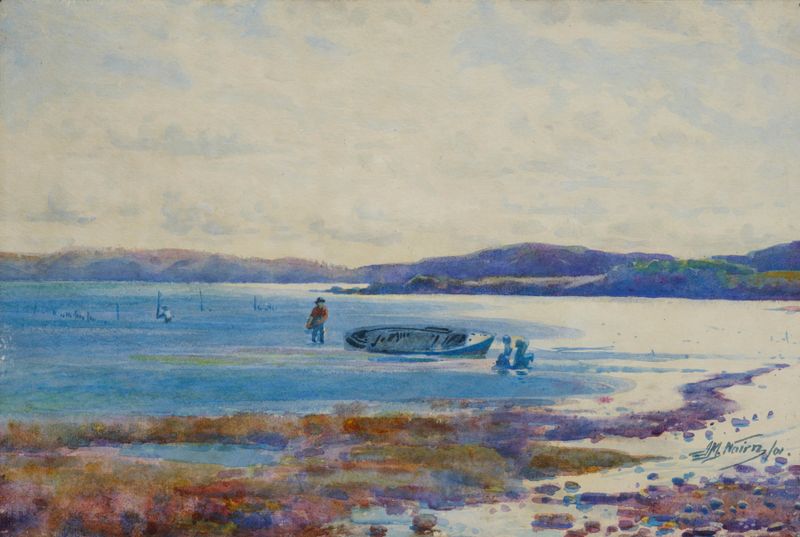
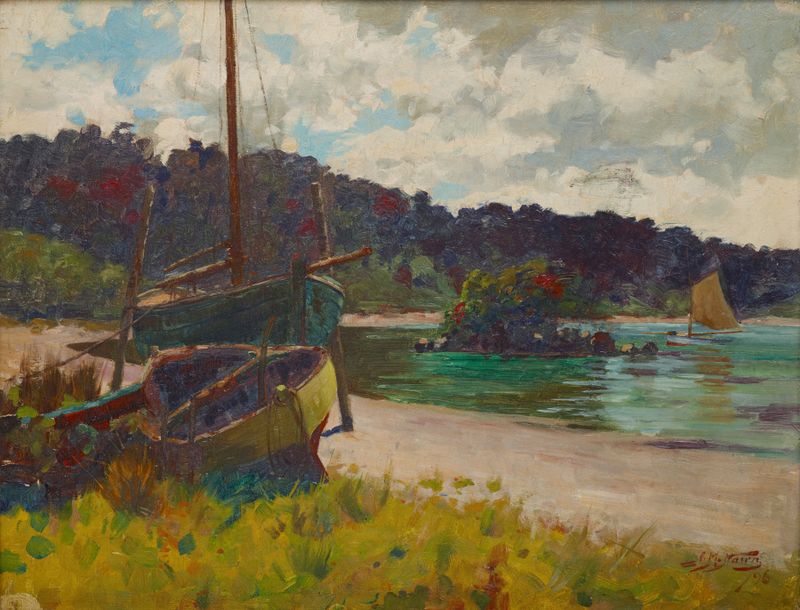
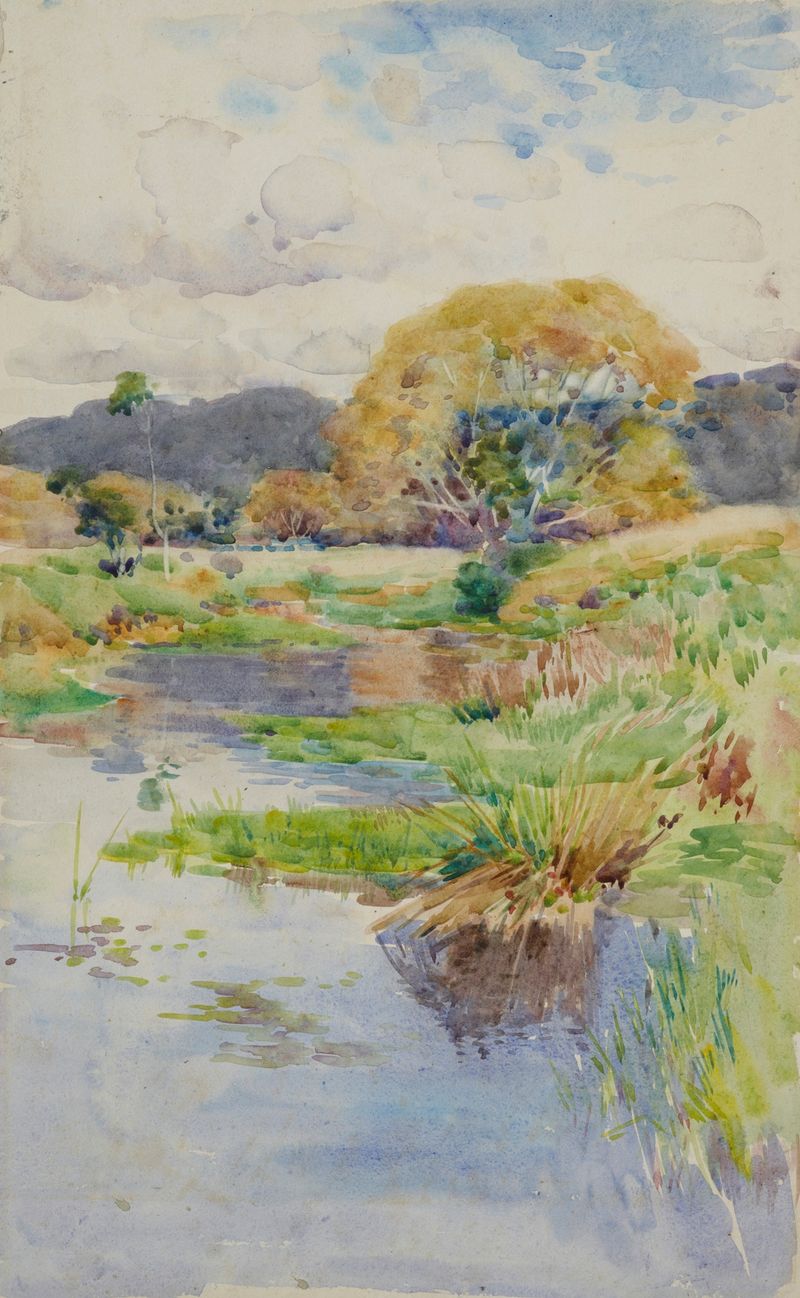
In the delicate dance of light and shadow, time slips by, and the past merges with the present in a visceral embrace. Look to the left at the shimmering water, where the silver stream glistens under the caress of soft sunlight. Observe how Nairn employs a palette of cool blues and silvery grays, expertly blending them to evoke the fluidity of water. The soft, dappled sunlight filtering through the trees creates patches of luminescence, while the dark shadows anchor the scene, lending depth and contrast.
The brushwork is spontaneous yet controlled, capturing the gentle sway of the river’s surface, each stroke adding to the resonance of the landscape. Delve deeper into this tranquil setting, and you’ll sense the tension between light and shadow, a metaphor for life’s duality. The illuminated areas invite contemplation and serenity, while the shadows whisper of hidden depths and untold stories. Each detail, from the bending reeds to the rippling currents, speaks of nature's quiet pulse, a reminder of the intricate balance between what is seen and what lies beneath the surface. In 1896, James Nairn painted this work amidst a burgeoning Scottish art scene that was beginning to embrace Impressionism.
He was exploring the interplay of light in landscapes as he sought to capture the essence of his surroundings near his home in Kirkcudbright. This period marked a significant transition for Nairn, reflective of his growing dedication to capturing the fleeting moments of nature, which would define his legacy as an artist.