Spring — História e Análise
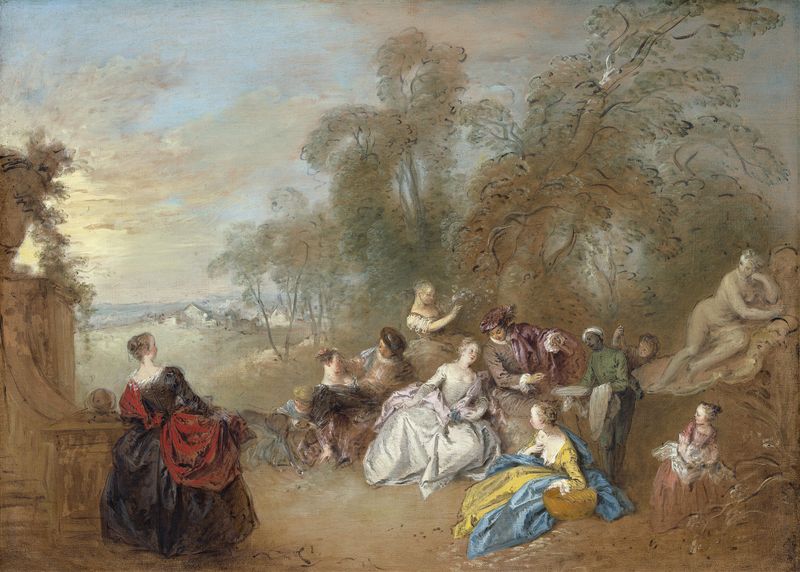
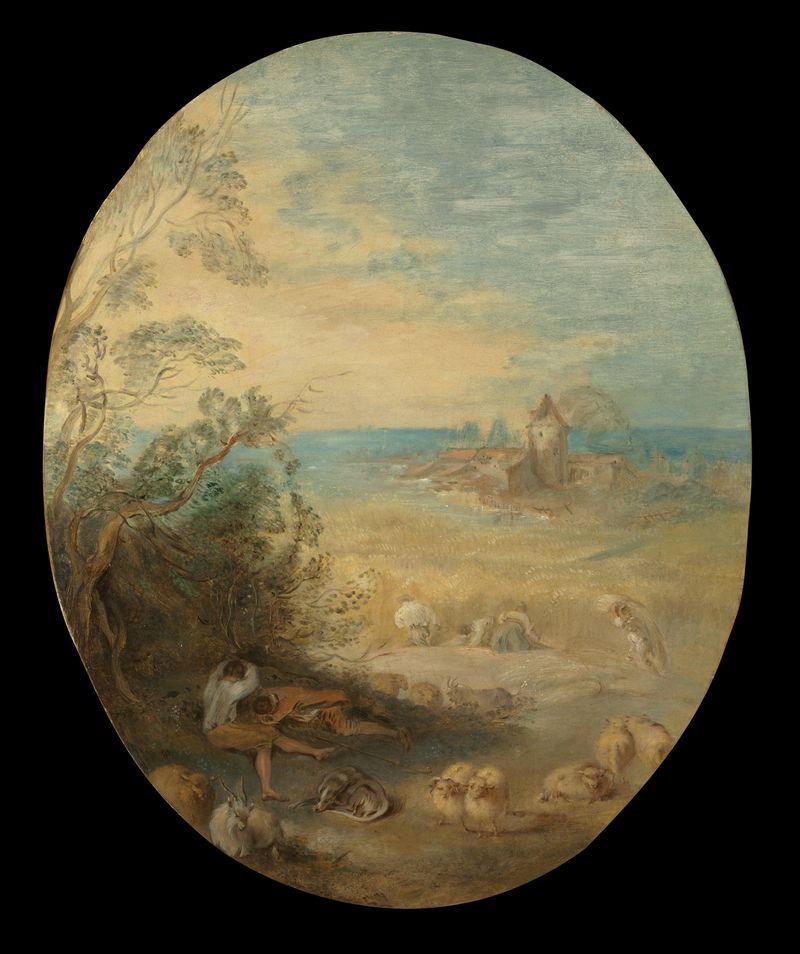
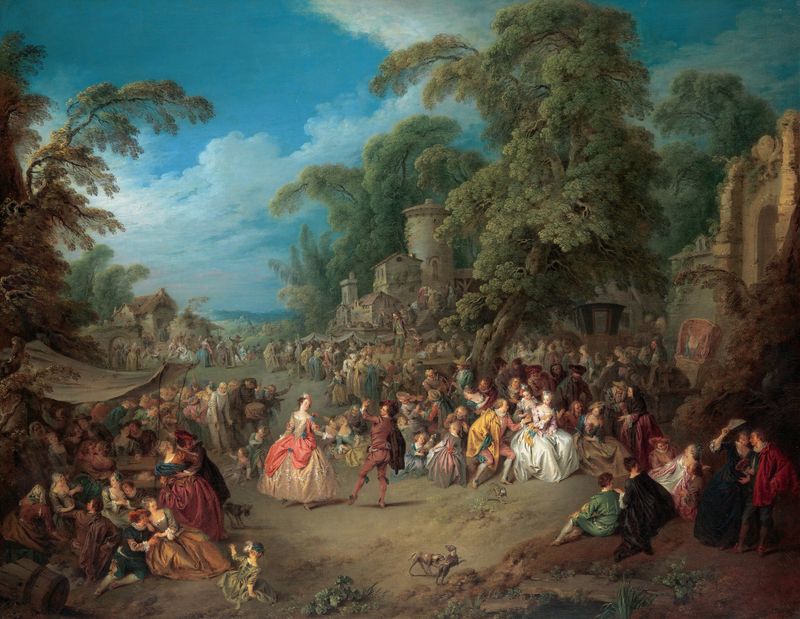
Can beauty exist without sorrow? The fleeting nature of spring whispers of joy intertwined with the inevitable passage of time, inviting us to ponder the depth of our memories. Look closely at the idyllic landscape, where vibrant greens and soft pastels breathe life into the canvas. Notice how the sunlight dances across the petals of blooming flowers, creating a gentle interplay of light and shadow. The figures, elegantly adorned in the fashion of their time, are scattered amid this lush setting, each gesture and expression evoking a sense of nostalgia for moments once lived, now just echoes of laughter and warmth. As you delve deeper, consider the contrasts at play: the joyous celebration of spring is tinged with the bittersweet awareness of its transience.
The lovers, their tender closeness juxtaposed against the backdrop of nature, embody the duality of affection and the fleeting joys of youth. The flowing drapery, rich in hues, carries a weight of longing, reminding us that even in beauty, there exists an undercurrent of melancholy. Jean-Baptiste Pater crafted this masterpiece during the early 18th century, a period marked by the flourishing of Rococo art in France. The artist was deeply influenced by the works of his mentor, Antoine Watteau, and the social elite's desire for lighthearted escapism.
In this era of extravagant leisure, Spring reflects the cultural appetite for scenes of joyous celebration while subtly embedding the essence of life's impermanence within its vibrant beauty.