Spring Landscape Hälsingland — História e Análise
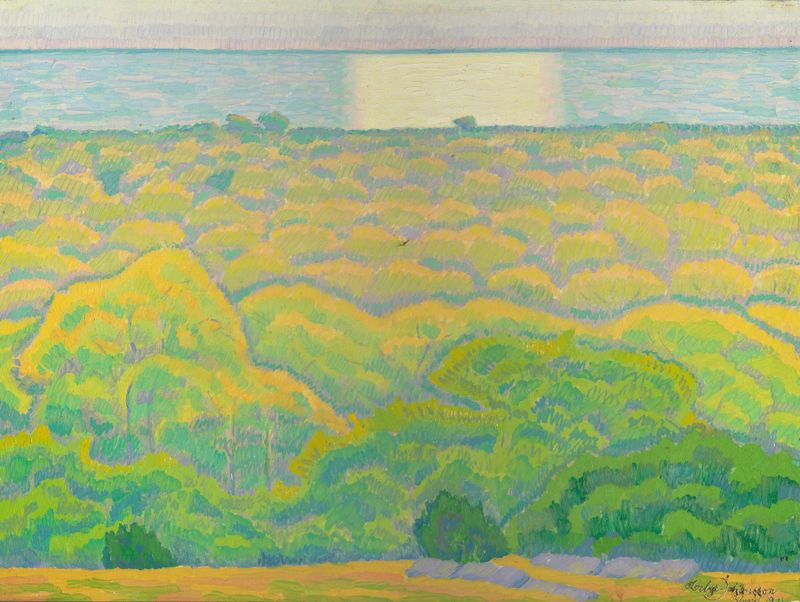
When did color learn to lie? In a world painted by nature’s hand, the illusion of vibrancy often conceals the quiet decay that lies beneath the surface. Focus on the sweeping expanse of green that stretches across the canvas, where patches of sunlight dance among the trees. Notice how the artist employs a palette of muted earth tones interspersed with bursts of brighter hues, suggesting both life and its inevitable decline. The brushwork is both impressionistic and detailed, capturing the gentle sway of grass and the stillness of the distant hills, inviting the viewer to explore the tension between vitality and the passage of time. Yet, in this seemingly idyllic landscape, hints of decay whisper through the composition.
Observe the gnarled branches, remnants of once-robust trees, and the subtle brown patches creeping near the edges of the verdant fields. The harmony of color and form evokes a bittersweet reflection on the beauty of nature, juxtaposed with the understanding that all life is fleeting. It is in these details that Johansson speaks to the cyclical nature of existence, illuminating the balance between growth and deterioration. Created in 1914, this work reflects Helge Johansson's deep engagement with the landscapes of Sweden during a time of significant change.
As the world teetered on the brink of war, the artist found solace and inspiration in the serene beauty of Hälsingland. This piece embodies both the tranquility of rural life and the unsettling undercurrents of an era poised for upheaval, marking Johansson as a keen observer of both nature and the human condition.