Stack of Wheat (Thaw, Sunset) — História e Análise
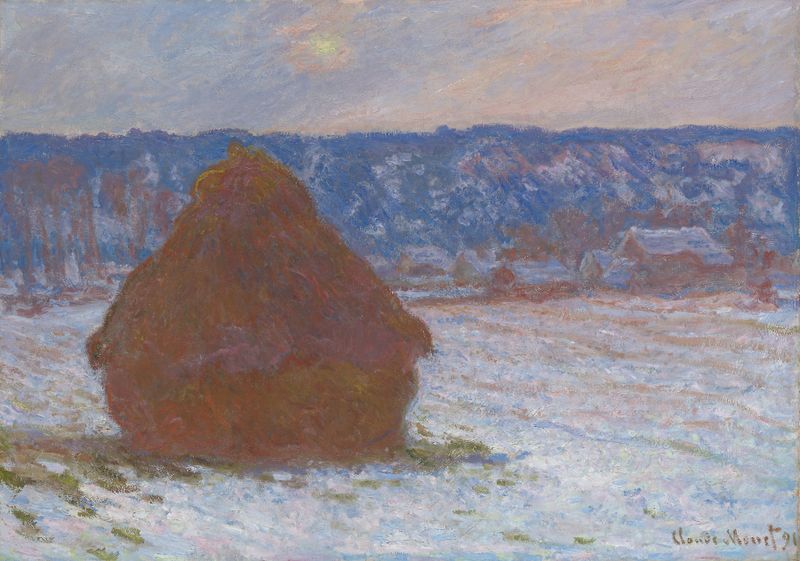
In Stack of Wheat (Thaw, Sunset), the canvas breathes with a revelation of light and color, encapsulating the transient beauty of nature's cycles. The scene invites reflection on the fleetingness of time and the profound connection between humanity and the environment. Look to the horizon where the sun, a molten orb, sinks into the embrace of the fields. The vibrant yellows and warm oranges cascade across the sky, casting a gentle glow on the stacks of wheat.
Notice how the soft brushstrokes create an interplay of light and shadow, making the crops appear almost ethereal against the fading daylight. The shifting colors evoke the warmth of the setting sun, underscoring the emotional resonance of this pastoral landscape. In the foreground, the golden stacks of wheat symbolize both bounty and the inevitability of change; they are both a celebration of harvest and a reminder that seasons shift and moments pass. The rich texture of the brushwork contrasts the stillness of the wheat with the dynamic sky, hinting at the tension between permanence and impermanence.
This duality reflects the artist’s meditation on the cyclical nature of life and the stories that lie within each stroke. During the late 19th century, while Monet created this piece between 1890 and 1891, he was deeply engaged in the exploration of light and color, a hallmark of the Impressionist movement he helped pioneer. Working in his garden in Giverny, he sought to capture the essence of a moment rather than its details, reflecting both personal introspection and the broader artistic shift towards modernism. The painting is a testament to his mastery and an invitation to contemplate the world anew.