
Stadt an der Riviera — História e Análise
Can paint confess what words never could? In Stadt an der Riviera, chaos dances beneath the sun, revealing a world teetering between tranquility and tumult. Look to the left at the vibrant strokes that form the sun-drenched buildings, their pastel hues blending harmoniously yet discordantly, creating an emotional tug-of-war. Focus on the waves crashing against the shore, each brushstroke conveying movement, a tangible energy that pulsates through the canvas. Notice how the light spills across the scene, casting elongated shadows that hint at the tumultuousness of human existence, even amid picturesque beauty. Delve deeper into the contrasting elements within the composition.
The serene coastline stands in stark opposition to the restless sea, reflecting the duality of life—peace can coexist with chaos, and calm can mask internal storms. The distant hills, rendered with a softness that contrasts the jagged edges of the foreground, symbolize the fleeting nature of serenity, suggesting that tranquility is but an illusion amidst the chaos of existence. In 1897, Alfred Zoff created Stadt an der Riviera during a period when European art was grappling with the transitions brought by modernity. Living in a time marked by rapid industrialization and shifting societal norms, Zoff sought to capture not only the beauty of the coastal landscape but also the underlying emotional currents that stirred within it.
This painting emerged as a reflection of both his personal experiences and broader artistic movements, blending impressionistic techniques with a keen awareness of the world around him.
Mais obras de Alfred Zoff
Ver tudo →
Chioggia
Alfred Zoff

Riviera, Breaking Waves in Boccadasse
Alfred Zoff

Camaret. Küste bei Brest
Alfred Zoff
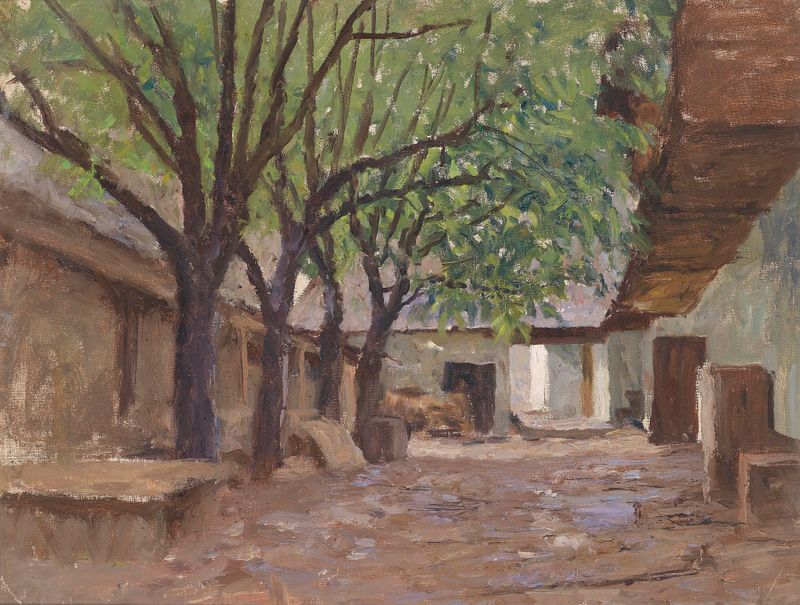
Bauernhäuser bei Klagenfurt
Alfred Zoff

Felsige Küstenpartie
Alfred Zoff

Ländliche Idylle
Alfred Zoff
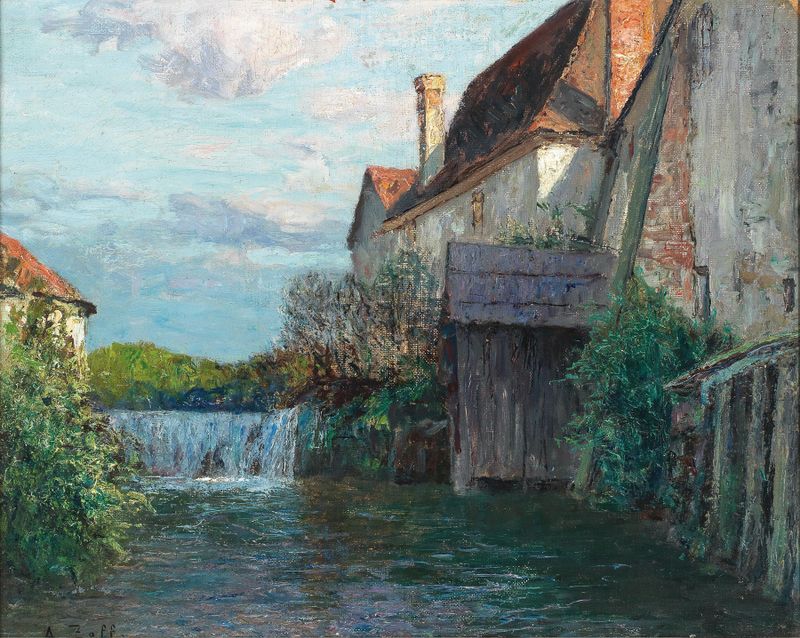
Motiv aus einem steirischen Eisenwerk
Alfred Zoff

Abendstimmung
Alfred Zoff
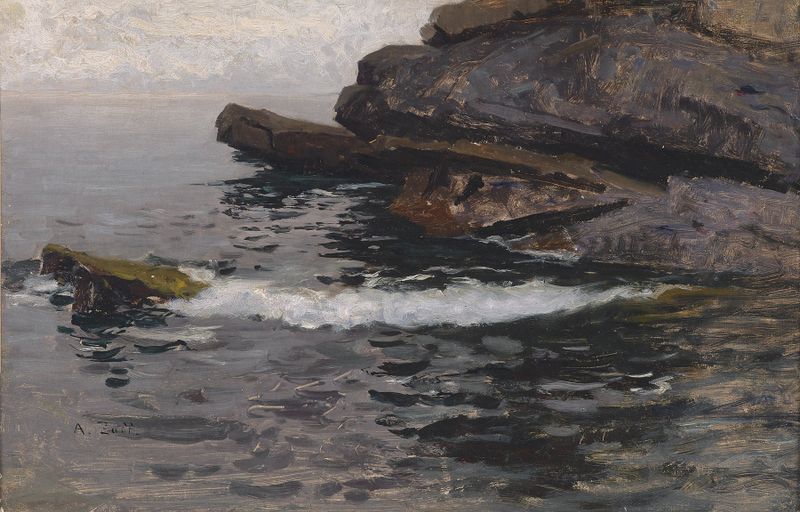
Felsküste bei Capo Lungo
Alfred Zoff

Fischerboote zur Zeit der Ebbe
Alfred Zoff





