
Stadtansicht — História e Análise
Within the urban landscapes that populate our lives, loneliness often stalks in the shadows, whispering truths we long to ignore. Look to the left at the stark outlines of the buildings, their angular forms creating an unsettling rhythm against the sky. The muted palette of ochres and grays envelops the scene, while the jagged rooftops seem to pierce the air like unspoken words. In the foreground, a lone figure stands, dwarfed by the looming architecture, embodying both isolation and resilience.
The brushwork is deliberate yet frenetic, capturing the emotional weight of solitude that hangs in the air. As you explore further, you’ll notice the contrast between the flat, rigid structures and the organic curves of the figure. This juxtaposition speaks to the tension between humanity and the relentless march of modernity. The empty streets amplify a sense of abandonment, suggesting that amidst the pulsating life of the city, true connection remains elusive.
Shadows lengthen, hinting at the passage of time and the weight of unexpressed emotions clinging to the edges. In 1906, Schiele, at the age of 26, was navigating the early stages of his artistic career in Vienna, a city bursting with creativity yet rife with tension. He was influenced by the burgeoning expressionist movement, seeking to depict not only the outer world but also the inner turmoil of existence. During this period, he faced personal struggles and societal pressures, which undeniably colored his portrayal of human isolation in works like Stadtansicht.
Mais obras de Egon Schiele
Ver tudo →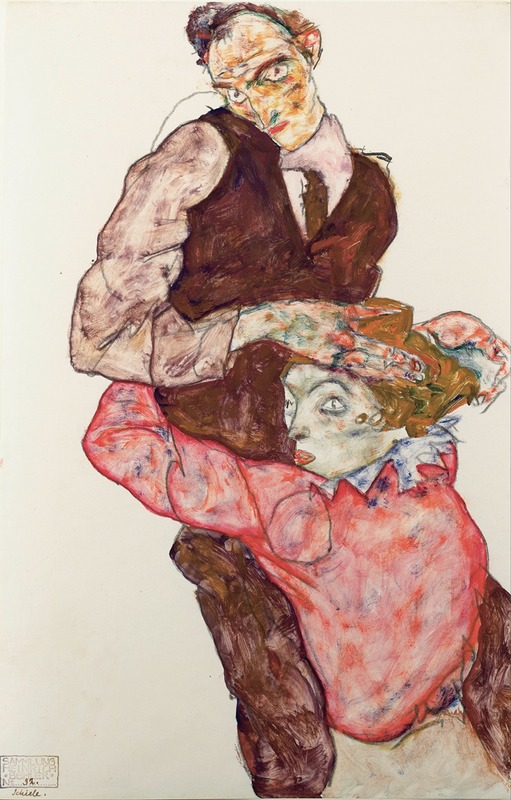
Lovers
Egon Schiele
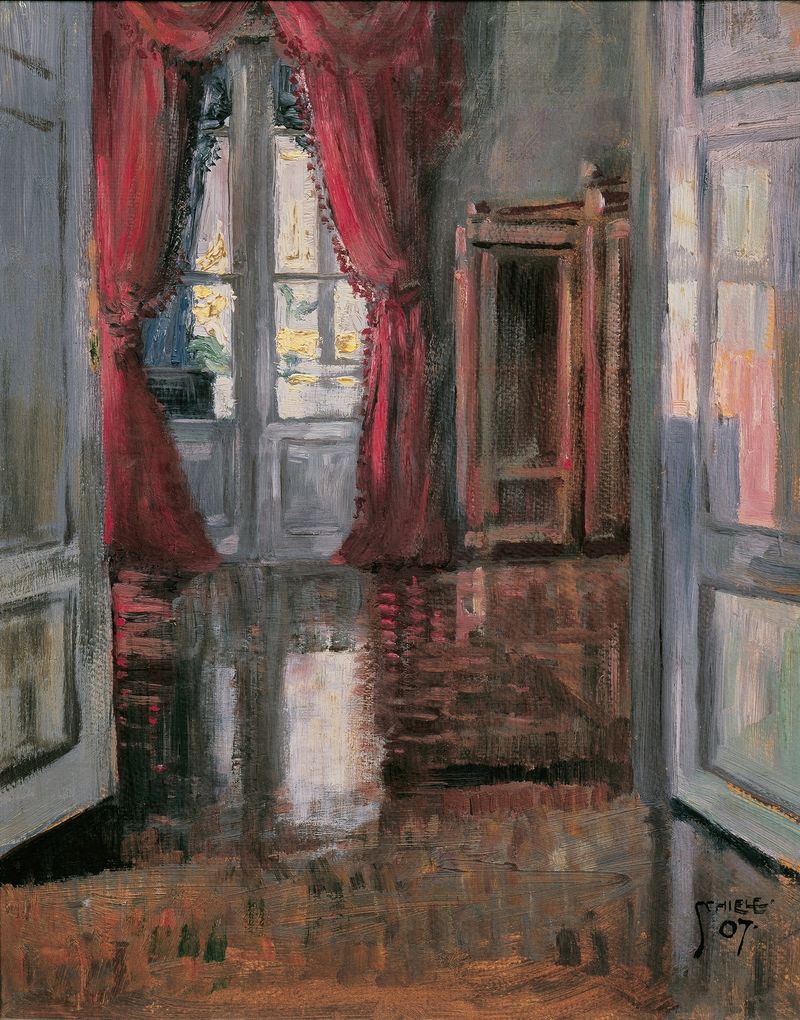
Blick in die Wohnung von Leopold und Marie Czihaczek
Egon Schiele
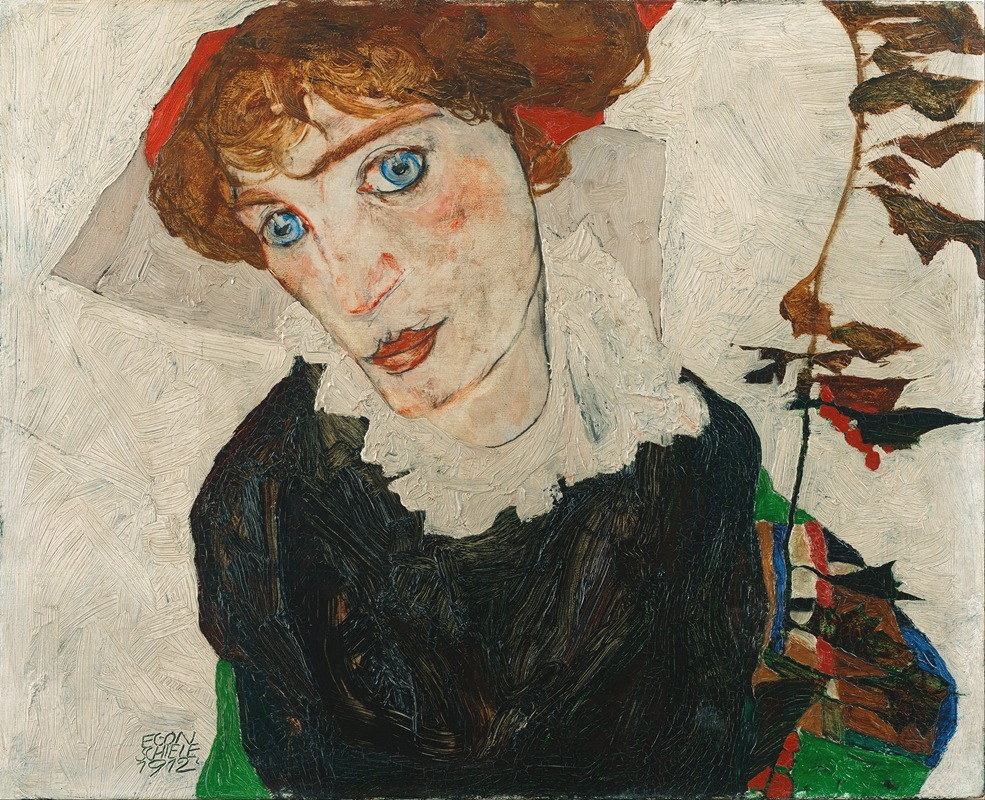
Portrait Of Wally Neuzil
Egon Schiele
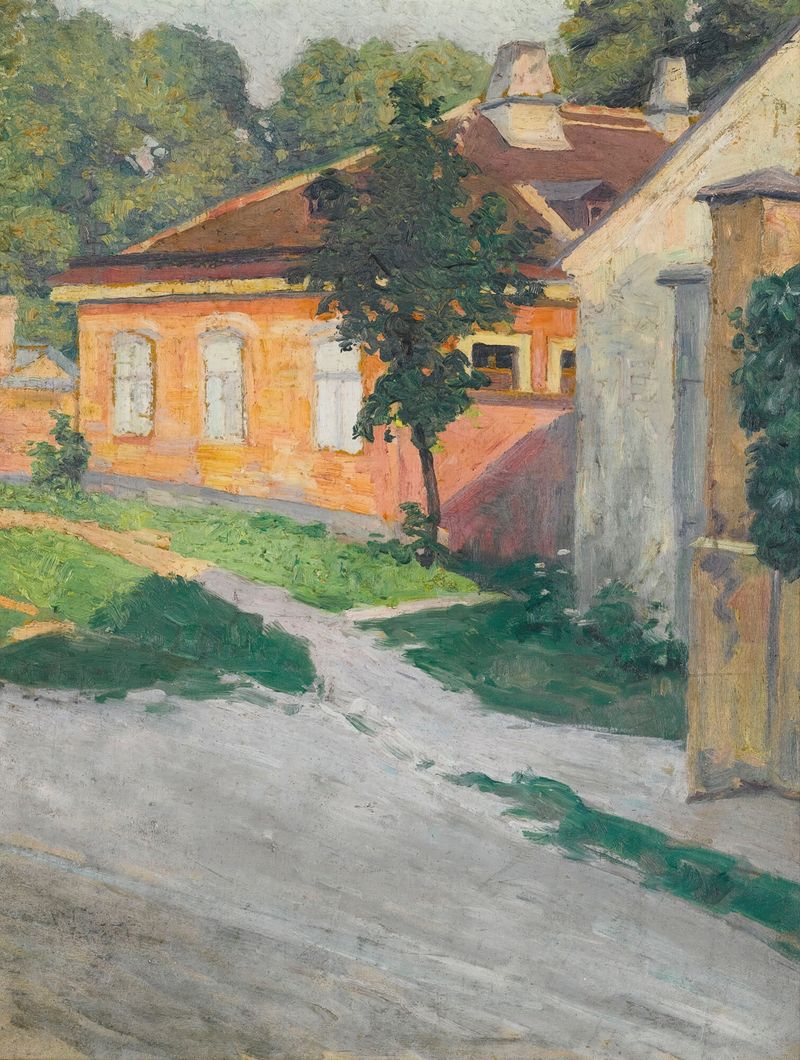
Haus In Hütteldorf (House In Hütteldorf)
Egon Schiele
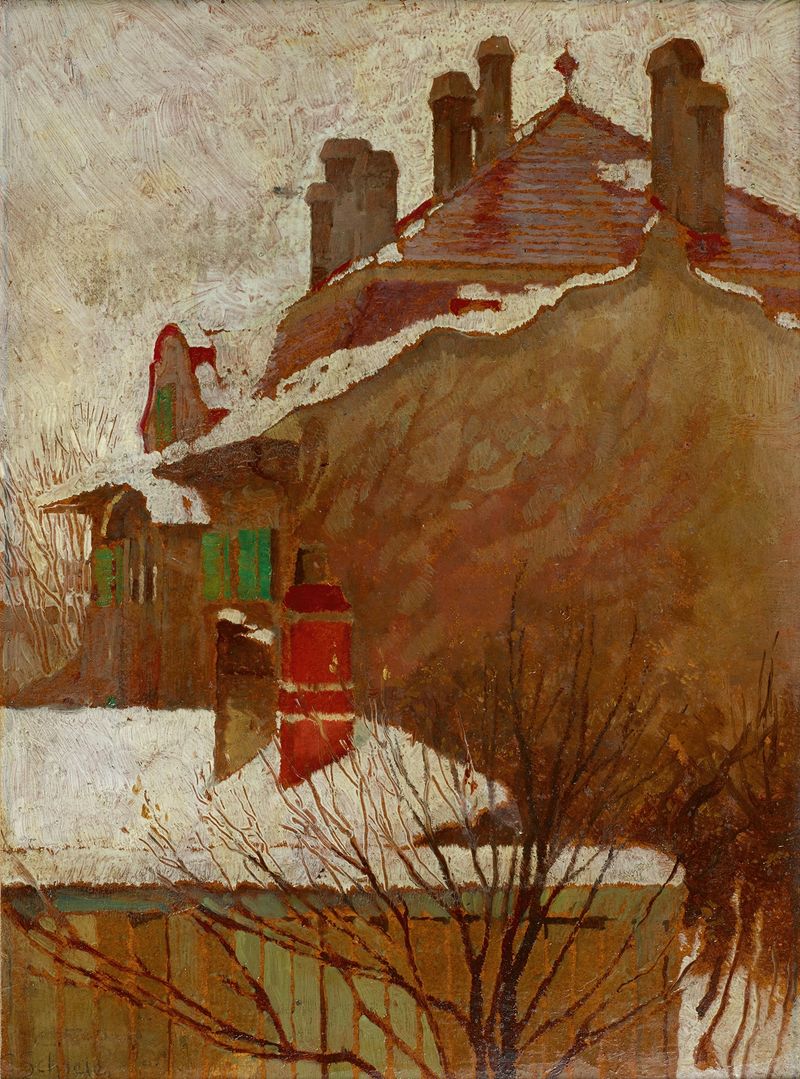
Häuser im Winter (Blick aus dem Atelier)
Egon Schiele
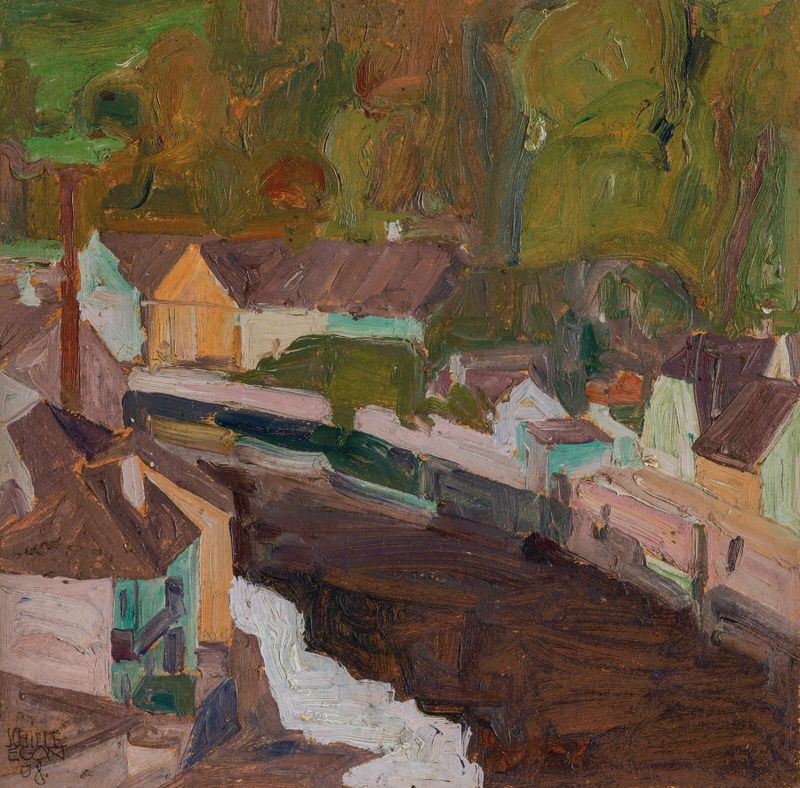
Dorf am Fluss II
Egon Schiele

Wiese mit Dorf im Hintergrund II
Egon Schiele

Setting Sun
Egon Schiele
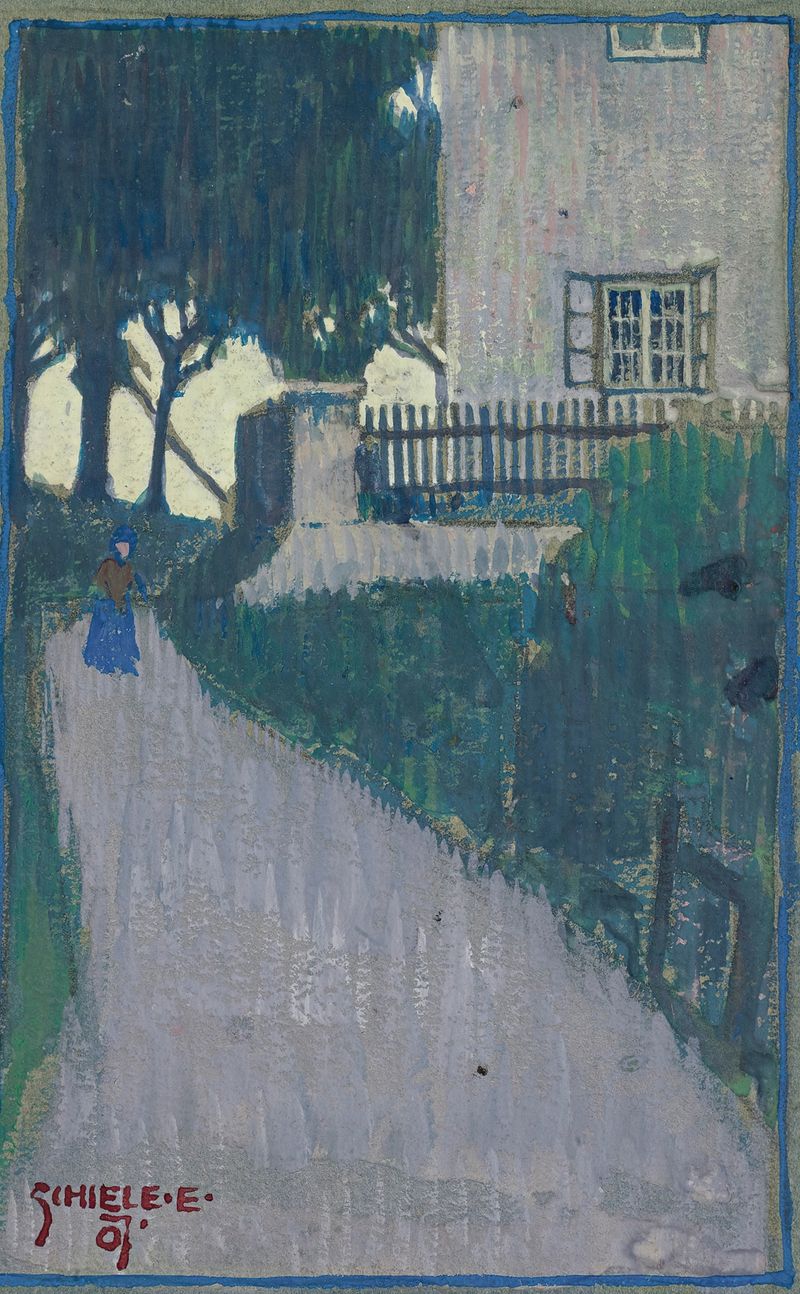
Landscape With House, Trees And Female Figure
Egon Schiele
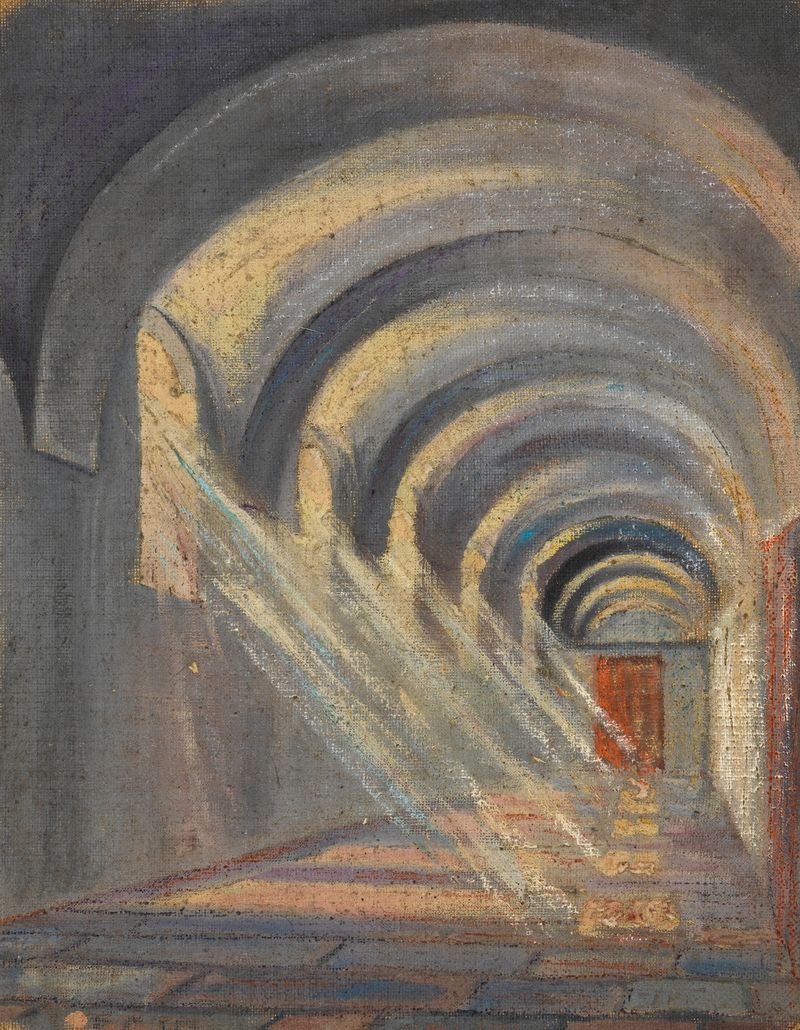
Kreuzgang mit einfallendem Sonnenlicht
Egon Schiele





