Strandjutters; Beachcombers — História e Análise
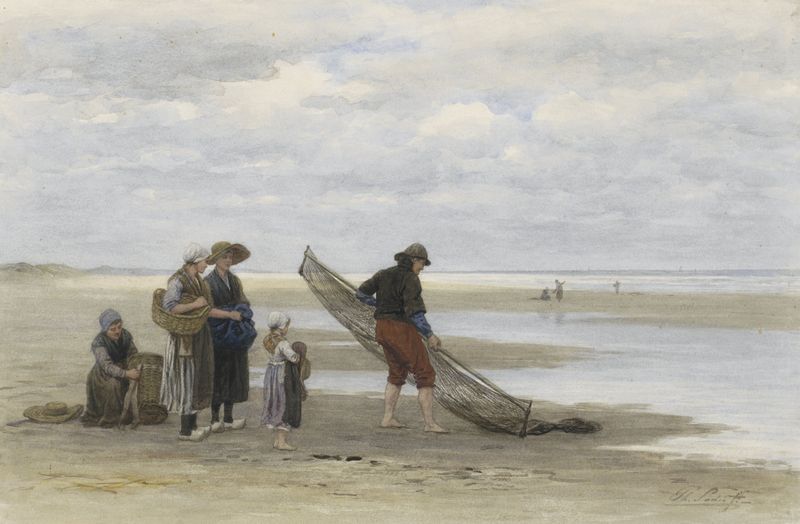
What if beauty was never meant to be finished? In the ebb and flow of the tide, desire lingers just out of reach, like shells waiting to be discovered on a windswept shore. Focus on the warmth of the earth-toned sand that cradles the figures as they sift through the remnants of the ocean's gifts. Notice how the light dances upon the water, casting glittering reflections that tug at the heart. The figures, a pair of beachcombers, seem almost absorbed in their quest, their gestures a blend of curiosity and reverence as they comb through the treasures left by the waves. The contrasts in the scene are striking: the fluidity of the ocean meets the stillness of the sand.
The beachcombers, intent in their search, embody a deeper yearning that transcends their simple activity — a desire for connection, for stories locked in the shells they gather. Their silhouettes against the vast backdrop of sky and sea subtly evoke thoughts on the nature of beauty and the fleetingness of time, each found object a whisper of the past. Philip Sadée crafted this piece during a period marked by personal challenges and shifting artistic landscapes. Working in the late 19th century, he was navigating the transition from traditional realism to more modern interpretations.
The world was changing rapidly around him, yet his focus remained on capturing intimate moments of life, like those found in Strandjutters; Beachcombers, where beauty and desire intertwine on the shimmering sands of existence.