Strasse in Tomaszow — História e Análise
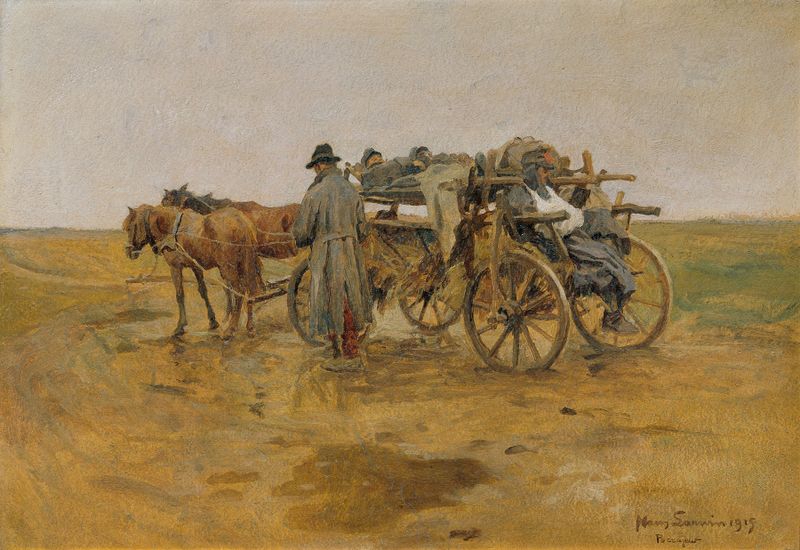
Where does light end, and longing begin? In the vibrant hues of the early twentieth century, we find ourselves at a crossroads of emotion and awakening, where the essence of life pulses through brushstrokes. Look closely at the center of the canvas; the cobblestone street leads your gaze toward a sun-drenched horizon, illuminated by a warm golden light. Notice how the interplay of light and shadow dances across the surfaces, revealing the gentle curves of the buildings and the textures of the street. The soft pastels and deeper earth tones blend harmoniously, echoing a sense of nostalgia and hope, inviting you to explore each corner of this intimate scene. As the viewer, you can feel the tension between the mundane and the extraordinary.
The figures moving along the street seem both engaged in their daily routines yet suspended in a moment of dreaming. The juxtaposition of the lively hues against the figures’ muted tones suggests a yearning for something beyond the present, a shared desire for connection within the bustle of everyday life. Each detail, from the fluttering leaves to the distant rooftops, speaks to the fragility of existence, mirroring the emotional landscape of the time. In 1915, Hans Larwin created this piece amidst a Europe grappling with the horrors of World War I, a period that ignited both fear and a profound sense of longing among its people.
Living in Germany, Larwin was part of a burgeoning movement that sought to capture the human experience through vivid color and emotive scenes. Strasse in Tomaszow reflects not only his artistic evolution but also the collective yearning for peace and beauty in a world overshadowed by conflict.