
Street in Sarajevo — História e Análise
Can paint confess what words never could? In Street in Sarajevo, fragility emerges not just from the brushstrokes but from the very essence of the scene, inviting a silent dialogue about resilience amidst tumult. Look to the left at the delicate interplay of light and shadow, where the sun filters through a canopy of tree leaves, casting fragmented patterns on the cobblestone street below. This soft luminosity juxtaposes the somber hues of the buildings, hinting at stories that linger in the air. The composition draws your gaze deeper into the street, where figures move with an air of contemplation, their forms blending into the tranquil yet charged environment. The subtle tension in the painting lies within the contrasts; the lively colors of the pedestrians seem almost at odds with the muted tones of the architecture, suggesting a struggle for vitality in a place marked by history.
Notably, the distant mountains serve as a silent witness to both the beauty and fragility of the human condition, anchoring the scene in a broader, existential context. Each brushstroke captures not just a moment in time but the poignant weight of history that lingers in the air. In 1927, Kazimierz Stabrowski painted this work during a period of artistic exploration and national identity in post-war Europe. Living in a world recovering from conflict, Stabrowski's focus on urban life reflected both personal and collective experiences of resilience and loss.
Amid this backdrop, Street in Sarajevo stands as a reminder of the delicate balance between light and shadow, both in art and in life itself.
Mais obras de Kazimierz Stabrowski
Ver tudo →
Mosque in Kairouan
Kazimierz Stabrowski
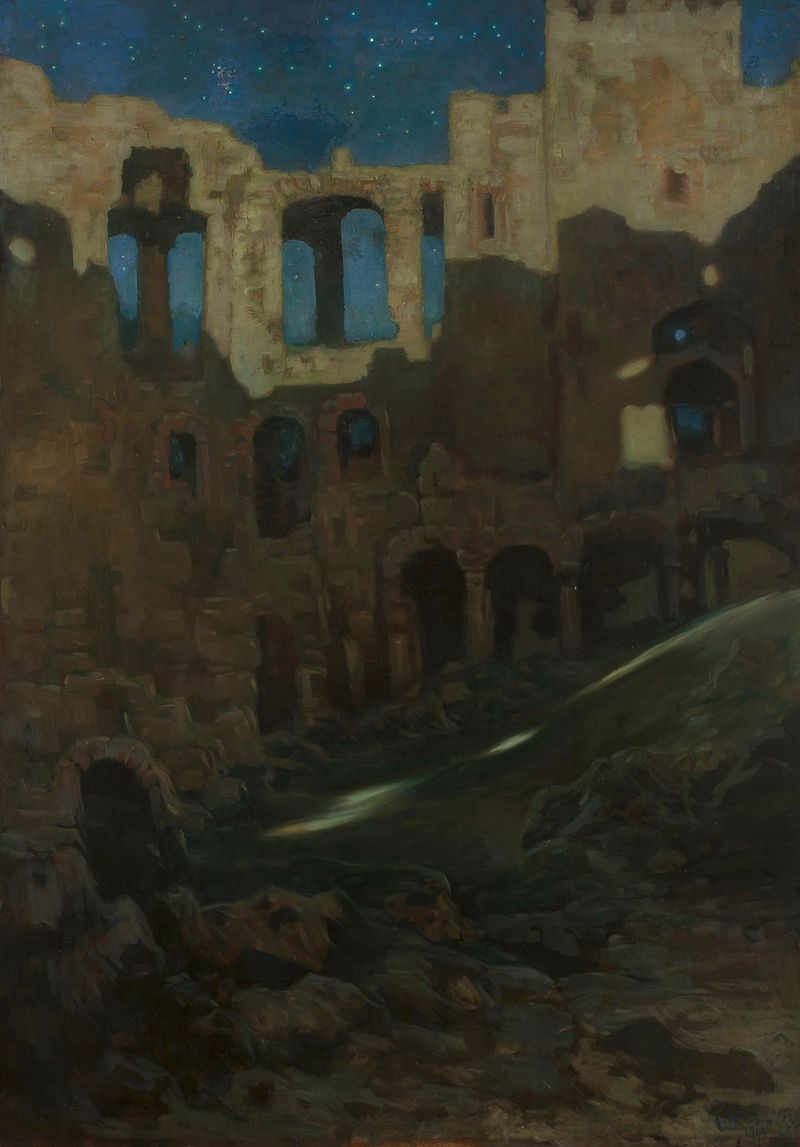
Ruins of the Krzyżtopór castle in Ujazd
Kazimierz Stabrowski
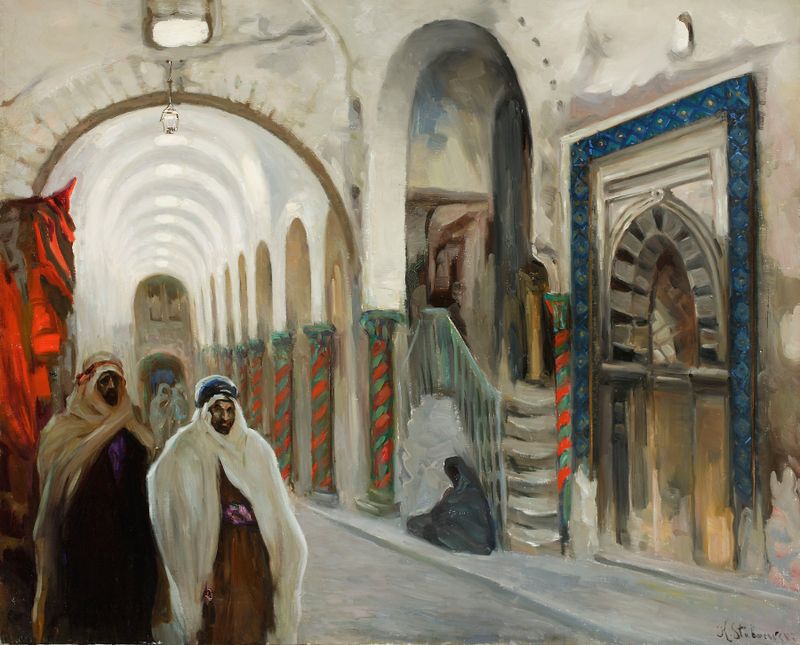
Souq in Kairouan
Kazimierz Stabrowski

Landscape with three trees
Kazimierz Stabrowski
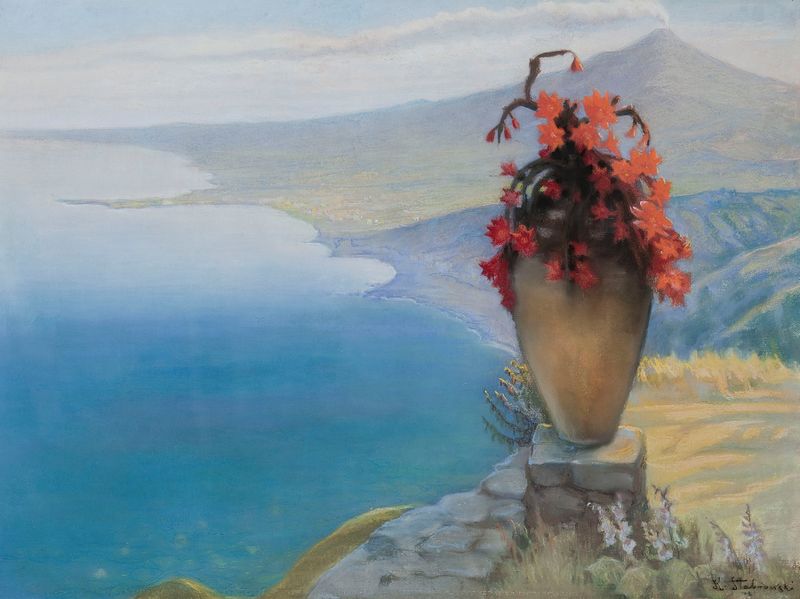
View of Taormina
Kazimierz Stabrowski

Vilnius – Cathedral Bell Tower
Kazimierz Stabrowski
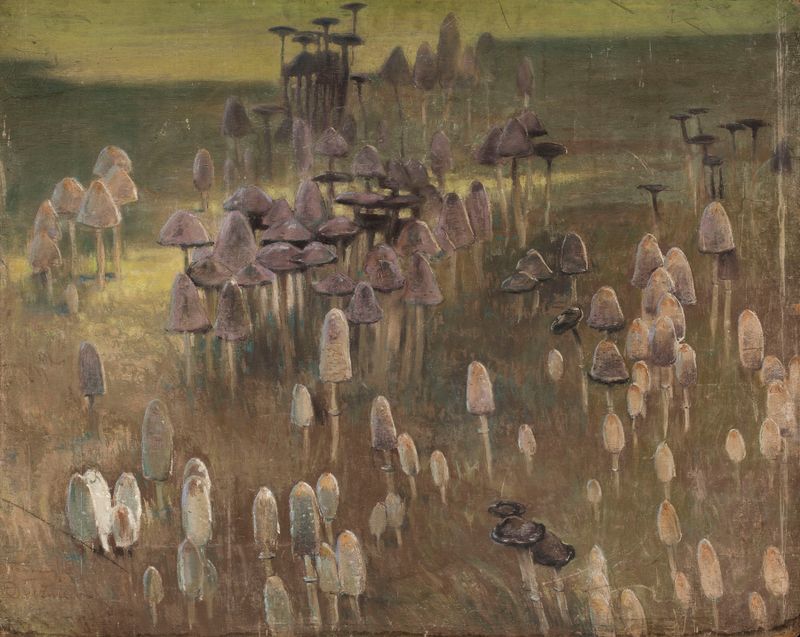
Autumn flora
Kazimierz Stabrowski
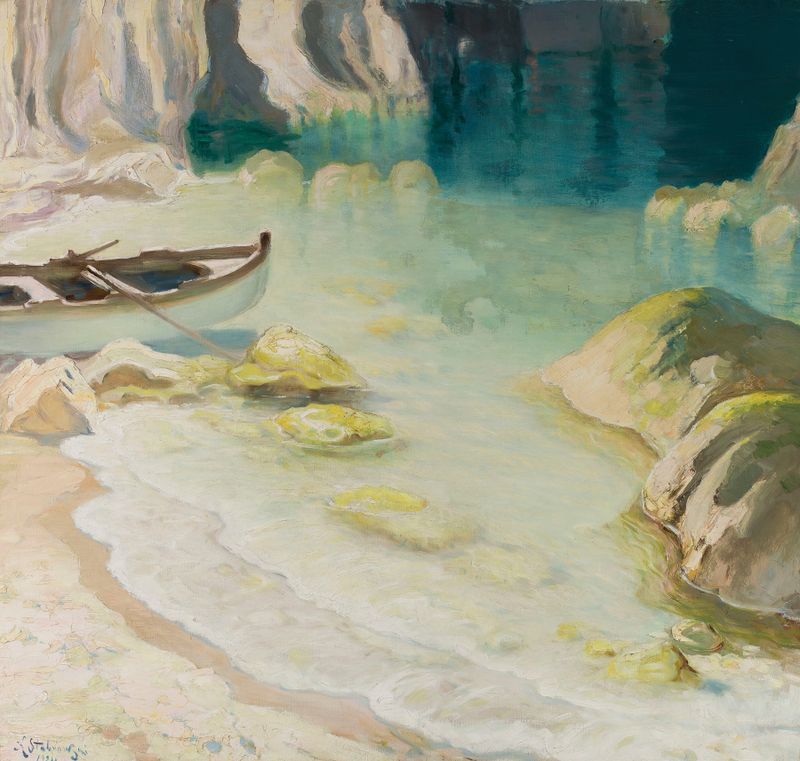
Boat at rocky coast
Kazimierz Stabrowski
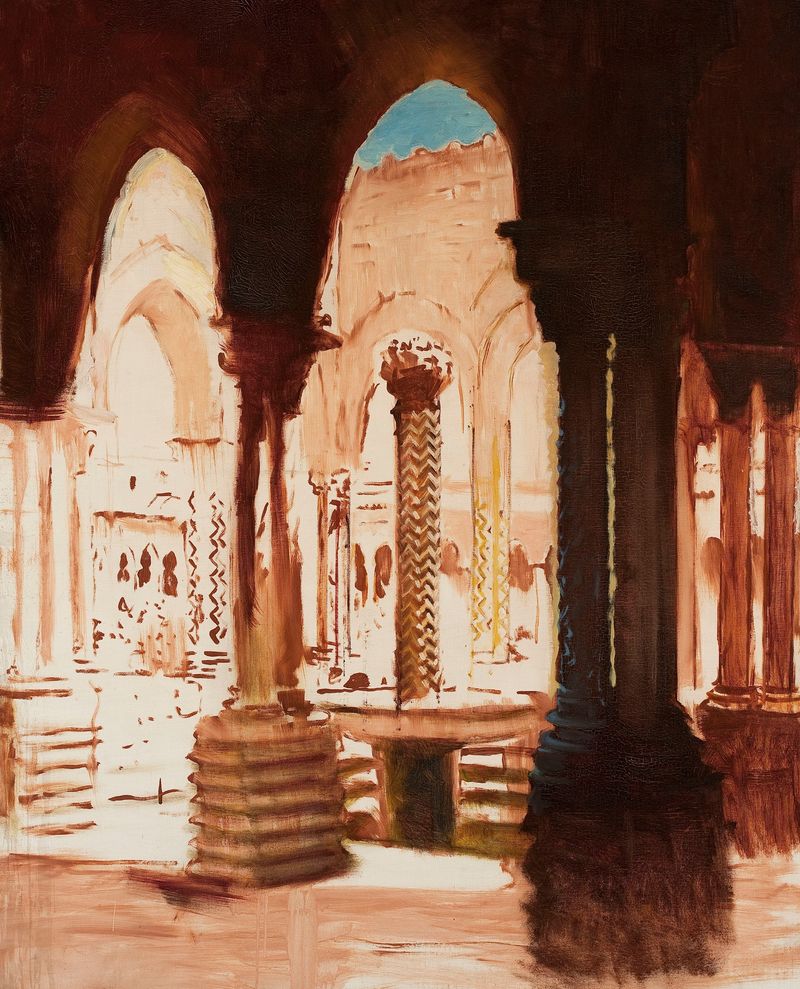
Monastery courtyard in Monreale-Palermo
Kazimierz Stabrowski

Norwegian fjord
Kazimierz Stabrowski





