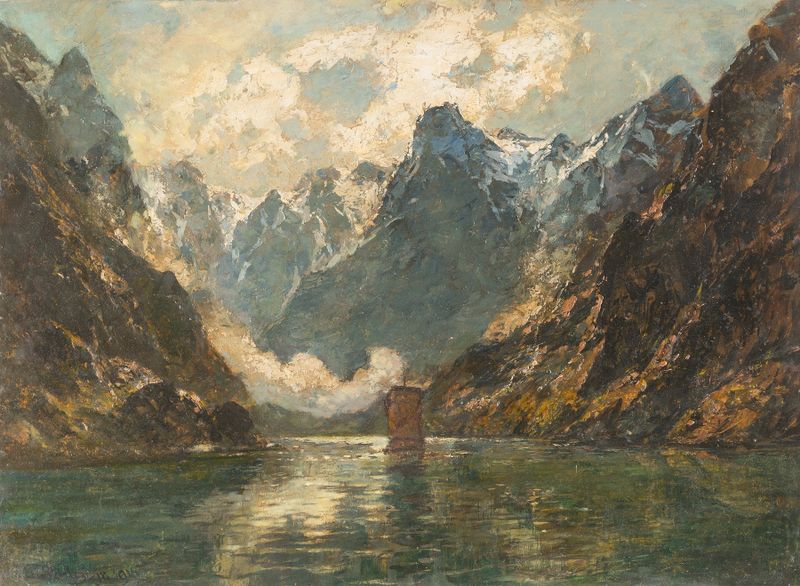
Sunset over the Lafoten — História e Análise
In the stillness of a sunset, nature speaks in hues that resonate with awe, capturing the fleeting beauty of a moment suspended in time. Look to the horizon, where the sun dips low, casting a warm cascade of oranges and golds across the sky. The delicate brushstrokes create a gentle interplay between land and sea, seamlessly blending the vivid colors that reflect upon the water’s surface. Notice how the dark silhouettes of the rugged mountains stand in stark contrast to the vibrant sky, anchoring the composition while evoking a sense of majesty and tranquility. Hidden within this sublime landscape lies a tension between light and darkness, a metaphor for the calm before twilight’s embrace.
The play of colors evokes different emotions: hope in the brightness, nostalgia in the shadows of the mountains, and perhaps longing in the fading daylight. Each element serves as a reminder of nature’s impermanence, urging the viewer to reflect on their own transient moments of beauty. Carl August Heinrich Ferdinand Oesterley painted this piece during a period of artistic exploration when Romantic ideals were rapidly influencing landscape painting. Working in the late 19th century, he embraced the natural world with a sense of reverence, seeking to capture its raw beauty in the context of an evolving artistic landscape.
The world was witnessing a growing appreciation for nature, as artists sought to connect audiences to the sublime experience of the outdoors.