Taos in the Snow — História e Análise
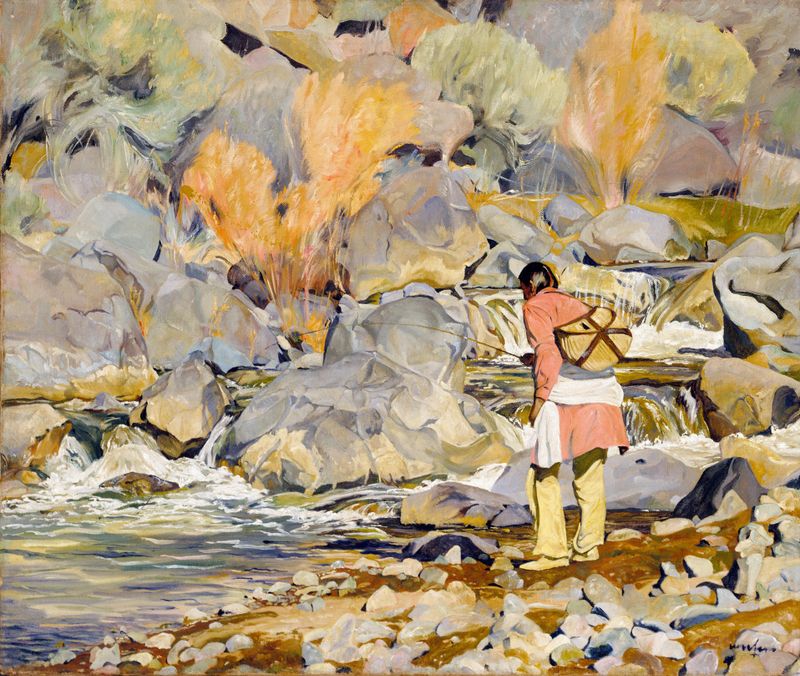
Who listens when art speaks of silence? In Taos in the Snow, the stillness of a snow-laden landscape becomes a profound commentary on solitude and awe. Look to the center of the canvas, where a blanket of pure, white snow envelops the distant mountains, contrasting sharply against the deep blue sky. Notice how the play of light creates a shimmering effect on the snow's surface, evoking a sense of crispness that invites you to breathe in the cold air. The rugged outlines of adobe structures, nestled against the backdrop, ground the scene in human presence, yet they appear dwarfed by nature's vastness.
Ufer's use of color, with its cool tones punctuated by warmer earth shades, captures the essence of a winter day in Taos, inviting an immersive experience. Beneath the serene surface, this painting encapsulates the tension between humanity and nature. The starkness of the landscape hints at isolation, yet the light's caress suggests hope and resilience. Each brushstroke conveys a quiet reverence for the beauty of the natural world, intertwining emotional depth with the majesty of its setting.
As you study the details, the interplay of shadow and light reveals a world that exists in both silence and sound, where each element seems to whisper stories of both solitude and connection. Walter Ufer painted Taos in the Snow between 1914 and 1920, during a time when he was deeply influenced by the vibrant artistic community in Taos, New Mexico. This period marked a transition in his work, as he began to embrace the unique landscapes and cultures of the American Southwest. The painting reflects his personal experiences and a growing appreciation for the region's natural beauty, perfectly capturing a moment in time when America was grappling with the aftermath of World War I and seeking solace in its evolving identity.