
The Elbe on a foggy Morning — História e Análise
Can beauty exist without sorrow? In The Elbe on a foggy Morning, the artist crafts a hauntingly serene landscape that invites reflection on the delicate balance between joy and melancholy. Look to the center of the canvas, where the river weaves through the mist, its gentle curves drawing the viewer’s eye. Notice how the fog blankets the horizon, diffusing the morning light into a soft, ethereal glow that envelops the scene. Subtle blues and grays dominate, while hints of warm color peek through, hinting at the sun's reluctant emergence.
The meticulously rendered details, such as the silhouettes of distant trees and the faint outlines of boats, foster a sense of depth and tranquility, yet also evoke a whisper of isolation. Beneath the tranquil surface, hidden tensions stir. The fog suggests both beauty and obscurity, blurring lines between reality and illusion. The boats, nearly swallowed by the haze, symbolize fleeting moments—presence intertwined with absence.
This duality reminds us that in nature's quietude, there often lies an unspoken sorrow, a feeling of longing and nostalgia that resonates deeply with the viewer. In 1830, Johan Christian Dahl was firmly establishing his reputation as a key figure in the Norwegian Romantic movement while living in Dresden. Influenced by the burgeoning Romantic ideals, he sought to capture the sublime beauty of the natural world, reflecting both its splendor and its inherent transience. This period in Dahl’s life was marked by exploration and discovery as he sought to convey his emotional response to the landscapes of his homeland, celebrated for their breathtaking beauty yet often shrouded in mist and mystery.
Mais obras de Johan Christian Dahl
Ver tudo →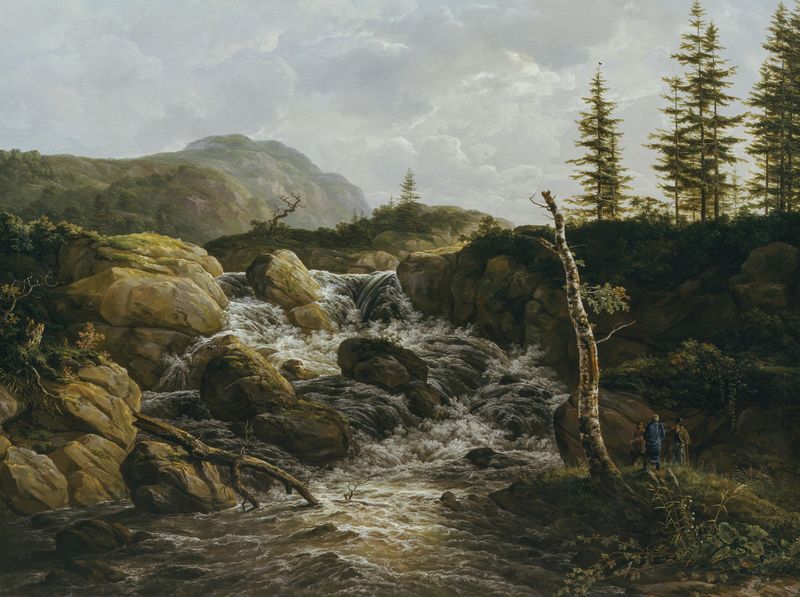
Mountainous Landscape with a Waterfall, Norway
Johan Christian Dahl
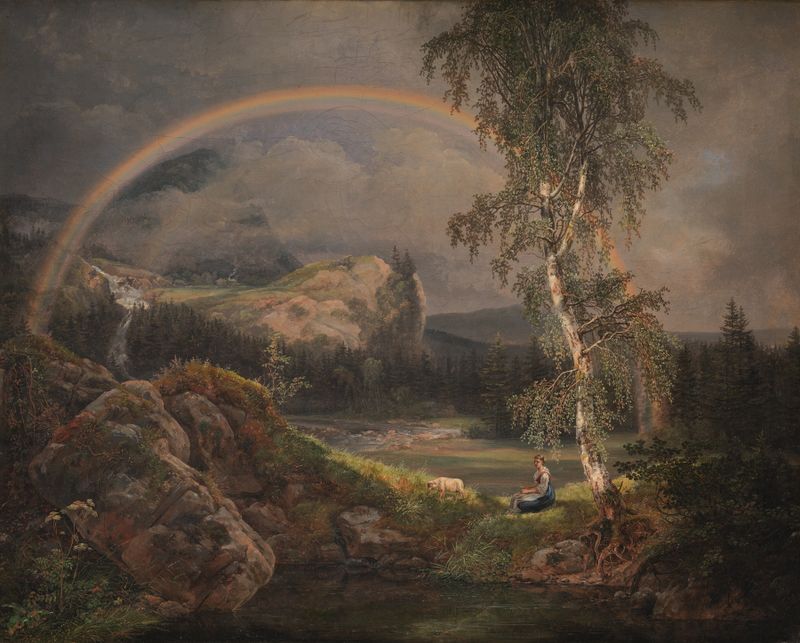
Norwegian Landscape with a Rainbow
Johan Christian Dahl
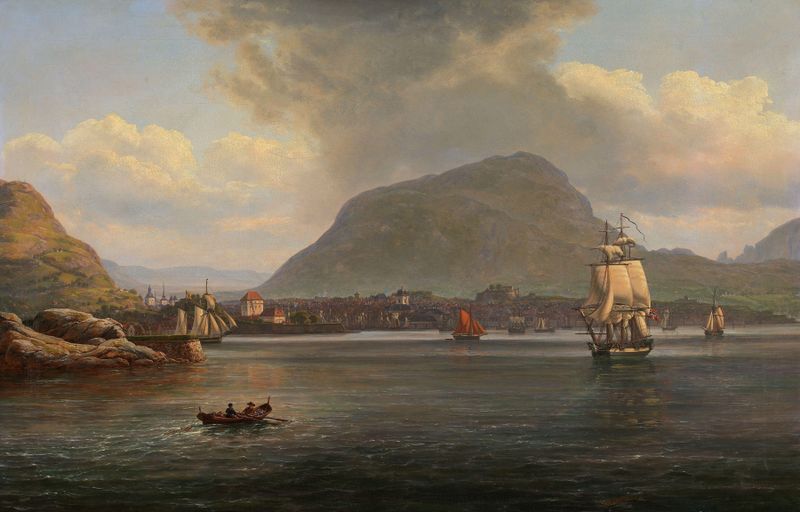
Bergen seen from the northern Inlet
Johan Christian Dahl
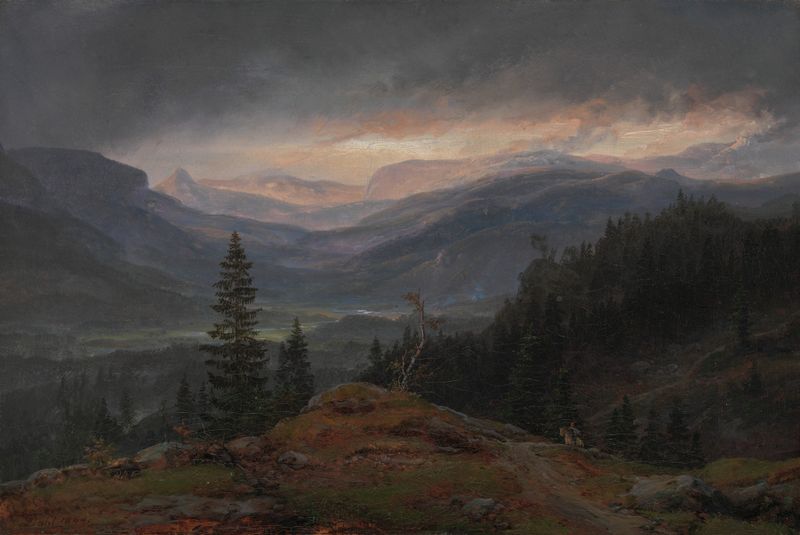
View over Hallingdal
Johan Christian Dahl
View over Øresund near the Lime Works
Johan Christian Dahl
A Shipwreck on the Coast of Norway
Johan Christian Dahl
View of a Lake, Norway
Johan Christian Dahl
The Watzmann
Johan Christian Dahl
View of Hjelle in Valdres
Johan Christian Dahl

View At Skjolden In Lyster
Johan Christian Dahl





