
The Landing Stage — História e Análise
Where does light end, and longing begin? Such questions resonate deeply in the space of our dreams, where the ethereal meets the tangible, and desire transcends into divinity. Look to the center of the canvas where a wooden landing stage juts out toward an expanse of shimmering water, inviting the viewer into a moment suspended in time. The play of light creates a luminescent path across the surface, leading the eye toward a distant horizon where the sky embraces the sea. The soft, muted colors of the scene evoke a sense of tranquility, while gentle brushstrokes suggest a fleeting moment, poised delicately between reality and reverie. Yet, amid its calm, the painting holds a palpable tension.
Notice how the reflections in the water shimmer with an otherworldly glow, contrasting the solidity of the landing stage. This duality between the firm structure and the ethereal reflections speaks to the complexity of human emotion—rooted yet yearning. The absence of figures invites introspection, making the viewer the sole occupant of this sacred space, confronting their own longing and aspirations. In 1911, while living in Barcelona, the artist created this work during a period marked by artistic exploration and personal transformation.
The early 20th century was a time of vibrant change in the art world, as Rusiñol became involved in the modernist movements sweeping through Europe. His choice to portray an isolated yet inviting scene reflects his deep engagement with themes of solitude and aspiration, capturing a moment where the divine and the tangible intersect.
Mais obras de Santiago Rusiñol
Ver tudo →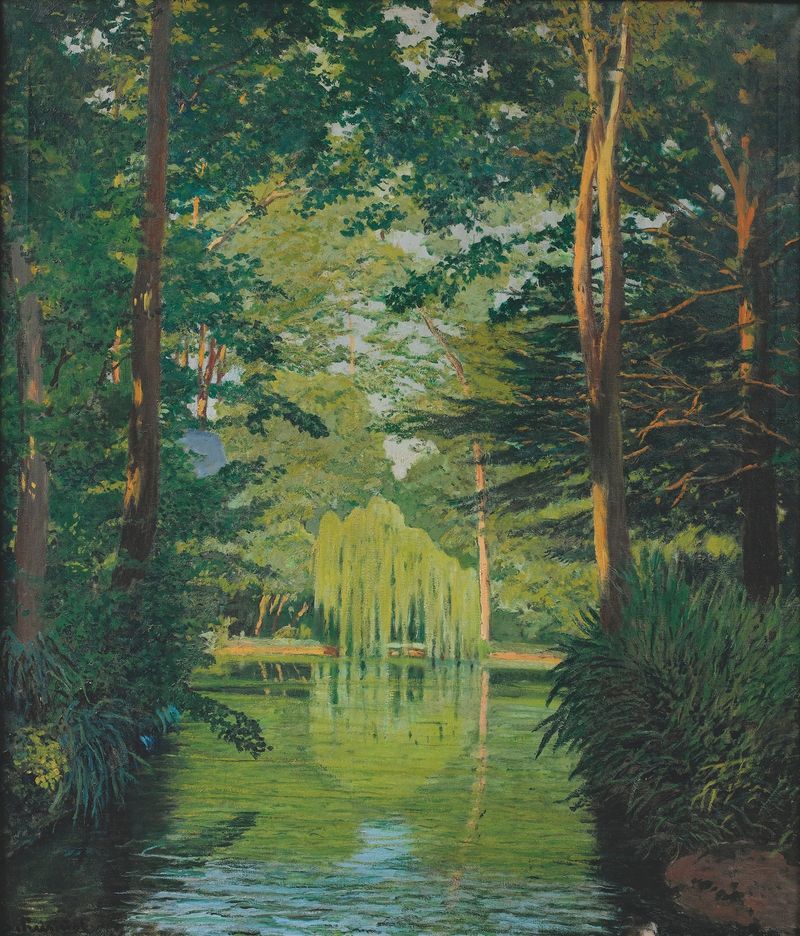
Parc Badés, Arbúcies
Santiago Rusiñol
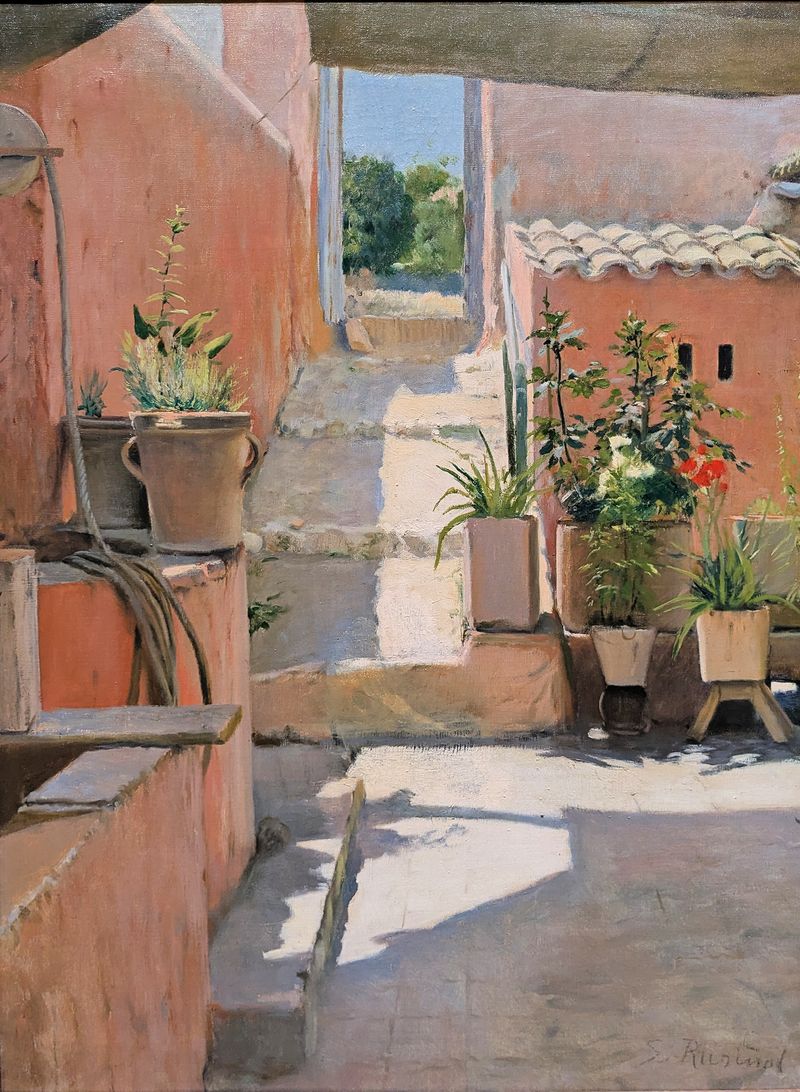
Patio in Sitges
Santiago Rusiñol
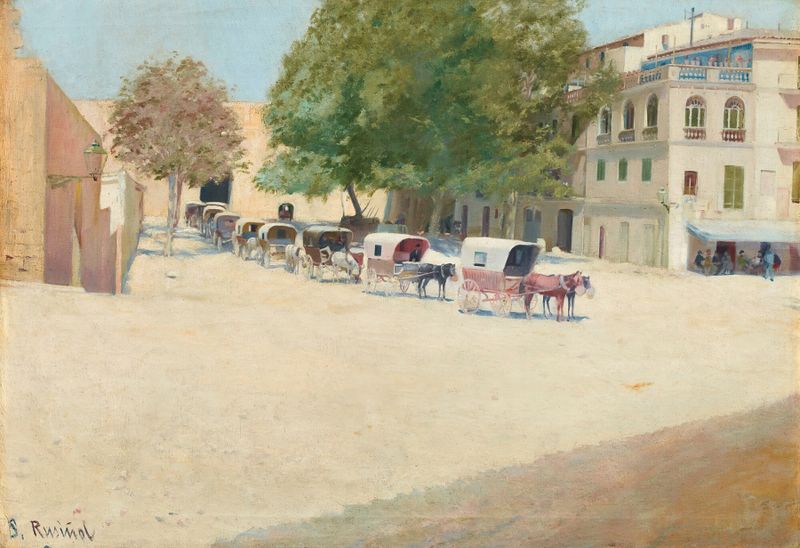
Paseo De Mallorca
Santiago Rusiñol
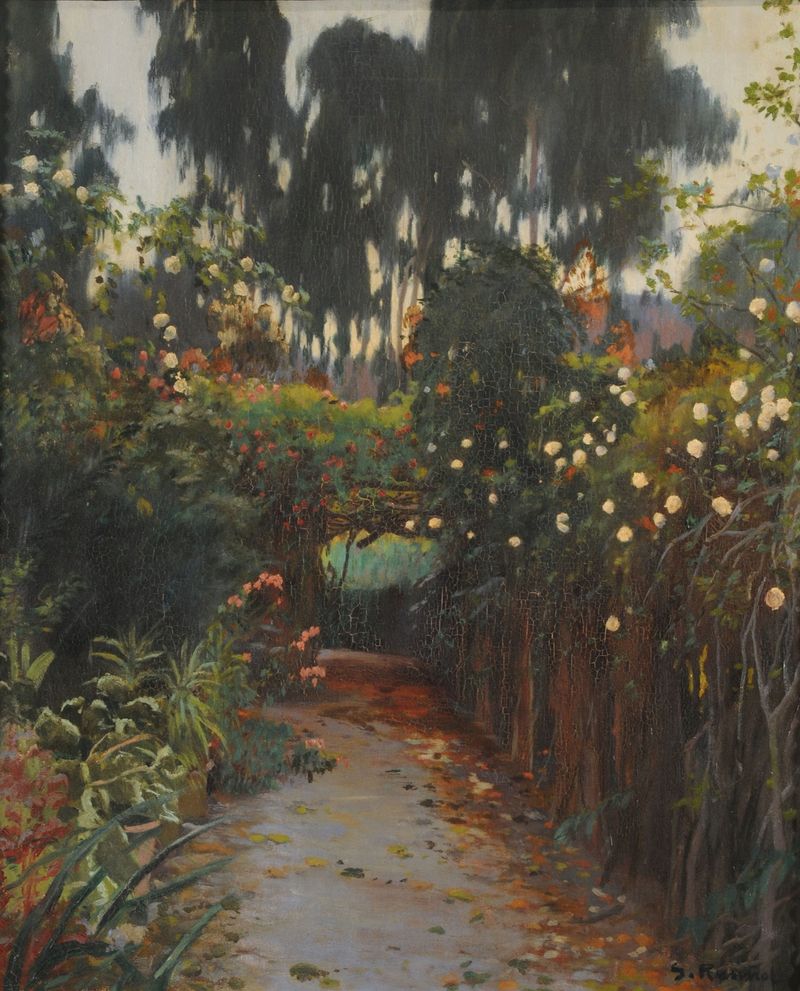
Camino de rosas
Santiago Rusiñol

Lavaderos De La Barceloneta
Santiago Rusiñol
Otoñal
Santiago Rusiñol

Cala Grisa
Santiago Rusiñol

Gardens of the Generalife
Santiago Rusiñol

Jardín De Sa Coma. Valdemosa
Santiago Rusiñol

La Fuente De Los Cipreses
Santiago Rusiñol





