The Moose Hunter — História e Análise
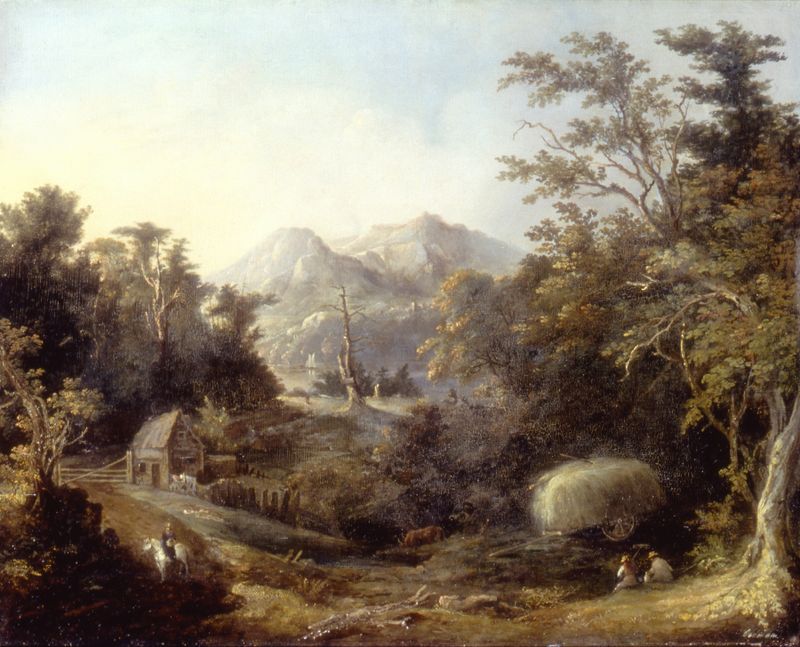
Who listens when art speaks of silence? In The Moose Hunter, a profound stillness envelops the canvas, inviting viewers to contemplate the weight of obsession. Look to the center where the lone figure stands poised, rifle in hand, against the backdrop of a vast, tranquil wilderness. The muted tones of greens and browns ground the scene in earthy realism, while the soft play of light highlights the hunter’s determined expression. Notice how the gentle curvature of the trees frames him, creating a natural focus that draws our gaze and emphasizes his solitude.
The intricate brushwork captures the textures of the landscape, rendering the scene alive yet hauntingly quiet. As you delve deeper, consider the tension between man and nature. The heavy silence suggests not just a moment of stillness, but a profound connection to an obsession that extends beyond the hunt itself, perhaps hinting at a longing for mastery over wildness. The almost spectral presence of the moose, barely perceptible in the foliage, intensifies this notion—an elusive target representing the complexities of ambition, desire, and the hunt for meaning in one's life. In 1831, Codman created this work during a time when American art was striving to define its identity amid European influences.
Living in the burgeoning city of Portland, he was deeply engaged with themes of nature and exploration, reflective of a nation on the brink of expansion. This painting encapsulates the spirit of the era, portraying both the isolation and intensity inherent in the pursuit of personal goals.