
The Scuir of Eigg — História e Análise
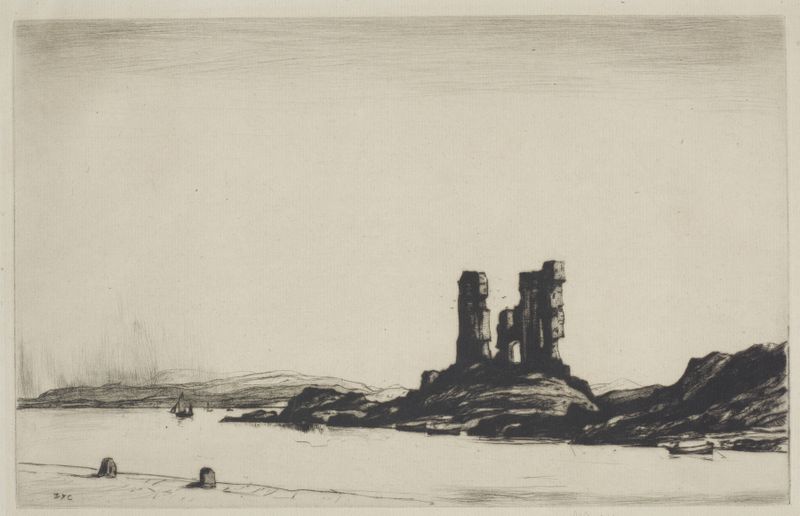
Did the painter know this moment would outlive them? The tranquility captured in The Scuir of Eigg offers a glimpse into nature's timeless embrace, a serene testament to the power of the artist's vision. Look to the horizon where the rugged silhouette of Eigg rises against a soft, pastel sky. The gentle hues of lavender and peach bleed into one another, while the deep greens of the foreground ground the composition. Notice how the sunlight caresses the cliffs, creating dramatic contrasts that draw your eye upward, inviting contemplation of the landscape's majesty.
Cameron’s deft brushwork harmonizes the textures of the land and sky, crafting a moment of stillness within the natural world. Delve deeper into the subtleties of the piece—the still water reflecting the vibrant colors above hints at the duality of life and its serene counterpart. The play of light suggests a fleeting moment, an ephemerality emphasized by the unyielding rock formations that stand resolutely against time. This juxtaposition evokes a sense of peace, simultaneously uplifting and grounding, offering a refuge from the chaos of the outside world. David Young Cameron painted The Scuir of Eigg in 1931, during a period marked by a shift in the art world toward modernism.
Living in Scotland, he was deeply influenced by the landscapes around him, as well as the socio-political changes of the time. This work reflects his mastery of capturing the beauty of the Scottish scenery while also embodying a desire for introspection amidst an increasingly complex world.
Mais obras de David Young Cameron
Ver tudo →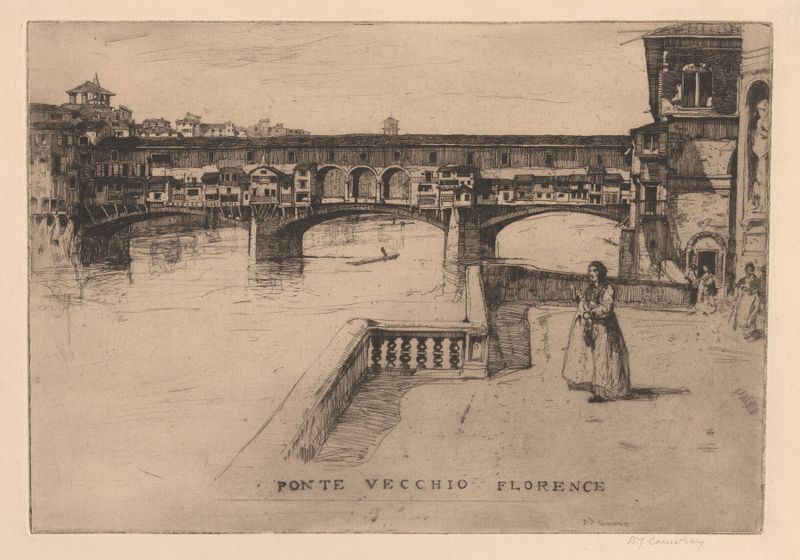
Ponte Vecchio
David Young Cameron

The Deanery, Winchester
David Young Cameron
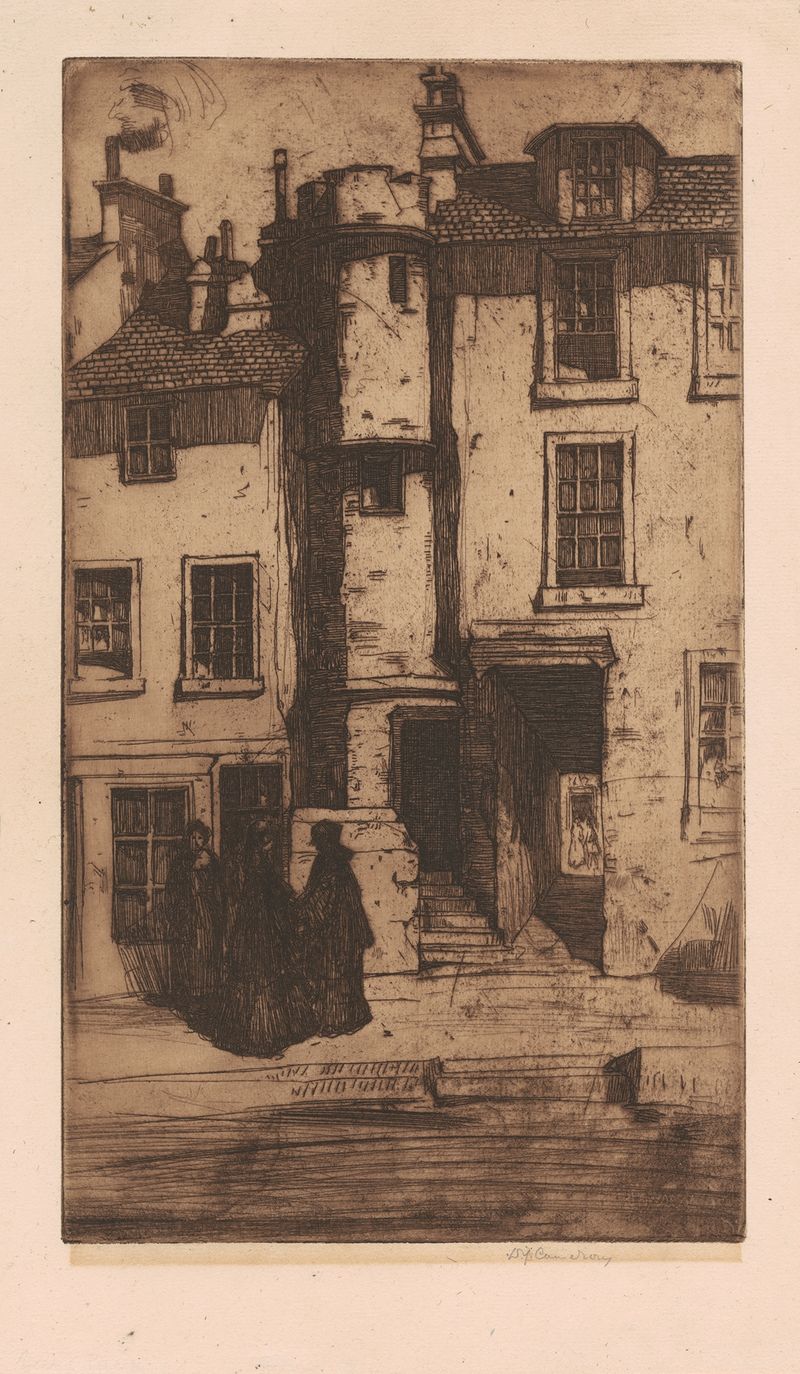
Old Houses, Stirling
David Young Cameron
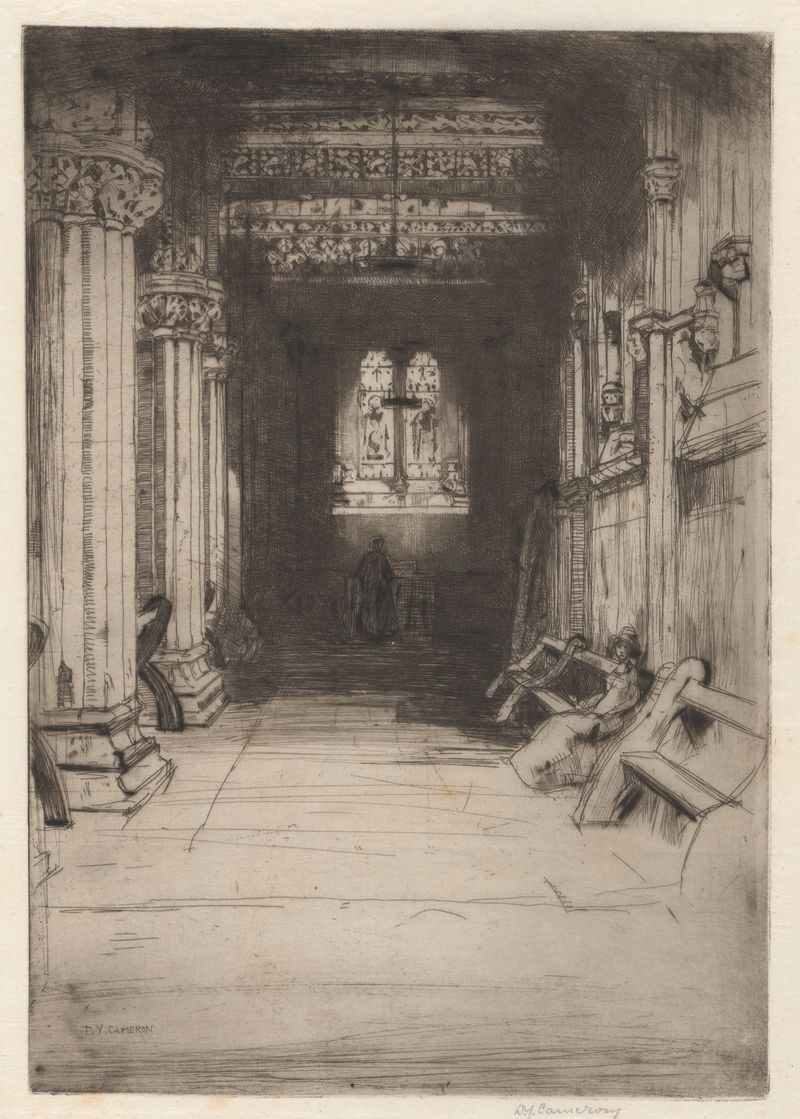
Rosslyn Chapel
David Young Cameron

The Old Museum, Beauvais
David Young Cameron
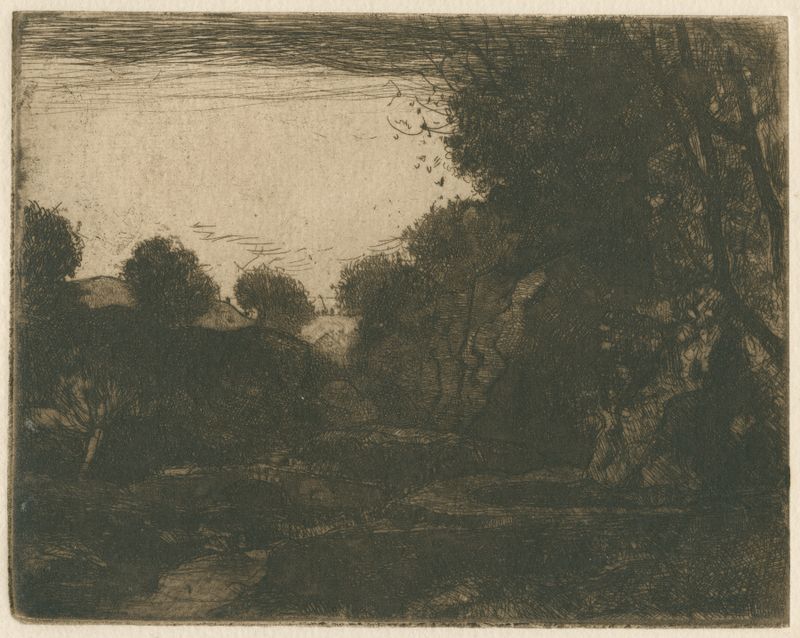
On the Bradford
David Young Cameron

The Smithy
David Young Cameron
Castle Moyle
David Young Cameron
Downing Street
David Young Cameron

Glasgow Cathedral
David Young Cameron





