
t’Huis te Persyn — História e Análise
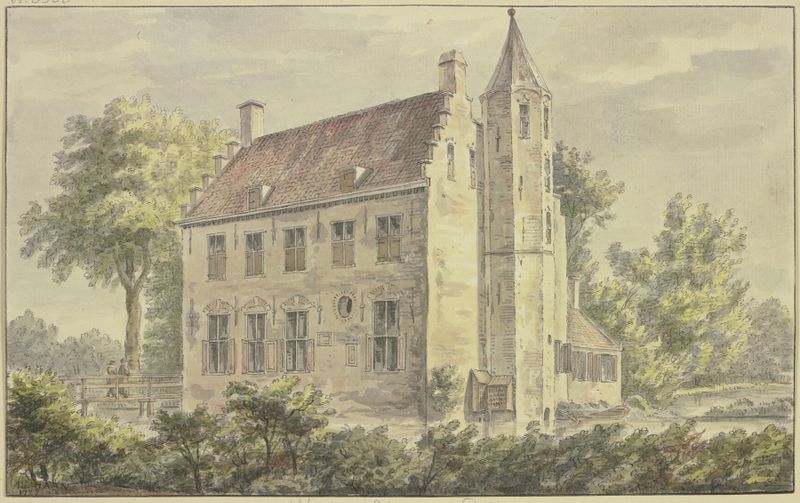
Could a single brushstroke hold eternity? Within the delicate architecture of t’Huis te Persyn, every stroke resonates with the weight of longing, whispering stories from a world caught between the past and the present. Focus first on the intricate details of the house, where the aged bricks seem to sigh under the gentle embrace of twilight. Notice how the golden light filters through the leaves of the surrounding trees, casting playful shadows that dance across the façade. The composition draws the eye upward, leading us to the peaked roof, a testament to both craftsmanship and the passage of time, while the soft palette of muted greens and browns evokes a sense of nostalgia. Yet beyond the visual beauty lies a deeper emotional resonance.
The juxtaposition of the sturdy structure against the ephemeral nature of light highlights the transient beauty of life itself. The viewer is invited to ponder the countless memories and moments embedded within those walls, a silent witness to human experience. Each brushstroke seems to capture not only the physical space but also the unfulfilled desires of those who may have inhabited it—echoes of laughter, whispers of dreams. During the period this piece was created, Abraham de Haen the Younger was painting quietly against the backdrop of the Dutch Golden Age, a time marked by an intense appreciation for realism and detail.
While artists explored new themes and techniques, he remained devoted to capturing intimate, everyday scenes, reflecting the collective consciousness of a society yearning for connection and understanding amidst the transformations of their world.
Mais obras de Abraham de Haen the Younger
Ver tudo →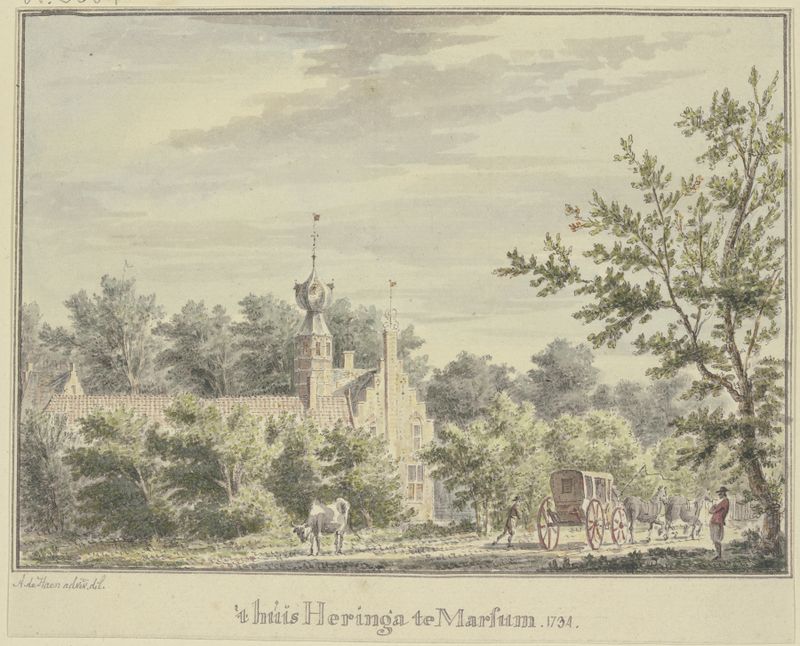
Mais arte de Arquitetura
Ver tudo →
The statue of Liberty
Frédéric Auguste Bartholdi

View of Houses in Delft, Known as ‘The Little Street’
Johannes Vermeer

View of Houses in Delft, Known as ‘The Little Street’
Johannes Vermeer

The Cathedral in Rouen. The portal, Grey Weather
Claude Monet

The yellow house
Vincent van Gogh

The Church in Auvers-sur-Oise, View from the Chevet
Vincent van Gogh