Turbulent water — História e Análise
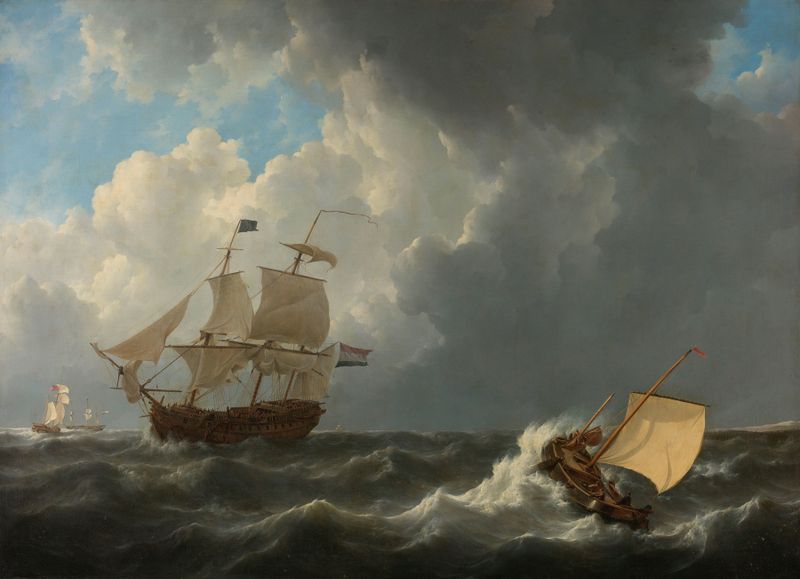
In a world where the relentless force of nature intertwines with the fragility of existence, turbulence becomes a poignant reminder of life’s transience. Look closely at the swirling mass of water in the foreground, where frothy whites clash with deep blues and greens. The artist’s meticulous technique captures the dynamic motion of waves, their crests reaching out as if to grasp the viewer’s attention. Notice the interplay of light shimmering across the surface, transforming the water into a living entity that pulsates under its own power.
Shadows lurk beneath, hinting at the depths of emotion hidden beneath the chaos. In the midst of this tumultuous scene, one senses a delicate balance between beauty and danger. The powerful waves symbolize both nature's might and the ephemeral nature of life, illustrating how quickly serenity can become chaos. Schotel’s choice of colors not only enhances the visual clash but also evokes a visceral response, drawing us into the emotional depths of fragility amidst overwhelming forces. Johannes Christiaan Schotel painted Turbulent Water in 1833 during a period marked by romanticism in art, where emotions and nature were increasingly explored.
Living in the Netherlands, a country often grappling with the sea’s unpredictability, Schotel reflected both the external world and his inner turmoil through this work. At this time, the art world was evolving, with artists seeking to capture the rawness of human experience against the backdrop of the sublime.