Vergezicht van weilanden met boerderijen — História e Análise
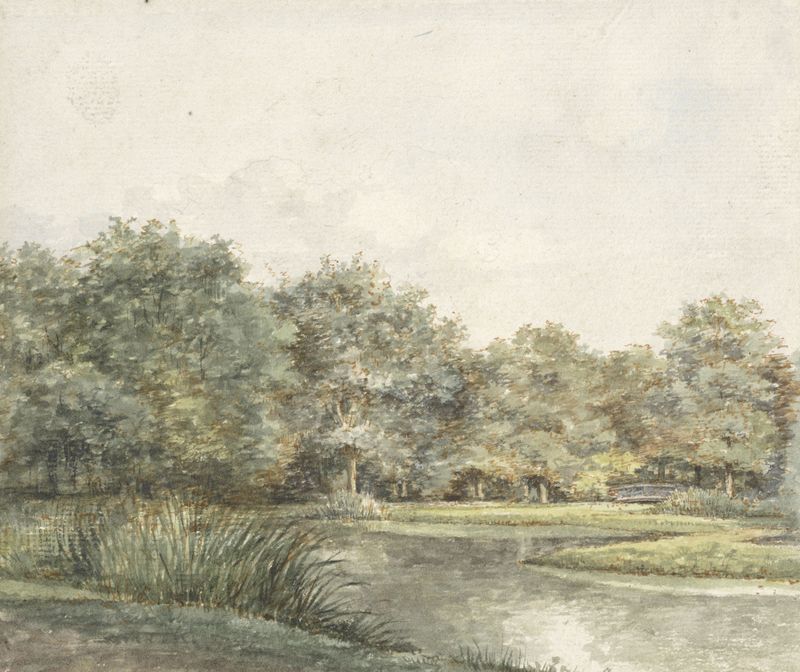
In the tranquil expanse of Vergezicht van weilanden met boerderijen, the stillness speaks volumes, inviting the viewer into a world where reflection intertwines with the landscape's soft whispers. Look to the foreground, where rich green fields roll gently into the distance, dotted with quaint farmhouses that punctuate the horizon. Notice how the light bathes the scene in a warm, golden hue, creating a harmonious balance between the earth and sky. The artist's deft brushwork captures the essence of rural life, with textures that evoke the tactile quality of the land, while soft clouds drift lazily overhead, suggesting a moment suspended in time. Embedded within the composition are subtle contrasts—the vibrancy of the fields against the muted tones of the buildings, highlighting the dichotomy between nature's bounty and human labor.
Each farmhouse tells a story of toil and tranquility, embodying the resilience of agrarian life. The undulating hills not only guide the viewer's gaze but also symbolize the cyclical nature of existence, reminding us that reflection is paramount to understanding our place in the world. Painted in 1828, this work emerges from a period when the artist sought to capture the essence of Dutch rural life amidst the backdrop of burgeoning industrialization. Living in the Netherlands, he distilled the beauty of the pastoral landscape during a time when artists were increasingly turning to Romantic ideals.
This piece encapsulates both a longing for simplicity and a recognition of the inevitable changes that loom on the horizon.