
View at Enderby, Leicestershire — História e Análise
In the stillness of the countryside, a quiet obsession unfolds, nestled between the vibrant hues of nature and the unyielding grasp of time. Look to the left, where the lush greens of the fields undulate gently beneath a cascade of soft, golden sunlight. The sweeping horizon beckons the eye, drawing attention to the contrasting strokes of brooding clouds above, creating a dramatic interplay of light and shadow. Morland’s precise brushwork highlights the textures of the landscape, from the rugged terrain to the delicate wisps of grass, each element rendered with remarkable attention to detail that speaks of his reverence for the natural world. Delve deeper into the scene, and you’ll find hidden meanings in the juxtaposition of serenity and tension.
The placid water reflecting the tumultuous sky suggests an emotional dichotomy, hinting at how tranquility can be undercut by an invisible weight. The solitary tree stands resolute, embodying both strength and isolation, as if it bears witness to the quiet obsessions that linger in the land, whispering secrets of forgotten stories. In 1792, George Morland painted this masterpiece while living in England, grappling with personal struggles and the pressures of his burgeoning career. This period saw him balancing his fascination with rural life against the backdrop of an art world increasingly captivated by romanticism.
As he captured this serene landscape, he found solace in nature, even as his own life spiraled into tumult, reflecting the multifaceted complexities of existence that resonated through his art.
Mais obras de George Morland
Ver tudo →
The Bell Inn
George Morland
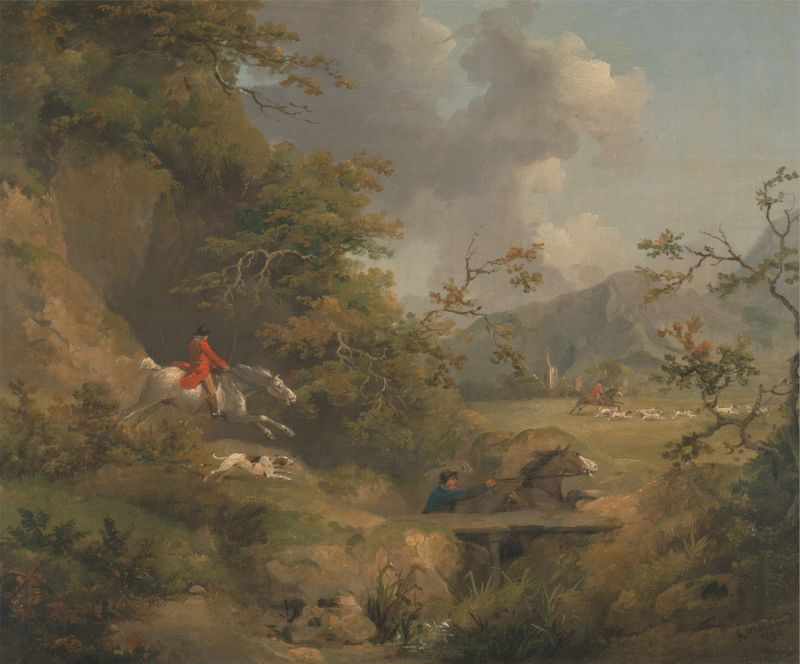
Foxhunting in Hilly Country
George Morland

Pheasant Shooting
George Morland

The Mail Coach
George Morland

Rocky Landscape with Two Men on a Horse
George Morland
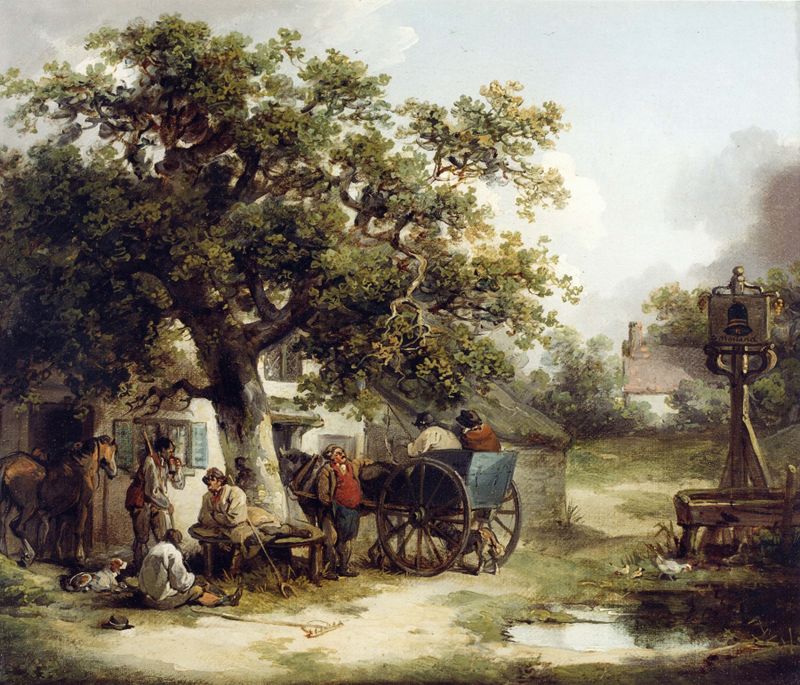
The Bell Inn, Kilburn
George Morland

Landscape
George Morland

Trepanning a Recruit
George Morland

A Country Inn
George Morland

Boats
George Morland





