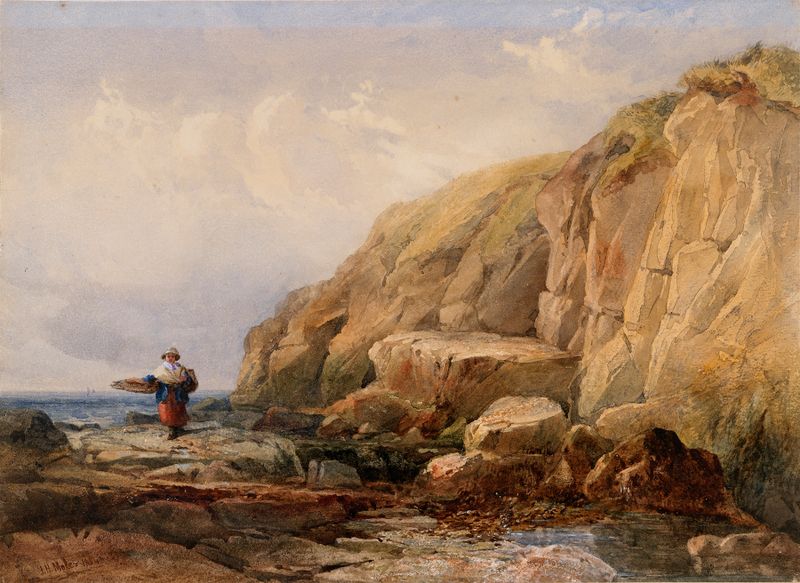
View from Craig-y-Barns, Dunkeld, Looking South — História e Análise
What if silence could speak through light? In View from Craig-y-Barns, Dunkeld, Looking South, the interplay of shadow and radiance invites contemplation of the unseen narratives that unfold in nature’s embrace. Focus first on the sweeping landscape that unfolds beneath a vast, cloud-strewn sky. The hills gently undulate, their contours meticulously rendered in shades of green and brown, capturing the lushness of the Scottish countryside. Notice how the light cascades across the scene, illuminating the foreground while casting deep shadows behind the distant trees.
This strategic use of chiaroscuro adds depth and dimension, imbuing the landscape with a sense of both serenity and latent drama. Hidden within the vibrant palette lies an emotional tension; the looming clouds hint at the tempestuous nature of life, contrasting with the tranquility of the natural world below. The shadows seem to whisper secrets of the past, suggesting a richness in the earth that is both inviting and mysterious. This duality reflects a deeper connection between humanity and nature, where moments of stillness offer space for reflection amid the chaos of existence. In 1855, John Henry Mole painted this work during a period of personal exploration and growth.
Living in Scotland, he was influenced by the Romantic movement that celebrated the beauty of nature and the sublime. The mid-19th century was a time of transition in art, as artists sought to convey emotion and the essence of their surroundings, paving the way for future generations to delve deeper into the relationship between light, shadow, and human experience.