
View from the Belvedere over Vienna — História e Análise
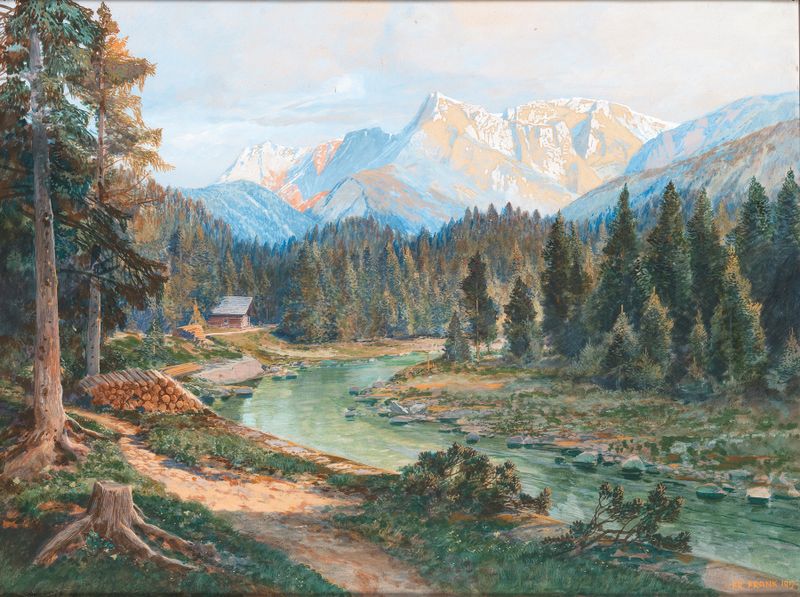
In the delicate balance of light and shadow, we find ourselves on the cusp of awakening. Look to the center of the canvas where the shimmering expanse of the Danube River unfurls like a ribbon of serenity. The warm tones of the setting sun bathe the city in a golden glow, casting elongated shadows that dance joyfully across the rooftops. Notice the meticulous details in the architecture; each building tells a story, their varied hues merging gently to create a harmonious skyline.
The delicate brushwork evokes a sense of depth, drawing the eye across the vista from the lush green foreground to the distant, undulating hills. As you absorb the scene, consider the emotional contrast between the bustling life of Vienna and the introspective stillness of the viewer's perch. The juxtaposition of vibrant color and tranquil space invites contemplation, as if the city breathes while we stand still, removed from the chaos. The soft blues and greens invite peace, while the shimmering gold hints at the vibrancy of life below, capturing a moment that feels both eternal and fleeting. This artwork came from the hand of Friedrich Frank in an undefined period of his artistic journey.
It reflects the 19th-century romanticism that was sweeping across Europe, characterized by a longing for nature and a connection to place. During this time, Frank was likely navigating personal introspections and artistic influences, exploring how landscapes could transform the subjective experience into a shared visual narrative.
Mais obras de Friedrich Frank
Ver tudo →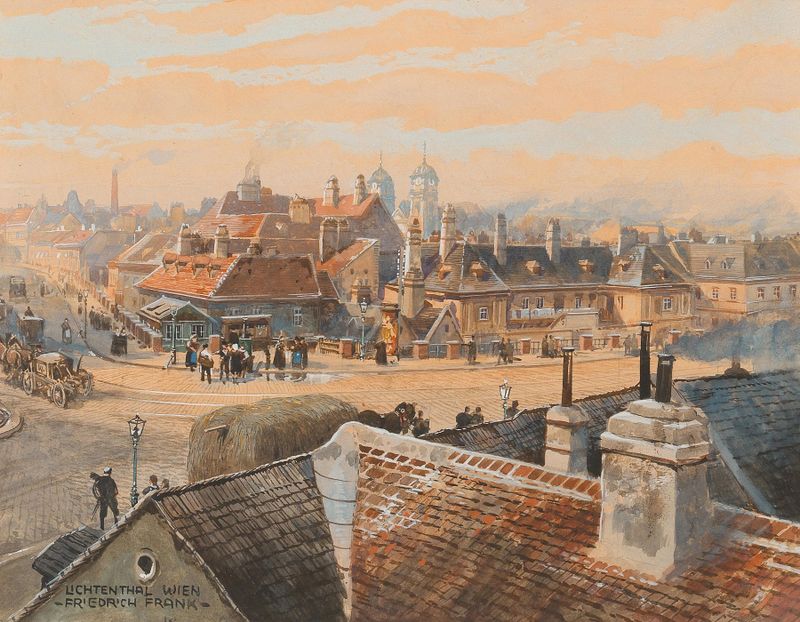
A view of the Viennese suburb Lichtenthal with Schubert church
Friedrich Frank
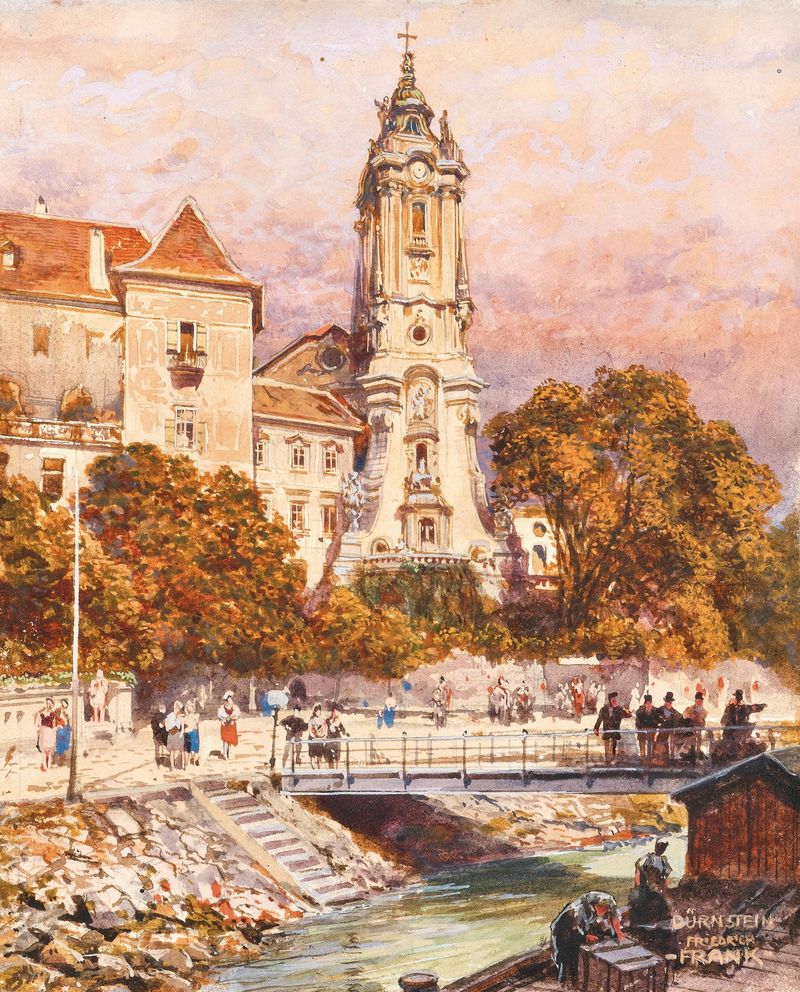
A view of Dürnstein monastery, the shipping pier in the foreground
Friedrich Frank
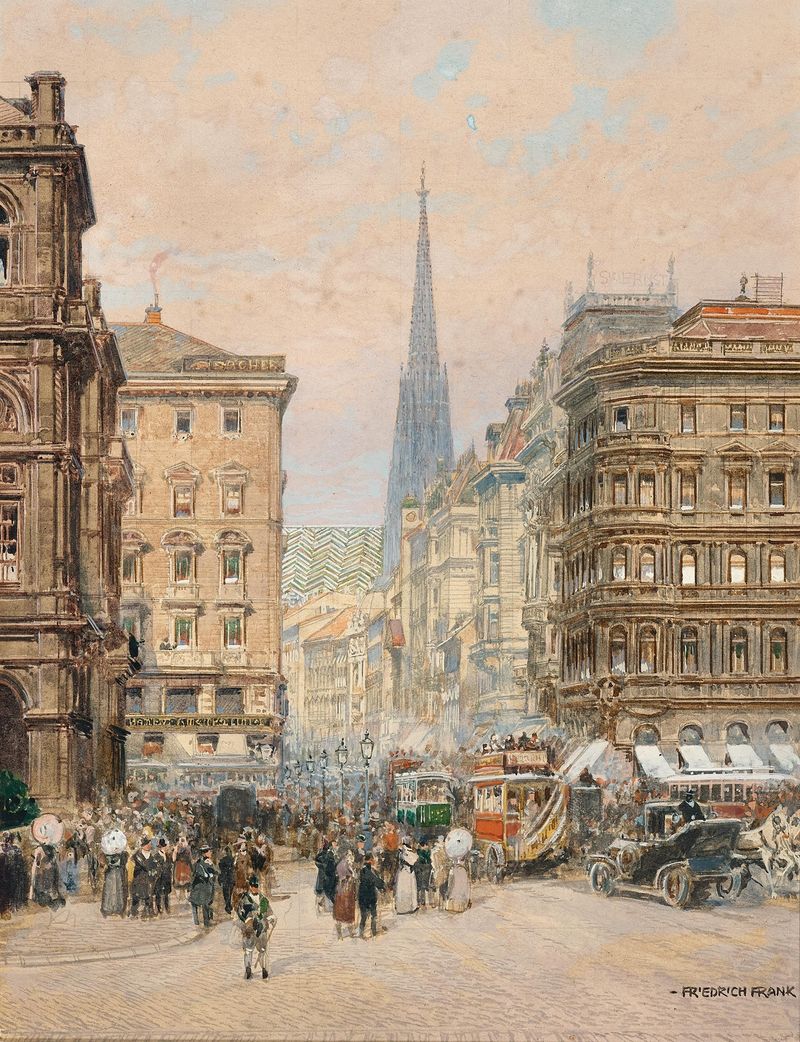
Vienna, Kärntnerstrasse, a view from the opera to Saint Stephen’s cathedral
Friedrich Frank

Saint Charles’s church in Vienna
Friedrich Frank
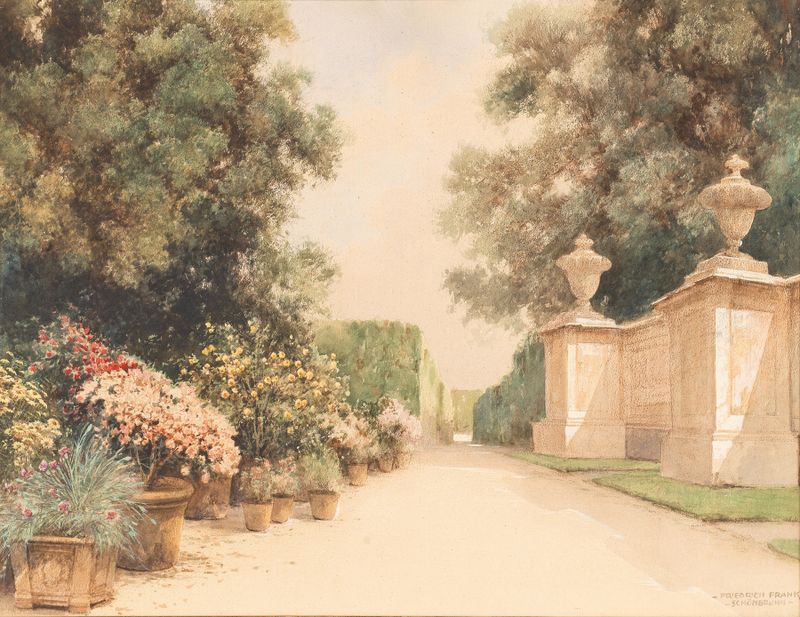
An alley in the Grand Parterre, flower pots and part of a wall in Schönbrunn park
Friedrich Frank
A motif from the Salzburg country side
Friedrich Frank





