
View of Gudvangen — História e Análise
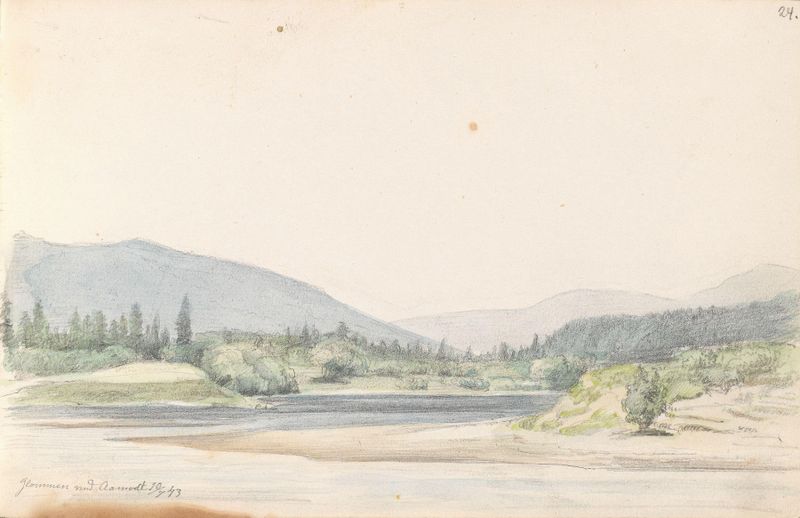
Can beauty exist without sorrow? The haunting landscape captured in this work suggests that the two are intertwined, revealing a world where joy and melancholy coexist. Look to the left at the majestic mountains, their towering peaks shrouded in wispy clouds that seem to cradle their summit. The vibrant hues of green in the valley below contrast sharply with the muted grays above, creating a sense of depth and drama. Notice the gentle flow of the river winding through the scene, its shimmering surface reflecting the somber sky, inviting the viewer to contemplate the passage of time and the fleeting nature of beauty. As you absorb the intricacies of the landscape, consider the delicate balance of light and shadow.
The interplay evokes a feeling of nostalgia, as if the viewer is peering into a moment suspended between two worlds. The small figures in the foreground, almost dwarfed by their surroundings, hint at the insignificance of humanity in the face of nature's grandeur. This juxtaposition embodies a tension between the sublime and the sorrowful, reminding us of the impermanence of existence. In 1843, Tidemand was in Norway, a time when Romanticism heavily influenced the art scene.
The artist was known for his depictions of Norwegian landscapes, reflecting both the country's natural beauty and its deep cultural heritage. While he sought to celebrate the majesty of his homeland, he was also deeply aware of the underlying emotions that such beauty could evoke—grief for what might be lost in the passage of time.
Mais obras de Adolph Tidemand
Ver tudo →
Bridal Procession on the Hardangerfjord
Adolph Tidemand

Fra Haugsbygd
Adolph Tidemand

Domkirkeruinen, Hamar
Adolph Tidemand

Hagestad prestegård, Ulvik i Hardanger
Adolph Tidemand

View from Gudvangen
Adolph Tidemand

Fra Gulsvik
Adolph Tidemand

From Kullen in Sweden
Adolph Tidemand

Country Road
Adolph Tidemand

Untitled
Adolph Tidemand
Glomma ved Åmot
Adolph Tidemand





