
Vue présumée de Montmartre. — História e Análise
When did color learn to lie? In the tranquil embrace of a Montmartre morning, hues blend seamlessly, weaving a tale of serenity and nostalgia that transcends the ordinary. Look to the left at the soft roll of the hills, their emerald and gold tones whispering of sunlit fields. Notice how the light gently caresses the rooftops, casting playful shadows that dance across the canvas. The careful brushstrokes create a tapestry of texture, inviting the viewer to meander along the winding paths, while the sky overhead, a delicate blue, envelops the scene in a calm embrace. Yet within this idyllic portrayal lies a subtle tension; the distant church steeple stands tall, a silent sentinel amid the pastoral beauty, suggesting an underlying narrative of societal change.
The vibrant colors evoke joy and tranquility, but they also conceal the shifting dynamics of Paris, where the artist anticipated the tumult of an emerging modernity. The contrast between the serene landscape and the looming urban environment hints at the complexities of existence in a changing world. Georges Michel painted this piece in 1830, during a time of great social upheaval in France, marked by the July Revolution. Living in the outskirts of Paris, he sought to capture the ethereal quality of the local landscape while also responding to the evolving artistic movements of his time.
His work reflects a retreat into nature even as the city began to rise around him, revealing both a personal longing for peace and a profound awareness of the world's transformations.
Mais obras de Georges Michel
Ver tudo →
The Approaching Storm
Georges Michel

Landschap met zandweg
Georges Michel

Landschaft bei Paris
Georges Michel
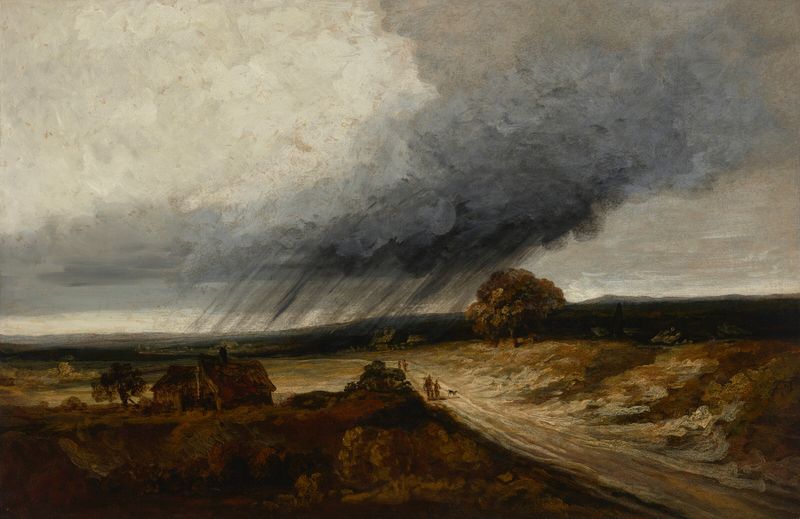
The Approaching Storm
Georges Michel

Landschap met overtrekkende bui
Georges Michel

Landschap met figuren en vee
Georges Michel

Approaching Storm
Georges Michel
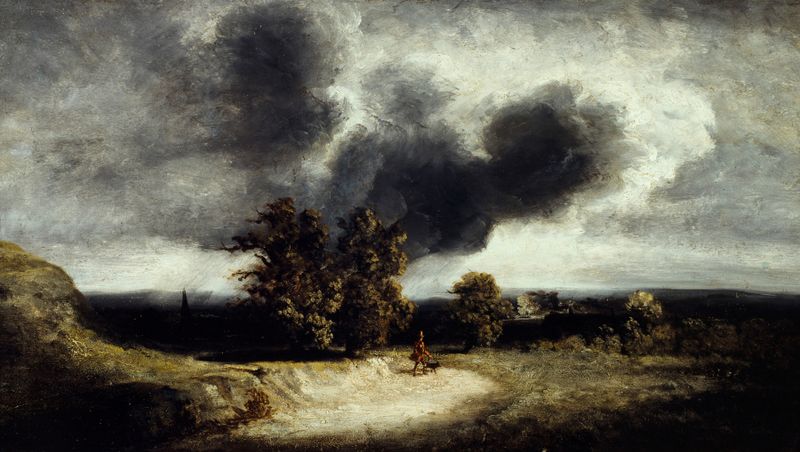
Paysage des environs de Paris.
Georges Michel

Gezicht op de Dome des Invalides uit de Champ de Mars
Georges Michel

Chaumière à la lisière d’un bois
Georges Michel





