Waldlandschaft — História e Análise
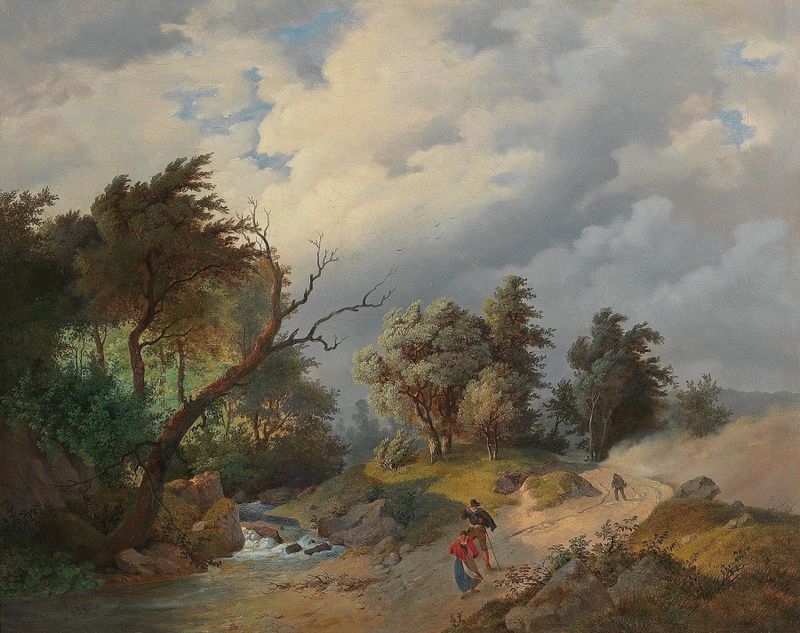
In the stillness of nature, innocence blooms quietly, untroubled by the chaos of the world outside. Each stroke of the brush captures a moment suspended in time, a testament to the beauty that thrives in solitude. Look to the left, where delicate foliage dances in the gentle breeze, vibrant greens contrasting against the soft, muted browns of the earth. Notice how the light filters through the trees, casting dappled shadows that play upon the forest floor, guiding your gaze deeper into this serene landscape.
The meticulous detail in the leaves and the tranquil river reflects a masterful command of technique, inviting viewers to lose themselves in the lush tranquility of this outdoor haven. Hidden within this pastoral beauty lies a poignant contrast — the simplicity of nature set against the complexities of human emotion. The innocent beauty of the scene evokes a sense of nostalgia, perhaps a longing for a more innocent time. The quietude depicted here resonates with those who seek solace, reminding us that even amidst turmoil, nature offers a refuge where we can reconnect with our purest selves. In 1863, Kriehuber painted this piece during a period marked by societal changes across Europe.
He was navigating the evolving art scene, where romanticism coexisted with emerging realism, reflecting a world in flux. This was a time when the innocence of nature was celebrated, perhaps as a counterpoint to the industrial distractions creeping into everyday life, capturing a fleeting moment of peace that resonated deeply with viewers of his time.