Zrúcaniny hradu — História e Análise
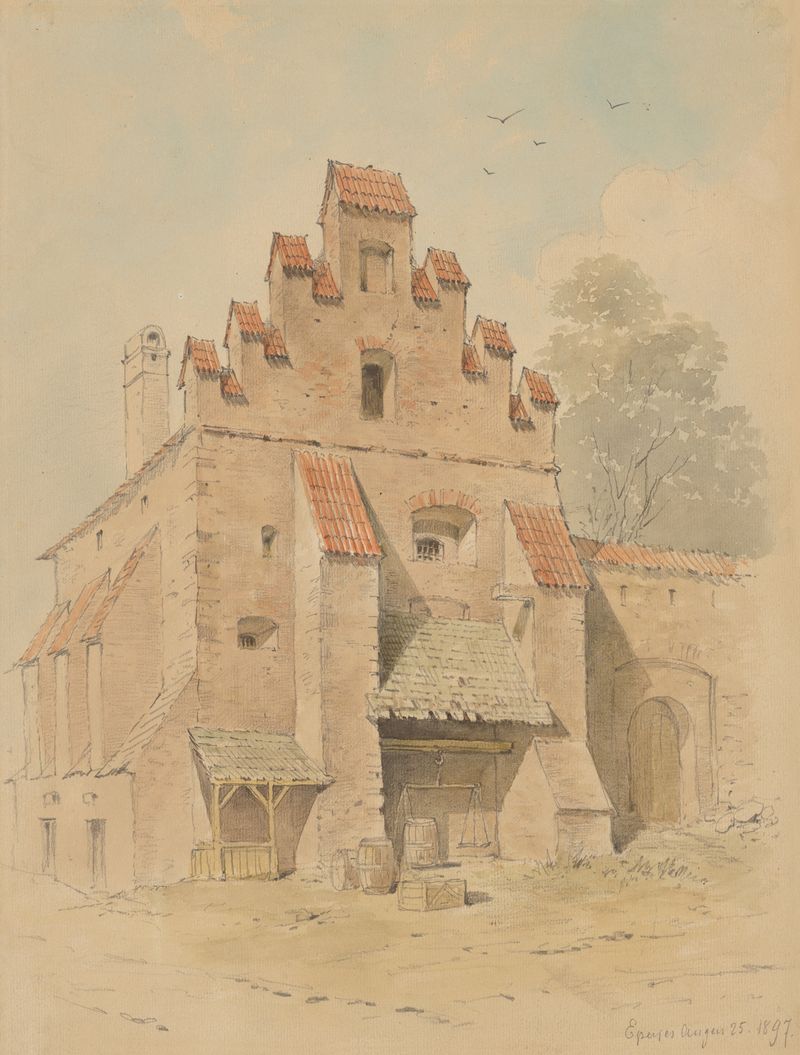
In the interplay of shadow and illumination, light transcends mere illumination. It becomes a vessel for emotions, whispering secrets of the human experience through the canvas. Look closely at the left side of the composition, where the sun’s golden rays pierce through darkened clouds, casting delicate highlights upon the crumbling stones of the castle ruins. Notice the ochre and deep azure tones that create a striking contrast, evoking a sense of nostalgia mingled with decay.
Each brushstroke conveys texture and depth, allowing the viewer to almost feel the weight of history that clings to the ancient walls. The light not only illuminates the ruins but also breathes life into the shadows, suggesting stories untold and memories long forgotten. Within this twisted embrace of light and dark, themes of transience and resilience emerge. The ruins symbolize the passage of time, echoing the impermanence of human endeavors.
The juxtaposition of vibrant hues against the somber remnants reminds us that beauty can exist even in decay. The interplay of light embodies hope and sorrow, suggesting that even in ruin, there is a flicker of life, a reminder of what once was and what might still be. Viktor Myskovszky created Zrúcaniny hradu between 1895 and 1899 during a period of societal shifts and artistic exploration in Central Europe. Active in Hungary, Myskovszky was influenced by the Symbolist movement, which sought to convey deeper meanings through visual language and emotion.
This painting reflects his dedication to capturing the essence of his surroundings, transforming the mundane into the extraordinary through the lens of light.