A Man and a Woman — History & Analysis
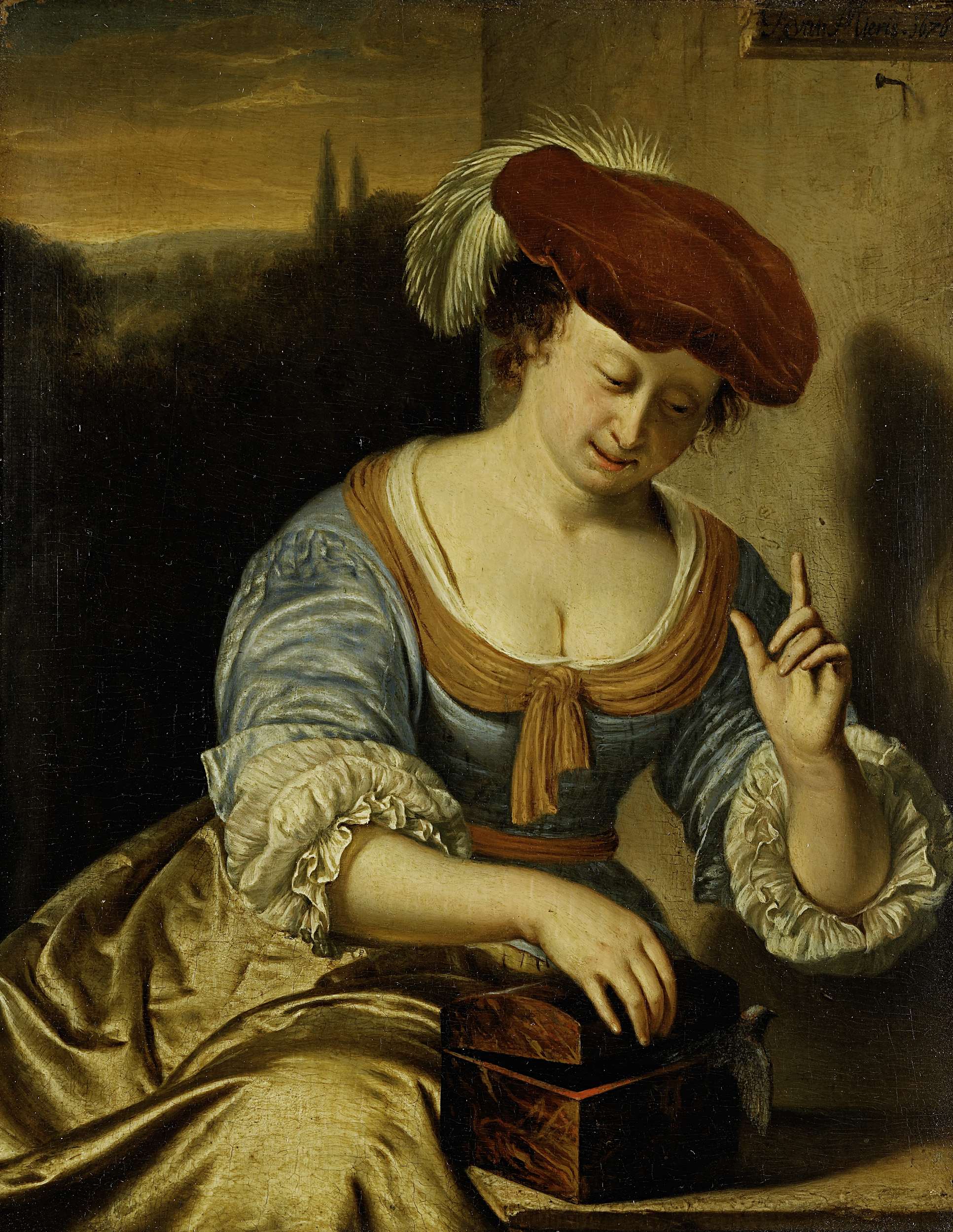
What if silence could speak through light? In A Man and a Woman, the ethereal glow that envelops the figures offers a dialogue of unspoken emotions and subtle yearnings. Look to the left at the elegantly draped curtain, shimmering with a soft brilliance that invites warmth into the intimate space. The interplay of light and shadow creates a naturalism that belies the meticulously applied brushstrokes, guiding your gaze toward the couple at its center.
Notice how the woman's delicate hand rests on the man’s arm, a gesture poised between affection and restraint, echoing the tension in their expressions. The rich, earthy tones of their garments contrast with the luminous highlights, drawing attention to the intricate details that embody both their status and vulnerability. Hidden within the canvas are contrasts that reveal deeper narratives: the juxtaposition of light and dark symbolizes the duality of passion and restraint, while the ornate objects scattered throughout the scene hint at a world filled with both luxury and isolation. The gentle tilt of the woman's head suggests a longing for connection, yet her distant gaze implies introspection or even doubt.
This complexity invites viewers to ponder the nature of their relationship—caught in a moment that is both fleeting and laden with significance. In 1678, Frans van Mieris was immersed in the vibrant art scene of the Dutch Golden Age, a period marked by a meticulous focus on realism and genre painting. Living in Leiden, he was celebrated for his ability to capture exquisite detail and emotional depth in everyday scenes. During this time, van Mieris drew inspiration from both the works of his predecessors and the growing interest in portraying human interactions, which is masterfully encapsulated in this piece.