Escaped Bird: Allegory of Chastity — History & Analysis
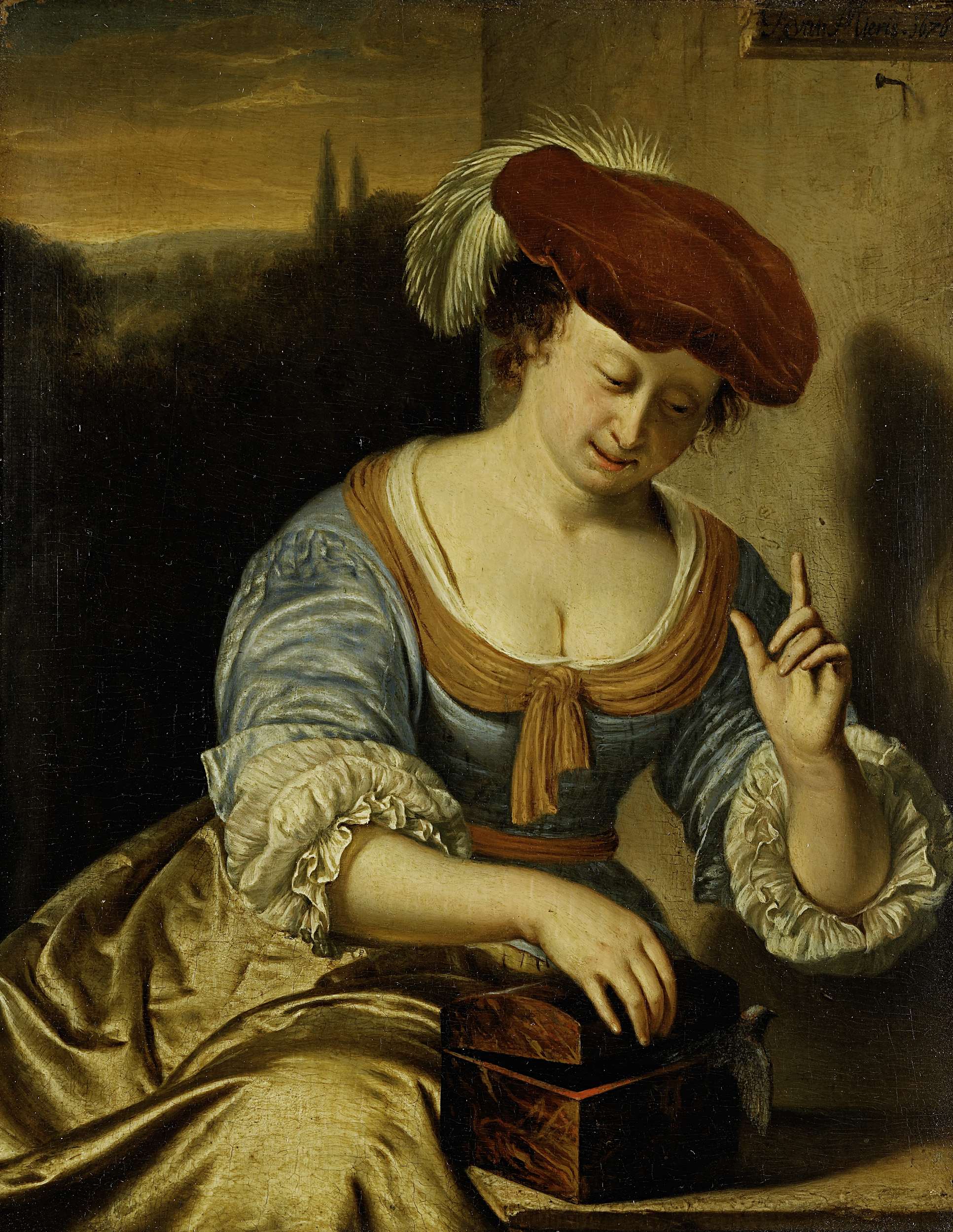
Can paint confess what words never could? In Escaped Bird: Allegory of Chastity, betrayal lingers in the air, spoken not through language but through the delicate interplay of light and shadow. Focus on the center, where a woman stands poised, her expression a mix of serenity and turmoil. Her hand delicately holds a caged bird, just liberated, its wings poised for flight.
Notice the vibrant colors—the rich hues of blue and gold—emphasizing her inner turmoil while contrasting against the muted backdrop. The light spills in from the left, casting gentle highlights on her face, revealing the conflict between her duty and her desires. Here, the liberated bird symbolizes both freedom and the complexity of personal choice. The tension in her gaze suggests a struggle against societal expectations, while the cage remains a haunting reminder of the constraints she faces.
Each element, from the floral motifs to the careful rendering of fabric, speaks to deeper themes of chastity versus temptation, where innocence grapples with the pull of the outside world. Frans van Mieris (I) painted this piece in 1676 during a period marked by the transition from the Baroque to more personal, introspective themes in art. Working in Delft, the artist drew from the cultural currents of his time, where allegorical representations spoke to the moral complexities of human relationships. This work reflects not only the artist's keen technical skills but also the rich tapestry of societal expectations that shaped his subjects.