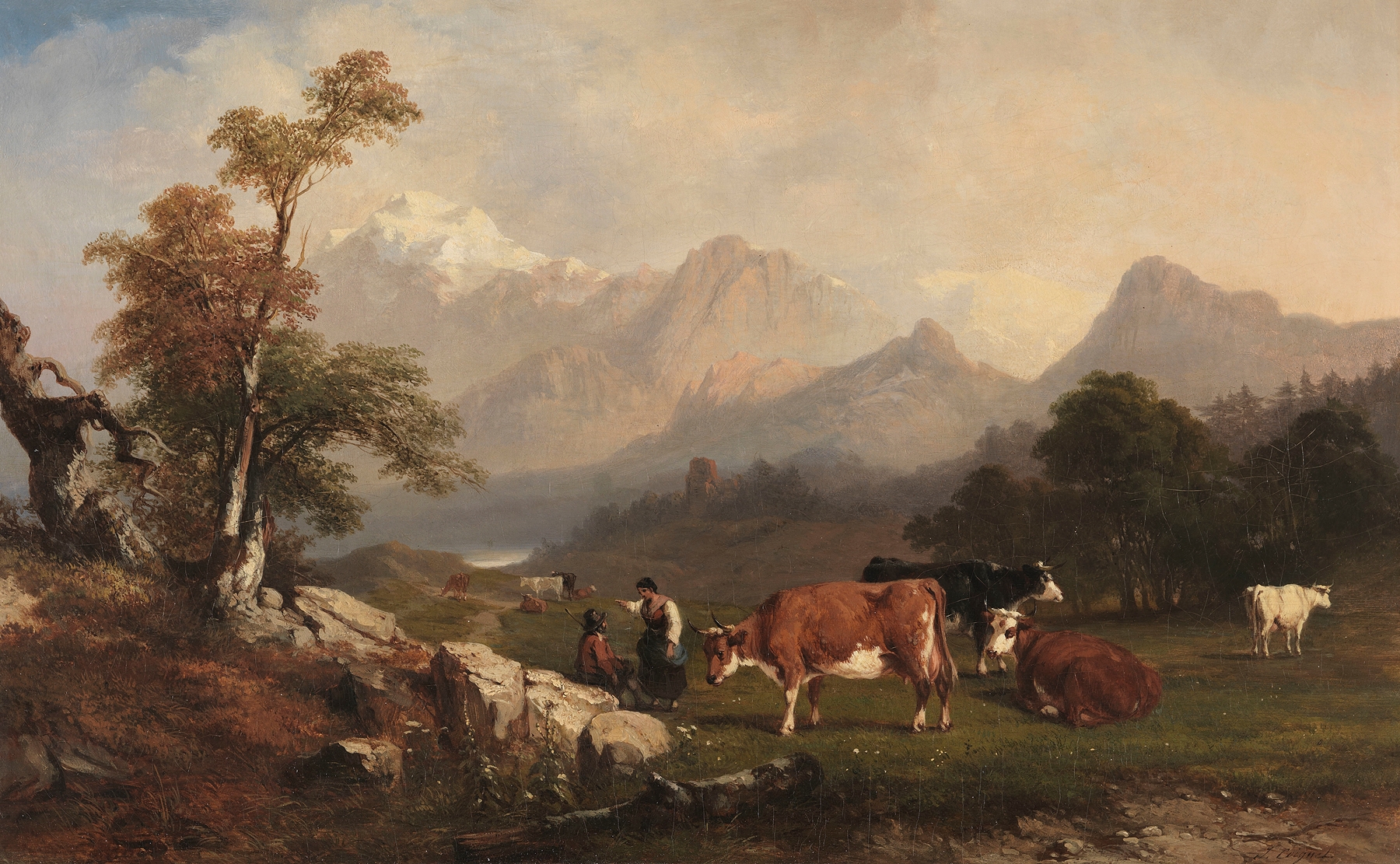
Alpine scene with cattle herders — History & Analysis
“Art reveals the soul when the world turns away.” In a fleeting moment of awe, landscapes become more than mere scenery; they transform into reflections of our deepest connections with nature. Focus on the gentle slopes of the mountains that cradle the scene, where hues of emerald and gold dance in harmony. Look closely at the herders, their figures poised against the vastness, embodying both strength and vulnerability. The brushwork is soft yet deliberate, creating a serene atmosphere as light spills across the canvas — a subtle interplay that draws you in, inviting contemplation of the lives entwined with the land.
Notice the contrasts in this piece: the strength of the sturdy cattle juxtaposed against the delicate wildflowers dotting the foreground. The expansive sky, filled with billowing clouds, seems to contain a myriad of emotions — from the tranquility of a sunny afternoon to the impending whispers of a storm. These details speak to the transient nature of life itself, a reminder of the delicate balance between human existence and the majesty of the natural world.
Around 1850, while creating Alpine scene with cattle herders, Coignet was immersed in the Romantic movement, which sought to celebrate both nature and emotion. This period found him in France, where artists were increasingly drawn to the sublime beauty of rural landscapes, free from the industrialization that was reshaping society. Coignet’s work reflects both a personal journey and a broader artistic response to the awe-inspiring power of nature.