View of Bozen with a Painter — History & Analysis
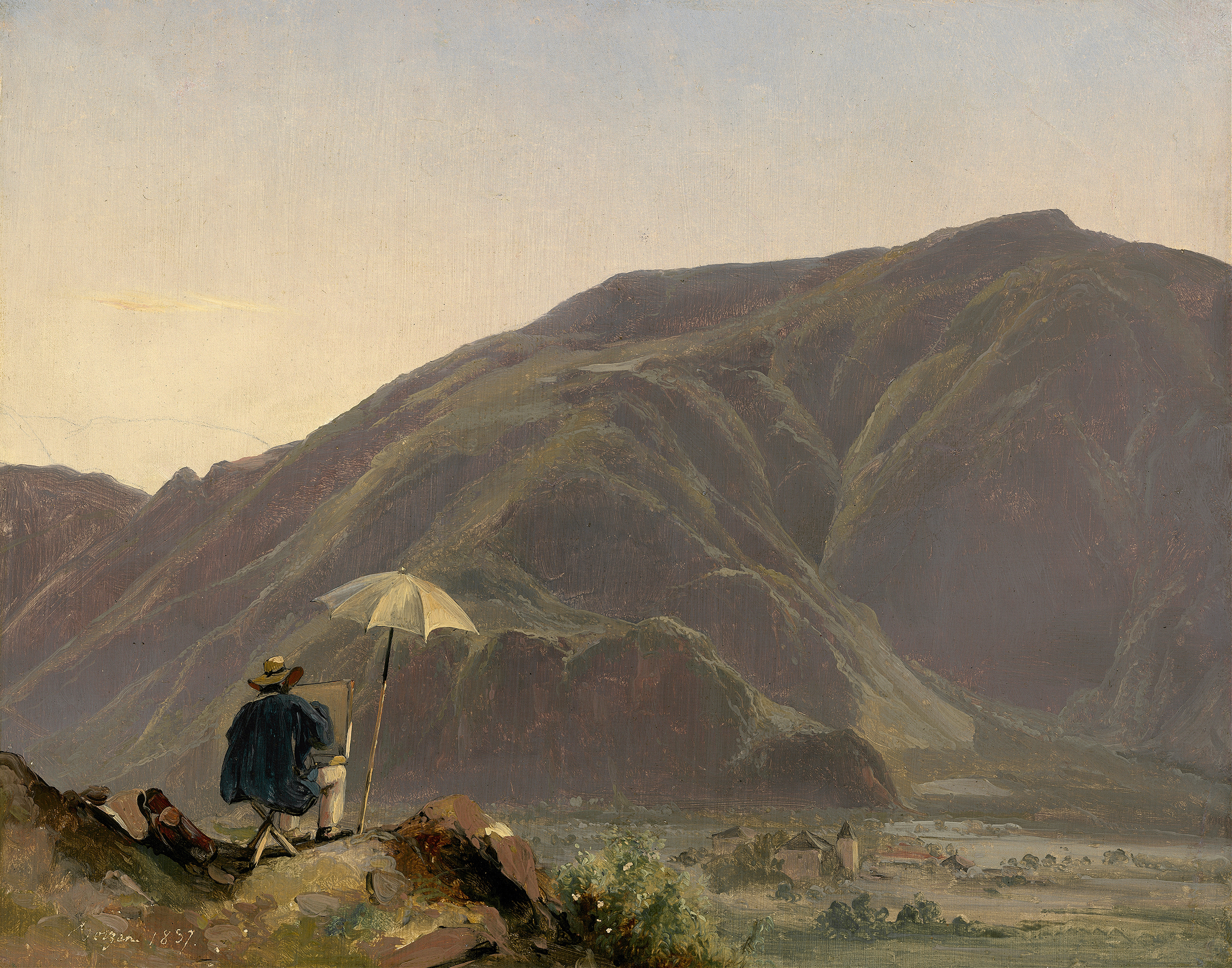
Could beauty survive in a century of chaos? In View of Bozen with a Painter, the answer seems to whisper softly through the verdant hills and tranquil skies. Focus on the painter poised on the foreground, his easel steady against the light breeze. Look closely at the lush green foliage that frames the scene, creating a sanctuary amidst the wildness of nature. The gentle palette of blues, greens, and subtle earth tones invites the viewer to bask in a moment of stillness, while the soft clouds overhead draw your eye towards the expansive sky.
The interplay of light and shadow adds depth, accentuating the serene landscape and bringing a sense of calm. The contrast between the solitary figure and the grandeur of nature evokes a poignant sense of introspection. The artist, captured in his moment of creation, seems to bridge the gap between the chaos of human existence and the eternal beauty of the natural world. The lush hills whisper stories of tranquility, yet the figure’s presence reminds us of the fleeting nature of art and experience.
Here, art becomes a refuge, highlighting the delicate balance between humanity and nature. In 1837, while living in France, Coignet painted this work during a time when Romanticism was flourishing, and artists sought to capture the beauty and emotion of the natural world. The burgeoning movement emphasized a deep connection to nature, and this piece reflects his desire to portray serene landscapes amid a tumultuous era marked by rapid industrial change. The painting embodies a moment when beauty was perceived as a counterforce to chaos.