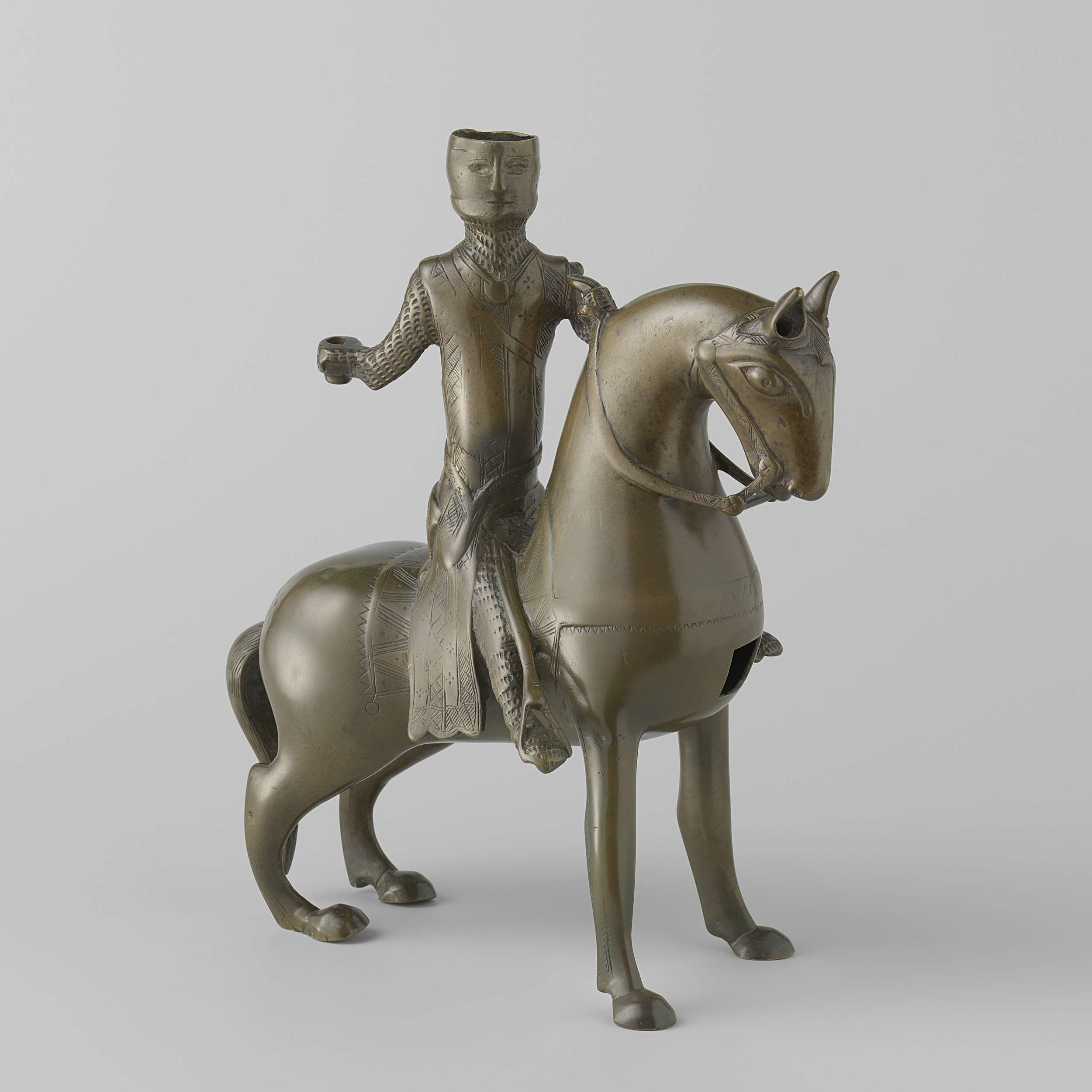
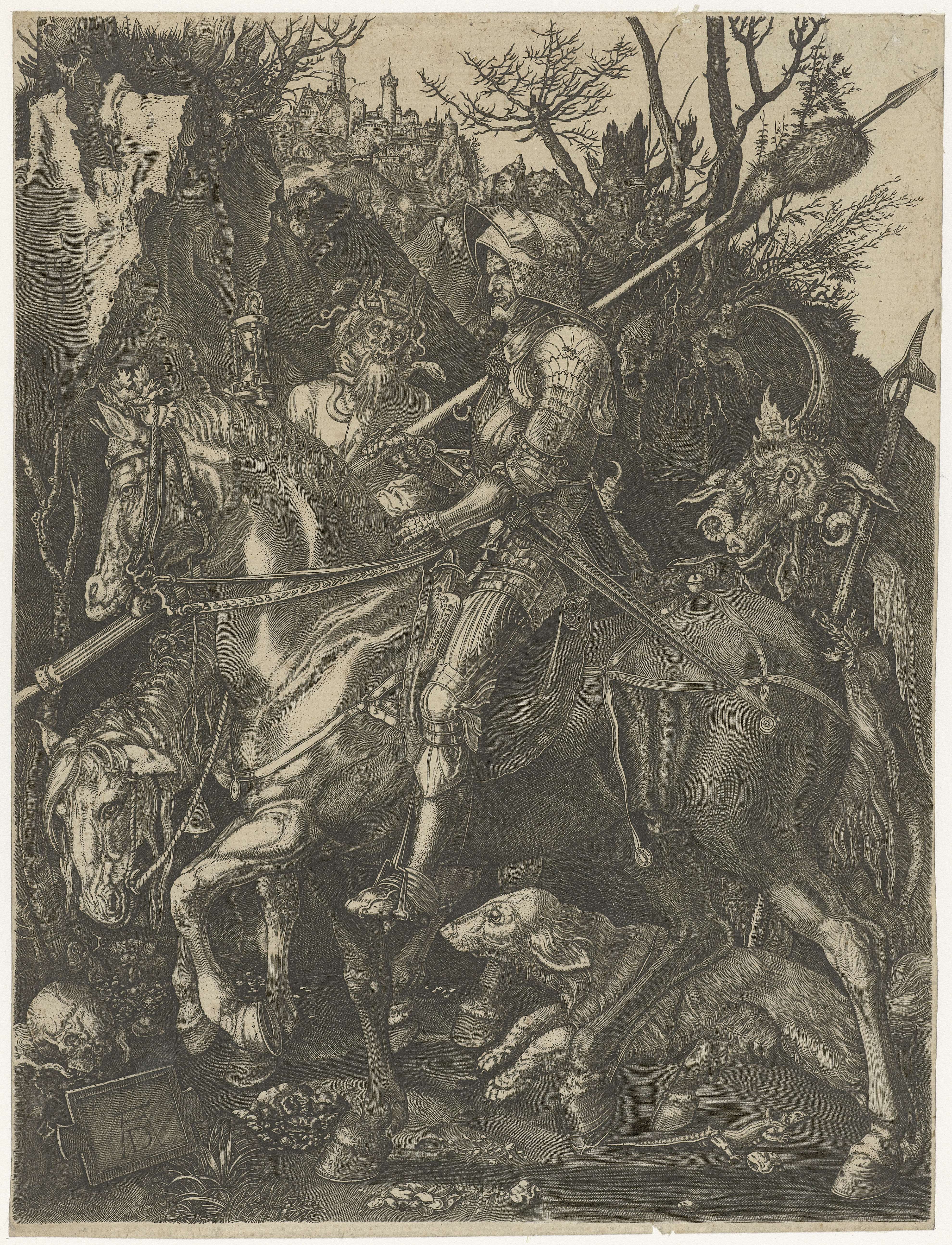
Could a single brushstroke hold eternity? As we gaze upon this aquamanile, we are invited to contemplate the void that elegantly shapes our experience of time and artistry. First, look to the knight, poised in regal splendor atop a horse. The intricate details of the armor glimmer in the light, while the flowing mane of the steed seems to pulse with latent energy. Notice how the artist employs rich tones of bronze and dazzling silver, contrasting subtly with the smooth, soft texture of the clay, creating a tension that speaks to both strength and fragility. This careful balance draws the eye, guiding us to appreciate not only the craftsmanship but also the poetic narrative held within. Delve deeper into the symbolism—the mounted knight represents valor and chivalry, yet his form is hollow, evoking a sense of emptiness that mirrors the void of unfulfilled aspirations. Each curve and contour whispers of the stories lost to time, amplifying the contrast between the heroic ideal and the inevitability of mortality. This tension invites reflection on the transient beauty of life and the enduring nature of art, eliciting a profound emotional resonance that transcends the physical object. Crafted between 1220 and 1240, this work emerges from an era marked by the rise of Gothic artistry, where spiritual and temporal realms collided. The unknown artist operated within a bustling medieval society, shifting from the monumental to the intimate, reflecting broader themes of identity and purpose. In this context, the aquamanile becomes not just a vessel for water but a vessel for contemplation, capturing the essence of humanity's quest for meaning amidst the void.