Ausfahrt Der Fischer — History & Analysis
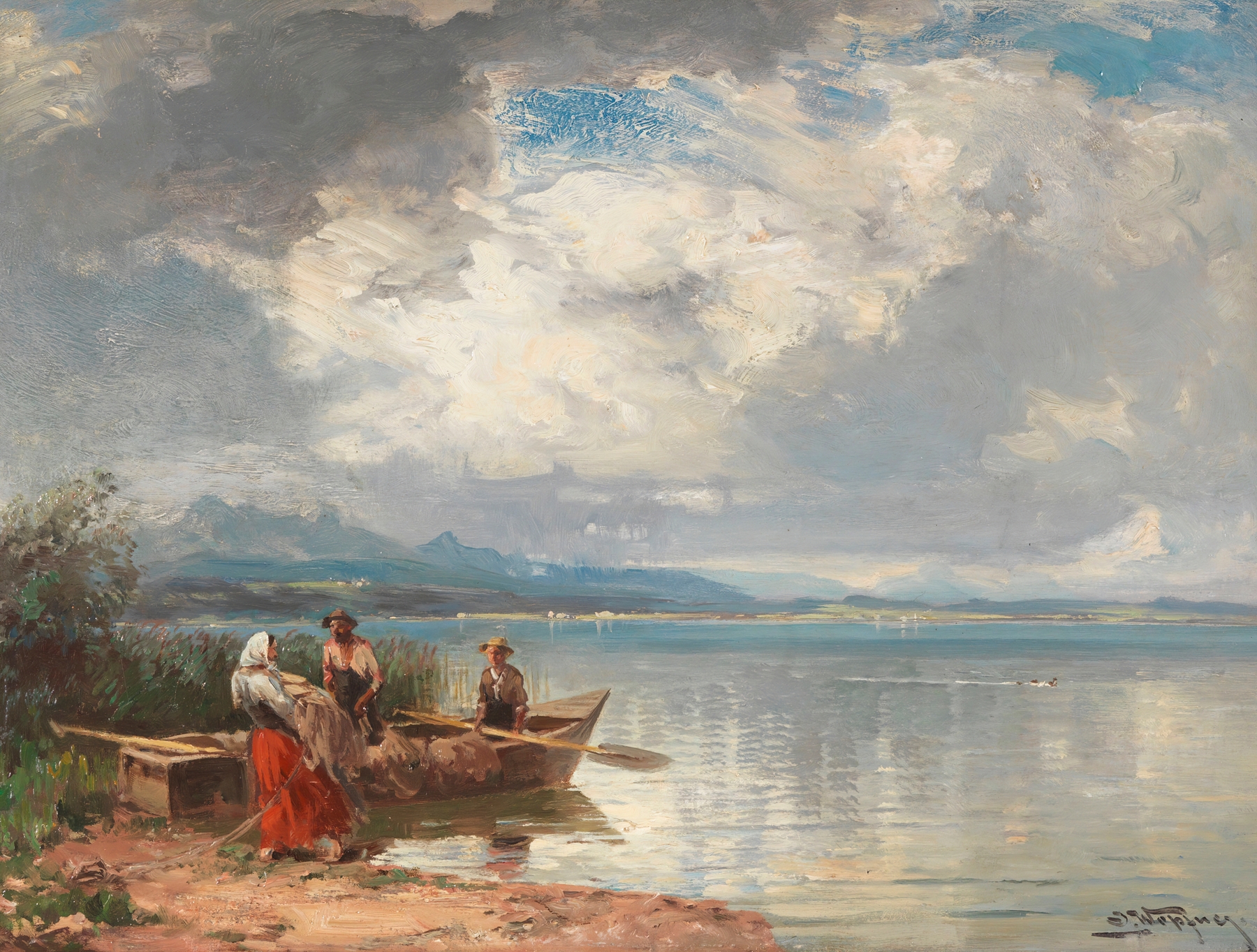
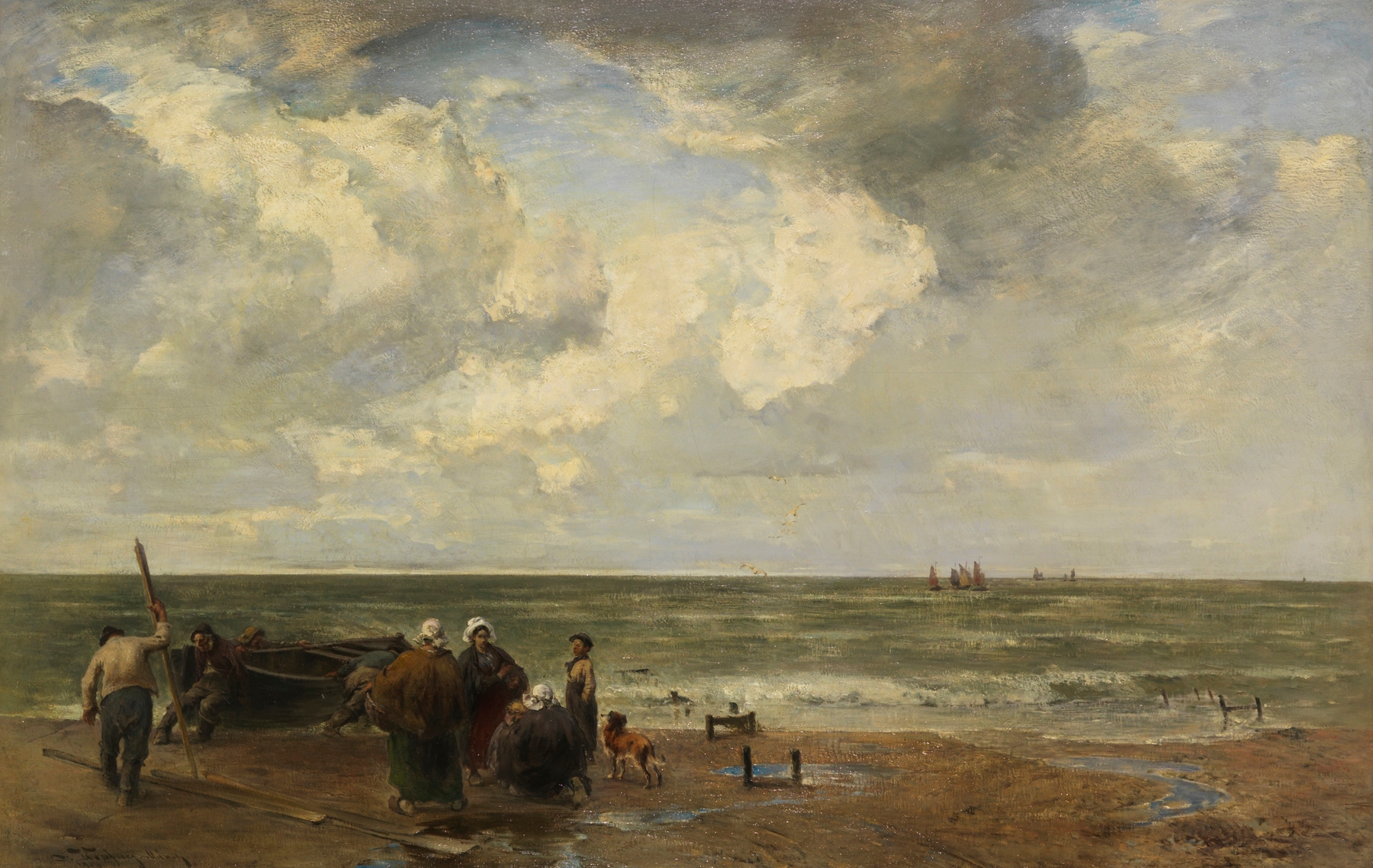
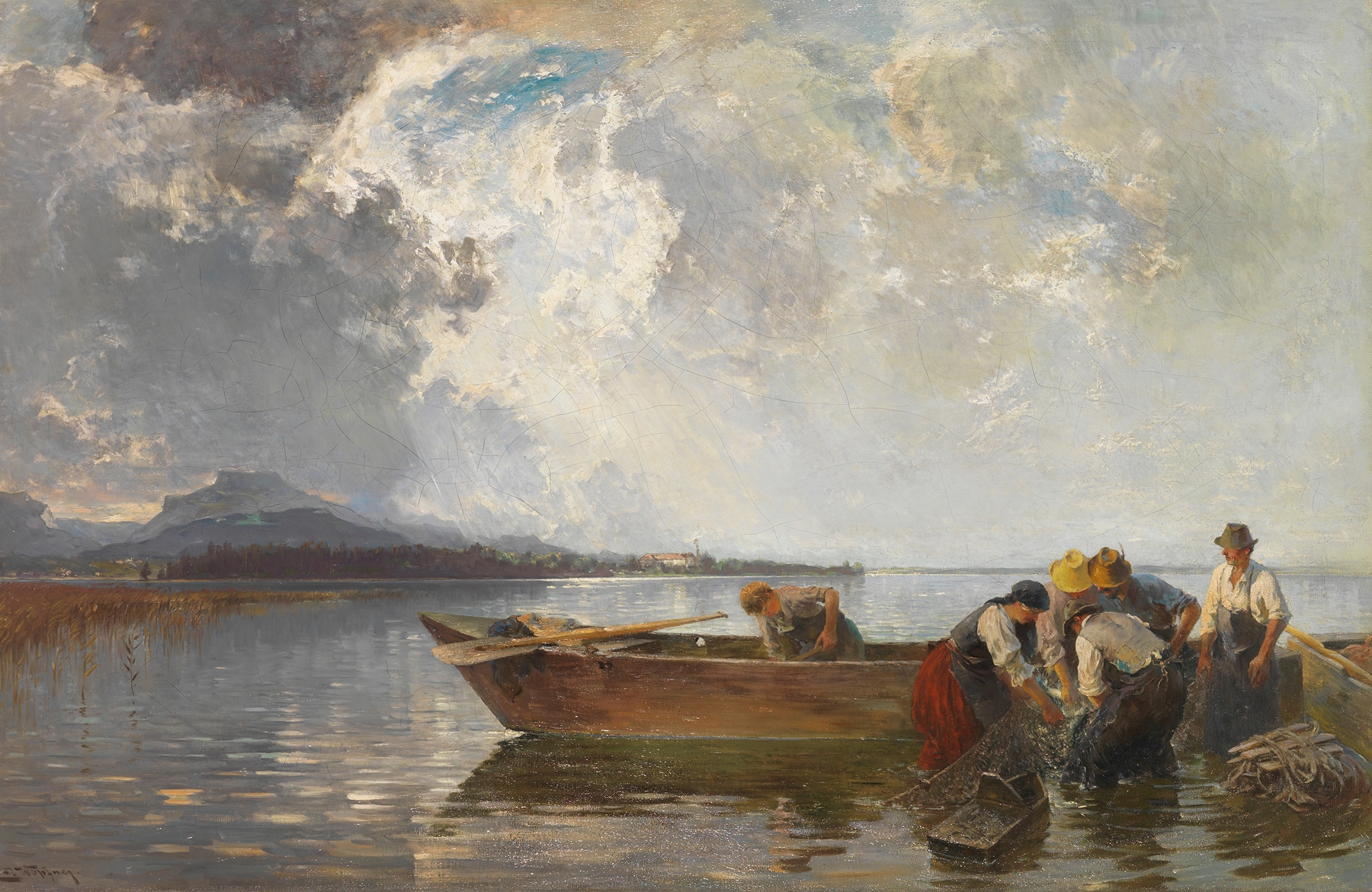
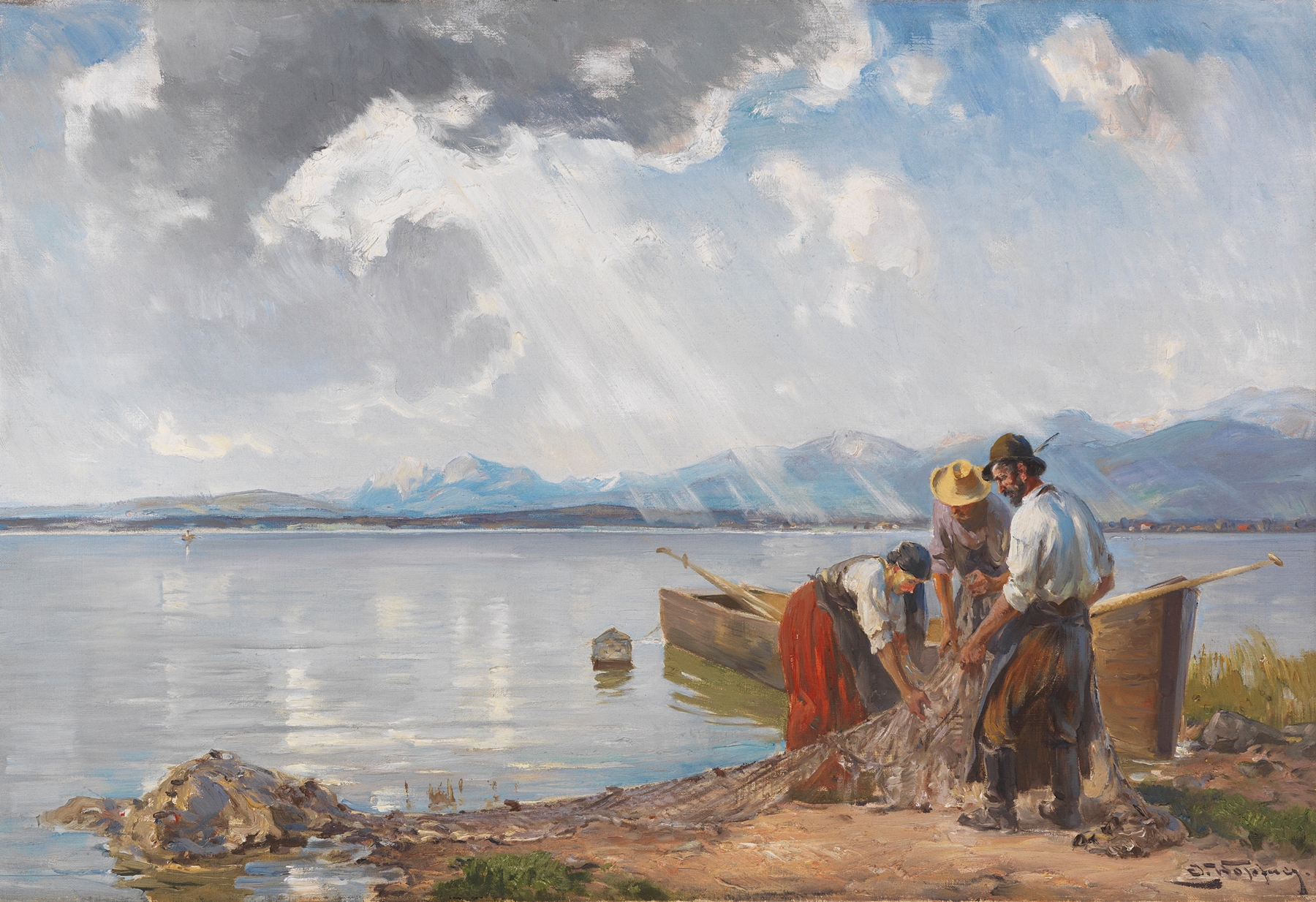
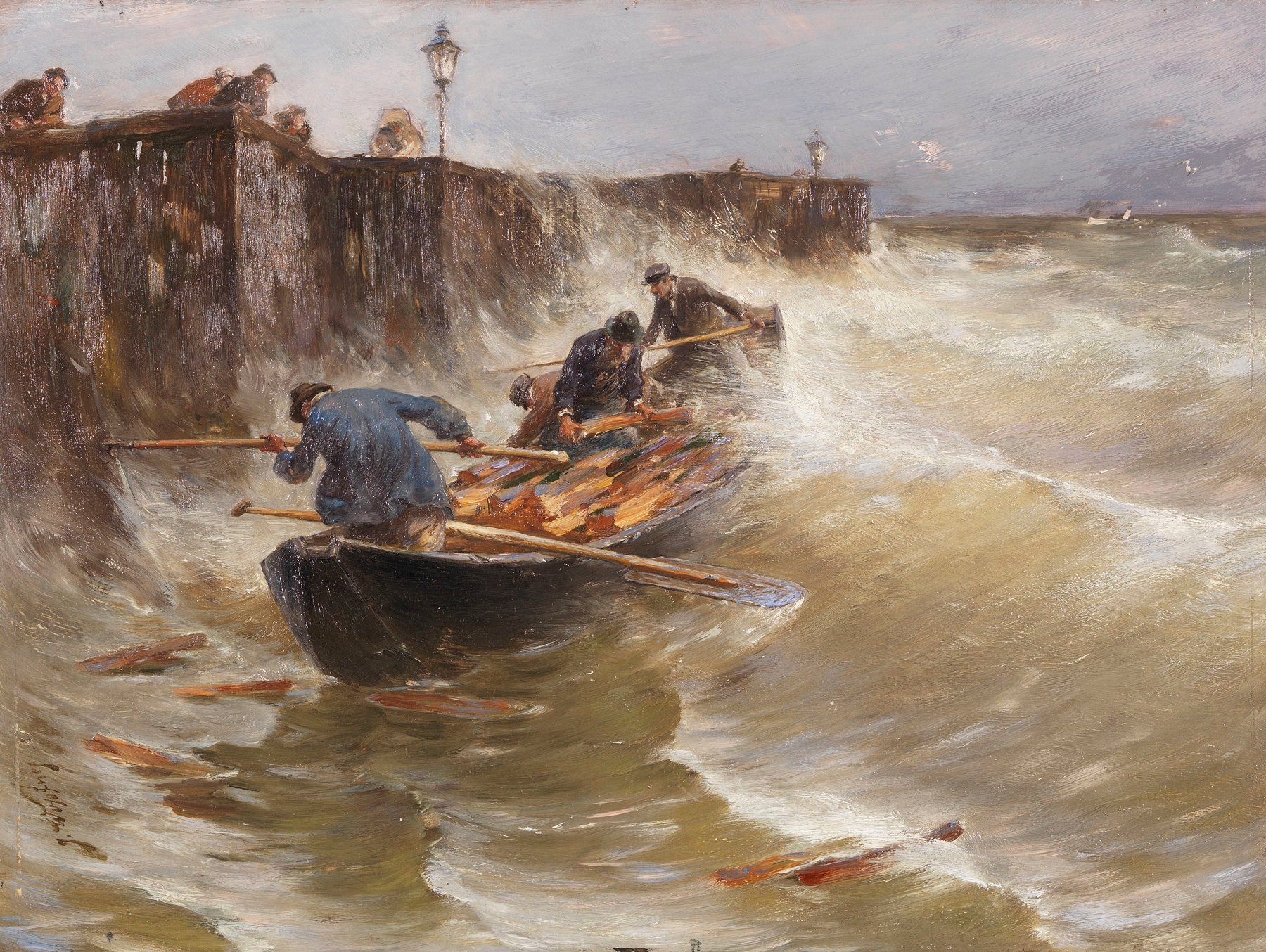
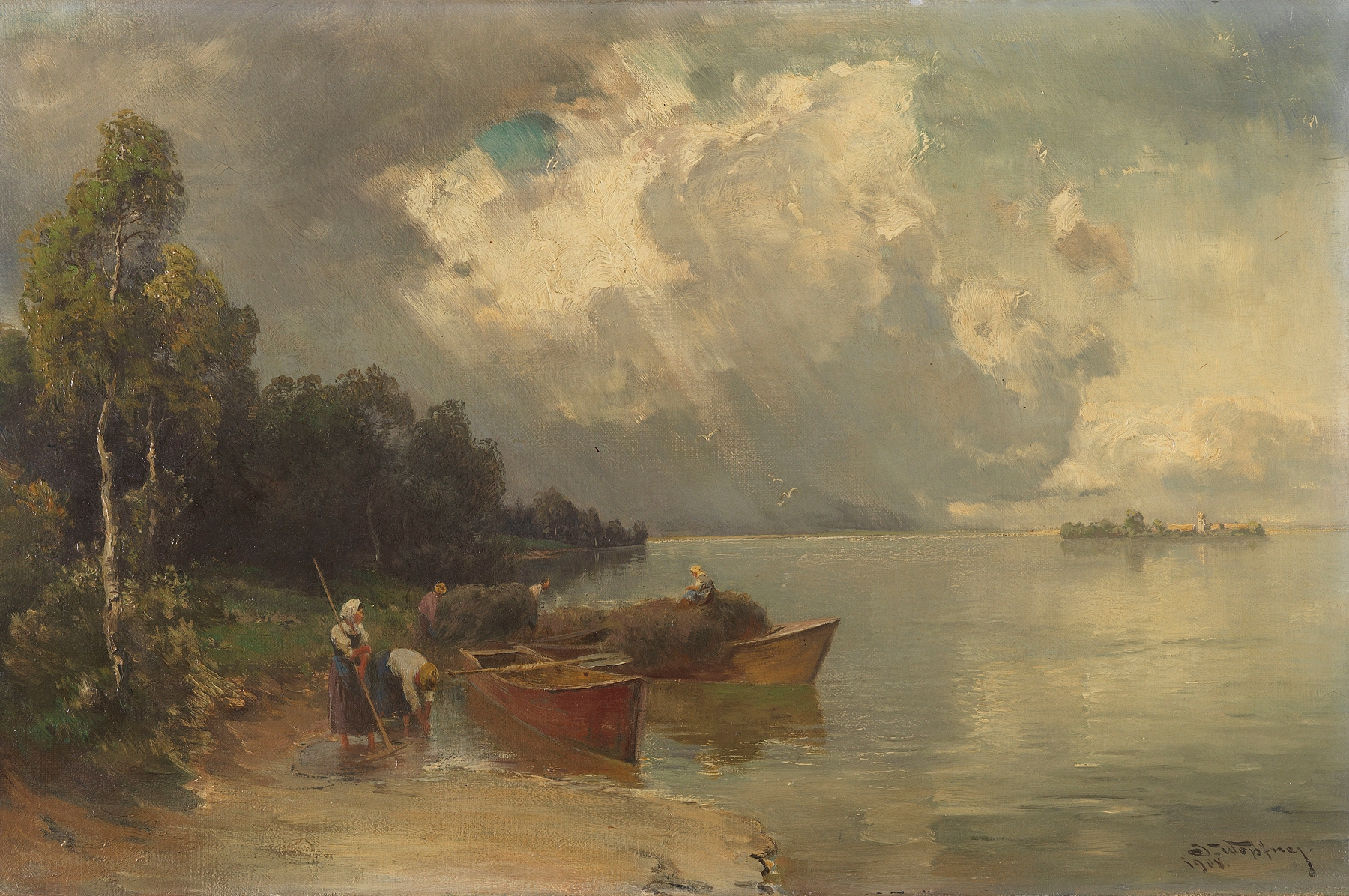
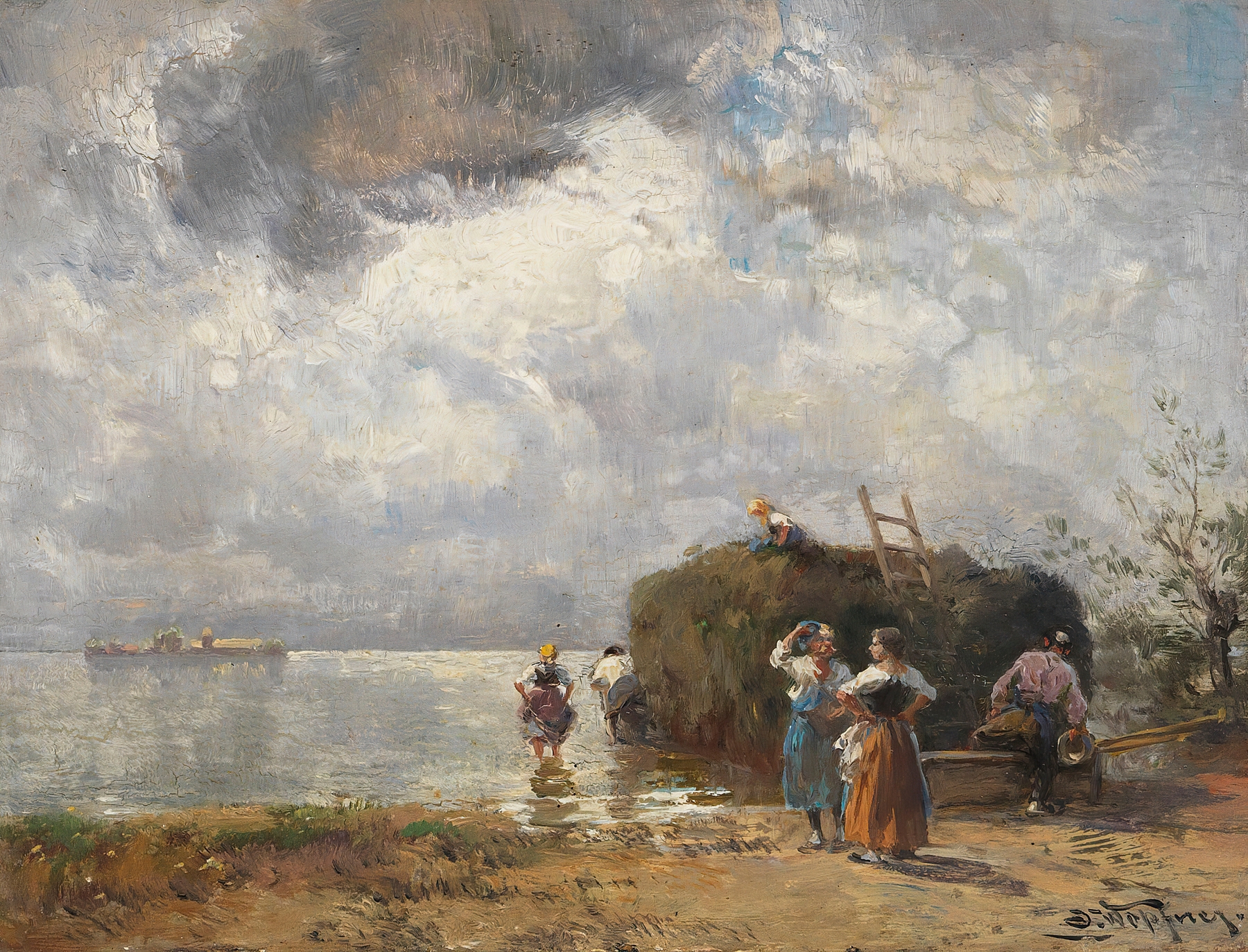
Can beauty exist without sorrow? In the gentle embrace of twilight, memory weaves through the fabric of life, bringing both joy and longing. Look closely at the center of the canvas, where the vibrant hues of the sunset bleed into the cool blues of the water. Notice how the fishermen, silhouetted against the fading light, are caught in a moment of both labor and camaraderie.
The brushwork is deft, each stroke conveying movement and emotion while the waves ripple seamlessly beneath their sturdy boat. The deep oranges and soft pinks of the sky contrast sharply with the serene, reflective surface below, creating a palpable tension between the warm glow of the day’s end and the coolness of the impending night. In this work, Wopfner captures the delicate balance of human endeavor and nature's beauty. The fishermen's expressions, grounded in focus yet touched by an unspoken nostalgia, hint at stories untold—stories of loss intertwined with the thrill of their daily catch.
The interplay between light and shadow serves as a metaphor for the duality of existence, where joy is often tinged with an awareness of fleeting time, urging us to reflect on our own memories. Painted in 1886, during a period of artistic exploration, the piece encapsulates the essence of late 19th-century realism. Wopfner, influenced by the shifting tides of society and art, found solace in depicting the everyday lives of fishermen along his native waterways. This work stands as a testament to the artist's commitment to capturing the beauty of ordinary moments, set against the backdrop of a rapidly changing world.